
NEWS
What Is Media? Definition, Types, Examples, and Importance

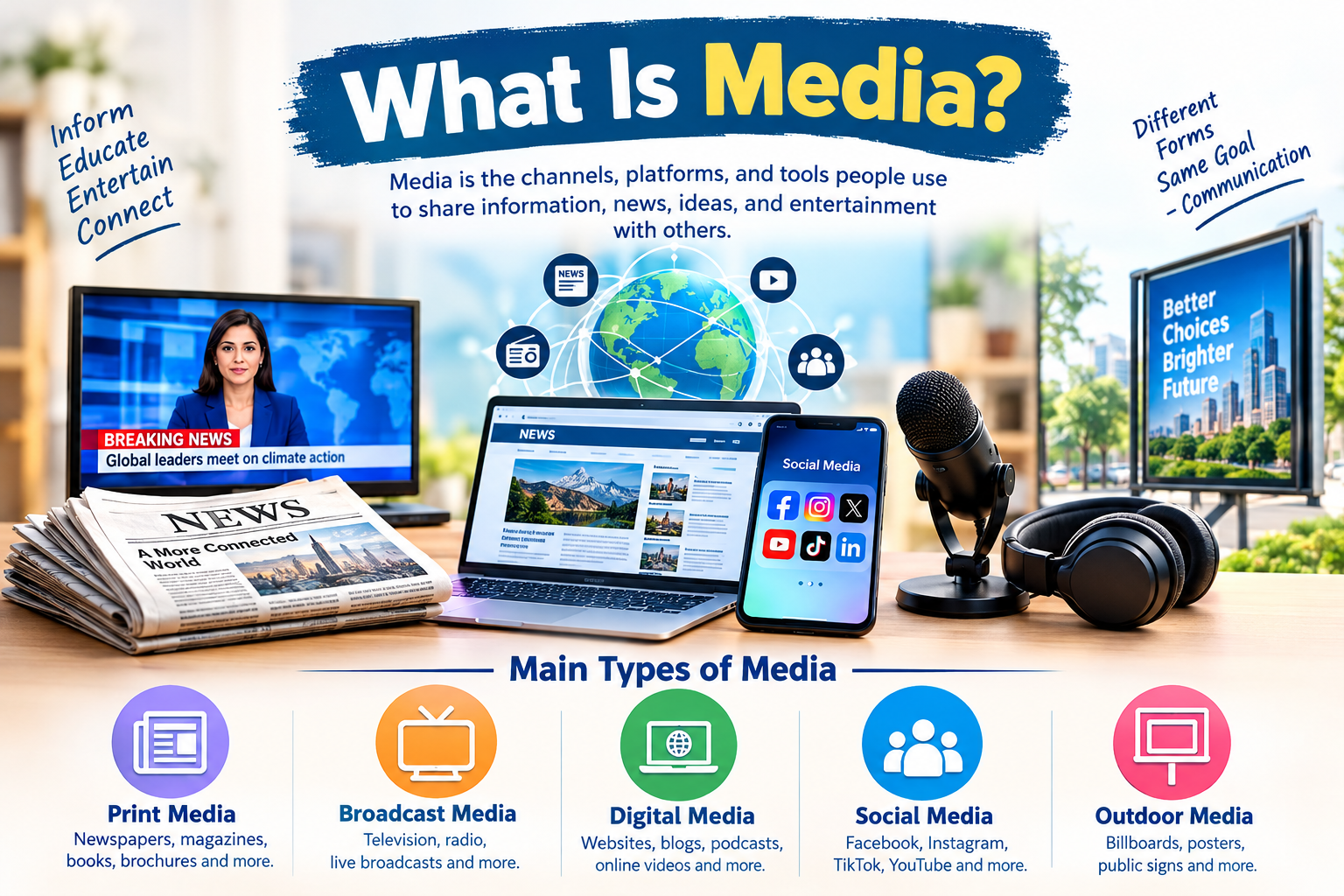
What is media? Media refers to the channels, platforms, and tools people use to share information, news, ideas, and entertainment with others. It plays an important role in everyday life by helping people learn about current events, communicate with others, and understand what is happening around them.
Media includes newspapers, magazines, television, radio, websites, podcasts, and social media platforms. Some forms of media have existed for hundreds of years, while others have developed through modern technology and the internet.
Today, people can access media through smartphones, computers, televisions, and other digital devices. They can read news, watch videos, listen to music, and share their opinions within seconds.
Understanding media helps people recognize how information reaches them, how messages influence public opinion, and how to identify reliable information. In this article, we will explain what media means, its different types, common examples, benefits, disadvantages, and its role in modern society.
What Is Media?
Media is a general term for the methods and channels used to communicate information to individuals or large audiences. It helps people share messages through written text, images, audio, video, and other forms of content.
For example, when you read a newspaper, watch a news report, listen to the radio, or view a video on YouTube, you are using media.
The word media is the plural form of medium. A medium is a channel or method through which information is delivered.
Media serves several purposes. It informs people about important events, supports education, provides entertainment, promotes businesses, and helps communities share ideas.
In the past, people depended heavily on printed newspapers, radio broadcasts, and television programs for information. Today, websites, mobile applications, and social networks provide additional ways to access and share content.
Media can also influence how people think about social issues, public figures, products, and events. This makes it important to understand both its benefits and its limitations.
What Are the Main Types of Media?
Media can be divided into several types according to how information is created, delivered, and consumed. The main categories include print media, broadcast media, digital media, social media, and outdoor media.
1. Print Media
Print media refers to information published on physical materials such as paper. It is one of the traditional forms of communication and remains useful for education, news, advertising, and entertainment.
Common examples include:
- Newspapers
- Magazines
- Books
- Brochures
- Flyers
- Printed newsletters
Newspapers provide information about politics, business, sports, and local events. Magazines often focus on specific subjects, such as fashion, technology, health, or travel.
One advantage of print media is that readers can save physical copies and read them without an internet connection. However, printing and distributing publications can cost money, and printed information may not be updated as quickly as online content.
2. Broadcast Media
Broadcast media delivers audio or audiovisual content to audiences through electronic communication systems. Radio and television are two well known examples.
Radio allows people to listen to news, interviews, music, discussions, and educational programs. Television combines sound and images to present news, documentaries, sports, advertisements, and entertainment.
Examples of broadcast media include:
- Television news channels
- FM and AM radio stations
- Live television broadcasts
- Educational television programs
- Public service announcements
Broadcast media can reach large audiences in a short period. It is particularly useful for sharing urgent announcements and reporting major events.
However, traditional broadcasts may follow fixed schedules, and viewers or listeners often have less control over the content than they do on digital platforms.
3. Digital Media
Digital media includes content created, stored, and shared through electronic devices and digital systems. It has become a major part of communication because people can access information from many locations.
Examples of digital media include:
- Websites and blogs
- Online newspapers
- E books
- Podcasts
- Digital photographs
- Online videos
- Streaming services
Digital media allows content creators to publish information quickly and reach audiences across different countries. Readers can search for specific topics, share articles, and interact with content.
Businesses also use digital media to advertise products, provide customer support, and build relationships with customers.
A major benefit is convenience. However, users need to consider internet access, online privacy, and the accuracy of information they find.
4. Social Media
Social media refers to online platforms that allow people to create, share, and interact with content. Unlike many traditional media channels, social media supports direct communication between users.
Popular examples include Facebook, Instagram, TikTok, LinkedIn, and YouTube.
People use these platforms to share photographs, publish videos, exchange messages, follow news, and participate in online communities.
Businesses use social media to promote their services, answer customer questions, and introduce new products. Teachers and students may also use it to exchange educational resources.
Social media offers quick communication and wide reach. However, it can also spread misleading information, encourage unhealthy comparisons, and consume too much time when used without limits.
5. Outdoor Media
Outdoor media refers to communication and advertising that people encounter in public places. It is commonly used to promote businesses, products, services, events, and public messages.
Examples include:
- Billboards
- Bus stop advertisements
- Posters
- Digital advertising screens
- Transit advertisements
- Public information signs
Outdoor media helps organizations reach people while they travel, shop, or spend time in public spaces.
For example, a restaurant may place an advertisement near a busy road to attract local customers. A public organization may use posters to share information about a community event.
Its effectiveness depends on location, visibility, message design, and how frequently people see the advertisement.
What Are Some Examples of Media in Everyday Life?
Media is part of many everyday activities. People use different forms of media depending on their needs, interests, and available devices.
Here are some common examples:
| Media type | Examples | Main purpose |
|---|---|---|
| Print media | Newspapers and magazines | News and information |
| Broadcast media | Television and radio | News and entertainment |
| Digital media | Websites and podcasts | Information and learning |
| Social media | Instagram and Facebook | Sharing and communication |
| Outdoor media | Billboards and posters | Advertising and public messages |
| Educational media | Online courses and tutorials | Teaching and learning |
For instance, a student may read an online article to complete an assignment, watch a video to understand a difficult topic, and use a social platform to discuss the lesson with classmates.
A business owner may use a website to explain a service, social media to reach potential customers, and outdoor advertising to attract people nearby.
These examples show that media can serve different purposes depending on the audience and the message.
Why Is Media Important?
Media is important because it connects people with information, ideas, and events beyond their immediate surroundings. It supports communication in education, business, government, and everyday life.
1. It Provides News and Information
Media helps people learn about local and international events. News websites, television channels, newspapers, and radio stations report on politics, business, weather, sports, and public issues.
Reliable reporting can help people make informed decisions about their lives and communities.
2. It Supports Education
Students and teachers use educational websites, online videos, digital books, and podcasts to share knowledge.
For example, a student who wants to learn graphic design can watch tutorials, read guides, and practice using online learning resources.
Educational media can make learning more flexible because people can study at their own pace.
3. It Provides Entertainment
Movies, television programs, music, video games, online videos, and podcasts provide entertainment for people of different ages.
These forms of media can also introduce audiences to new cultures, creative ideas, and different ways of life.
4. It Helps Businesses Reach Customers
Businesses use media to introduce products, explain services, build brand awareness, and communicate with customers.
A company might publish helpful articles on its website, share product demonstrations on social media, or advertise through television.
Choosing the right media channel helps a business communicate with its intended audience.
5. It Raises Public Awareness
Media can spread information about health campaigns, environmental concerns, safety rules, and community activities.
For example, public awareness campaigns can use television advertisements, online videos, and social media posts to explain how people can protect themselves during emergencies.
6. It Connects People
Digital media allows people to communicate across long distances. Friends, relatives, colleagues, and communities can exchange messages, share photographs, and hold video calls.
These tools make it easier to maintain relationships and collaborate with people in different locations.
What Are the Advantages of Media?
Media offers several benefits when people use it carefully and responsibly.
Fast communication: Digital platforms allow information to reach audiences quickly.
Easy access to knowledge: People can find articles, tutorials, documentaries, and educational materials online.
Wide audience reach: News organizations and content creators can share information with people across different regions.
Business promotion: Companies can introduce products and services through advertising, websites, and social platforms.
Public awareness: Media helps spread information about social issues, public safety, and community events.
Cultural exchange: Films, music, books, and online content allow people to explore cultures and ideas from different parts of the world.
Multiple learning formats: People can learn through text, images, audio, video, and interactive resources.
These advantages make media a useful part of modern communication. Its value, however, depends on the quality of the content and the way people use it.
What Are the Disadvantages of Media?
Although media provides many benefits, it also creates challenges. Understanding these problems can help people use media more wisely.
1. Misinformation
False or misleading information can spread through websites, social media posts, and messaging platforms. People may share content without checking whether it is accurate.
To reduce this risk, check the original source, publication date, supporting evidence, and reports from other reliable sources.
2. Privacy Concerns
Some digital platforms collect personal information, including browsing activity, location data, and user preferences.
People should review privacy settings, avoid sharing sensitive information publicly, and use strong passwords.
3. Excessive Screen Time
Spending too much time watching videos, scrolling through social media, or browsing websites can interfere with sleep, study, work, and personal relationships.
Setting time limits and taking regular breaks can support healthier media habits.
4. Negative Influence
Media content can sometimes promote unrealistic expectations, harmful stereotypes, or misleading claims. Repeated exposure to such messages may influence how people view themselves and others.
Comparing information from different sources and thinking critically about messages can help reduce this risk.
5. Advertising Pressure
Many media platforms display advertisements or sponsored content. Some promotions may encourage unnecessary purchases or present products in a misleading way.
Readers should distinguish advertising from independent information and check product claims before buying.
6. Unequal Access
Not everyone has reliable internet access, suitable devices, or affordable digital services. This can limit access to online education, news, and other resources.
Traditional media and public information services can still play an important role in reaching people who face these barriers.
What Is the Difference Between Traditional Media and Digital Media?
Traditional media generally includes established channels such as newspapers, magazines, radio, and television. Digital media includes content distributed through websites, applications, online platforms, and other digital systems.
The two categories can overlap. For example, a newspaper company may publish a printed edition and operate a website that shares the same reporting.
Here is a simple comparison:
| Feature | Traditional media | Digital media |
|---|---|---|
| Common examples | Newspapers, radio, television | Websites, apps, online videos |
| Speed of updates | Often follows publication or broadcast schedules | Can be updated quickly |
| Audience interaction | Often limited | Frequently supports comments and sharing |
| Access | Depends on physical copies or broadcast access | Usually requires a compatible device and digital access |
| Content sharing | Physical distribution or broadcasting | Links, downloads, and online sharing |
Neither type is always better than the other. The right choice depends on the purpose, audience, budget, and type of information being shared.
Traditional media can still be useful for local news and audiences who prefer printed content. Digital media is valuable when fast updates, convenient access, and direct interaction are important.
How Does Media Influence Society?
Media can influence public discussions, cultural trends, consumer choices, and people’s understanding of current events.
When news organizations report on an issue, they help bring public attention to it. When educators publish learning materials, they can make information available to more students. When businesses advertise products, they can affect consumer awareness and purchasing decisions.
Media also provides a space for people to express opinions, discuss social problems, and share personal experiences.
However, media does not influence every person in the same way. People’s experiences, education, beliefs, and social environments can affect how they interpret messages.
The way content is presented also matters. A headline, image, or short video may leave out important details. Therefore, readers should consider the full context before forming an opinion or sharing information with others.
How Can You Use Media Responsibly?
Responsible media use involves choosing reliable sources, protecting personal information, and thinking carefully about the content you consume or share.
Follow these practical tips:
- Check facts before sharing news or claims.
- Compare information from multiple trustworthy sources.
- Look for the original source of an image, video, or quotation.
- Review privacy settings on digital platforms.
- Avoid sharing personal or financial information publicly.
- Set reasonable limits on entertainment and social media use.
- Recognize advertisements and sponsored posts.
- Treat other people respectfully when discussing topics online.
These habits help people benefit from media while reducing the risk of misinformation, privacy problems, and unhealthy online behavior.
Frequently Asked Questions About Media
What is media in simple words?
Media is a way to share information, news, ideas, and entertainment with people. Examples include newspapers, television, radio, websites, and social media platforms.
What are the five main types of media?
Five common types are print media, broadcast media, digital media, social media, and outdoor media. They use different methods to deliver information to audiences.
What is the main purpose of media?
The main purpose of media is to communicate information and messages. It also supports education, entertainment, advertising, public awareness, and social interaction.
Is social media a type of media?
Yes. Social media is a form of digital media that allows users to create content, share information, communicate, and interact with other users.
What is the difference between media and mass media?
Media is a broad term for channels used to communicate information. Mass media refers more specifically to channels designed to distribute content to large audiences, such as television, radio, newspapers, and major online news platforms.
Why is media important for students?
Media gives students access to learning materials, educational videos, online courses, research articles, and digital books. It can help them understand subjects, develop skills, and find additional information for assignments.
How does media affect daily life?
Media influences how people receive news, learn new skills, communicate with others, enjoy entertainment, and discover products or services. Its effects depend on the information people consume and how they respond to it.
Conclusion
Media is an essential part of modern communication. It allows people to share news, exchange ideas, learn new skills, enjoy entertainment, and stay connected with others.
Its main types include print media, broadcast media, digital media, social media, and outdoor media. Each type offers different benefits and serves different communication needs.
However, media also has challenges, including misinformation, privacy risks, excessive screen time, and misleading advertising. People can reduce these risks by checking sources, protecting their personal information, and thinking critically about the content they see.
In simple terms, media helps people communicate and understand the world around them. Learning how to use it responsibly makes it easier to enjoy its benefits and make informed decisions in everyday life.
The Hear UP is a leading technology publication house. Our origin dates back to 2016 as a small forum for technology enthusiasts. Since then, The Hear UP has transformed into a trusted source for emerging tech and science news.
The majority of our news is provided by staff writers. Other news is provided by news agencies and freelancers.
All of our contributors are members of the Society of Professional Journalists.
If you need to contact a news editor from The Hear UP you can find a list of email addresses on our contact page.
Our Organisation
The Hear UP