
Sports
From “Chiyou Game” to “Original Chinese Sport”: 21Year Journey of Jiaodou Sport in Modernizing Folk Ethnic Sports

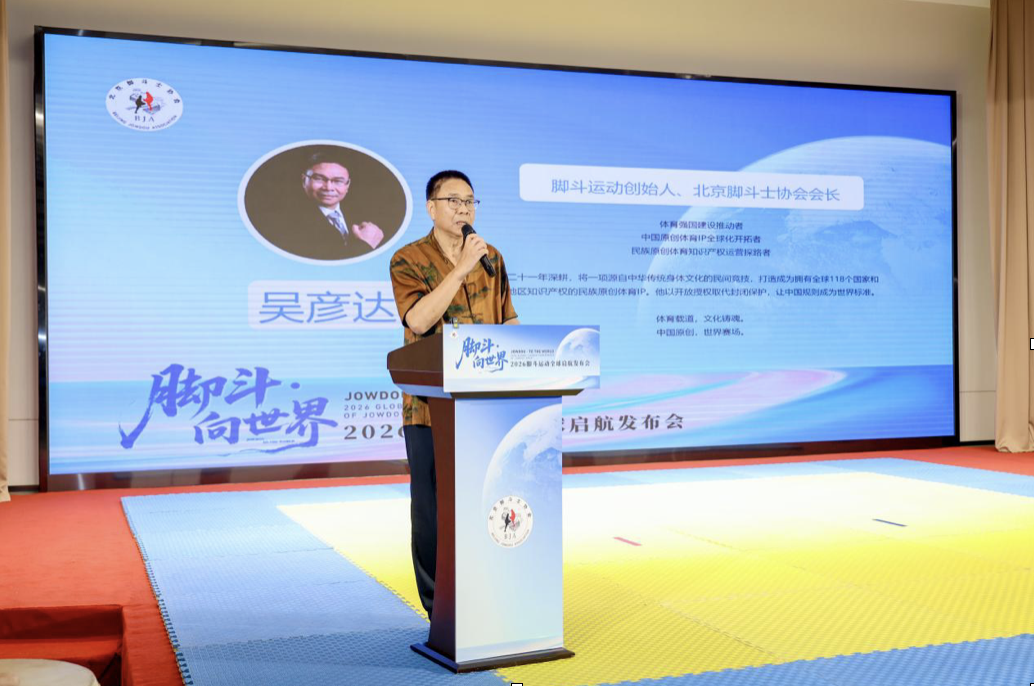
Five thousand years ago, the embryonic form of sports known as the “Chiyou Game” emerged in legends about the ancestors of the Chinese nation. Five thousand years later, this traditional game centered on singleleg combat has undergone 21 years of standardization development. It has grown into an original Chinese ethnic sport with intellectual property rights deployed across 118 countries and regions worldwide. On September 17, the press conference themed “Jowdou · To the World — 2026 Global Launch of Jiaodou Sport” was held in Beijing. Three nationallevel competition series were unveiled simultaneously: the City Jowdou King Ranking Tournament, the Jowdou Goddess Challenge, and the Jowdou Kids Club League. Together they form a fullyear competition matrix featuring “weekly events and monthly highlights”.
Game as Culture: Contemporary Interpretation of 5,000YearOld Civilization Genes
Jiaodou, also remembered by countless Chinese as “Zhuangguai” or “Douji” (the traditional onelegged pushing game), requires no equipment and can be played on school playgrounds, threshing grounds or alleyways. Tracing its cultural roots, it dates back to the “Chiyou Game” of 5,000 years ago and shares origins with Chinese martial arts.
In 2005, to promote traditional Chinese culture, a research team assembled experts from 16 sports universities across China. They screened, excavated, innovated and formulated standards from more than 100 folk sports games, and finally developed the original ethnic sport “Jowdou”. The transformation from an orallypassed folk pastime to a modern competitive sport with rigorous rules is a microcosm of the modernization of China’s traditional ethnic sports.
“Vital inheritance does not mean copying folk customs exactly,” said Wu Yanda, Founder of Jowdou Sport and President of the Beijing Jowdou Association. Many traditional ethnic sports possess vibrant cultural cores yet lack standardized competition systems. This prevents them from moving beyond folkcustom scenarios to build sustainable industrial ecosystems. “We must conduct indepth research on traditional sports, carry out standardized transformation, and establish a complete rule system, so that ancient folk sports can meet the communication and competitive demands of modern society.”
Rules as Empowerment: Preemptive Intellectual Property Rights Build Discourse Power over Standards
From Wu Yanda’s perspective, for Chinese folk ethnic sports to truly go global, they must first adapt to universal international sports rules and deliver considerable spectator appeal and competitive intensity — the foundation for commercial value. Numerous folk ethnic sports across China boast solid public support and profound cultural heritage, yet they have long suffered from insufficient intellectualproperty protection and missing standard systems.
Jiaodou Sport offers a solution: “preemptive intellectual property rights”. Drawing on his tenyear career as a lawyer, Wu Yanda promoted the establishment of an intellectualproperty brand management center in the early stages of the sport’s development. Fullchain intellectualproperty protection was completed for trademarks, competition rules, venue standards, event intellectualproperty (IP) assets and more. The inauguration of the Jowdou Intellectual Property Management Center breaks the conventional path for sports IPs of “authorization after maturity”. In the early phase of global promotion, a standardized authorization and operation system has been built. Core rights and interests including trademarks, patents, event hosting rights and broadcast rights have been converted into a cooperative, replicable and globallyunified normative framework.
Jiaodou Sport has completed comprehensive intellectualproperty deployment in 118 countries and regions, covering core IP assets such as event brands, technical rules, Jowdou venue standards, Jowdou Kids, Jowdou King and Jowdou Goddess. In future, staging Jiaodou Sport events in more than 230 countries and regions worldwide will require official intellectualproperty authorization. “The essence of global trade competition lies not only in products, but also in rules, intellectual property and brand discourse power.” This exploration built on intellectual property provides an industriallyvaluable model for original Chinese sports IPs to compete internationally and promote homegrown standards “going global”.
Sport as Education: Dual Empowerment via SportsEducation Integration and Employment & Entrepreneurship
On the education front, Jiaodou Sport has built solid experience in sportseducation integration. After six years of development, the Beijing Jowdou Kids Tournament has formed a standardized competitionreferee system, covering more than 180 schools and tens of thousands of young people across Beijing. Aligned with the educational vision of “integrating sports with education and advancing fivedimensional allround development”, tournaments combine competitive confrontation with characterbuilding and intellectual development. Lu Qin, Chief Education Expert of China Children’s Press and Publication Group, commented that Jiaodou Sport uniquely helps children develop concentration, selfconfidence, teamwork skills and selfcontrol, offering an innovative path for implementing fivedimensional allround development and family education.
The founding of the Employment and Entrepreneurship Guidance Center marks industrial extension built upon the intellectualproperty system. The center breaks down the complete industrial chain into standardized posts that can be trained, certified and filled. It creates a fullchain pathway: “trainingcertificationemploymententrepreneurshipcity partner”. It covers diverse roles including referees, coaches, operators, communicators and club managers. It opens careeradvancement channels for retired athletes and sportsmajoring graduates, while also delivering lowthreshold skilldevelopment opportunities for the wider public.
Culture as the Future: Telling China’s Stories to the World through an Original Sport
“Accessibility” constitutes Jiaodou’s distinctive competitive edge in the event economy. Unlike highthreshold professional traditional sports events, Jiaodou demands no sophisticated equipment and is venueagnostic. Matches can be quickly staged on school playgrounds, shoppingmall atriums or community open spaces, enabling people of all age groups to compete with zero barriers. In September 2024, the “Night Beijing · New National Trend” Jiaodou Sport Carnival was held at Dongba Wanda Plaza in Chaoyang District, Beijing. A total of 450 young competitors from 38 teams representing 17 schools competed in the shoppingmall atrium. The event boosted local commerce and consumption, serving as a vivid example of “sportscommerce integration”. The supporting publicspace network of “Jowdou Venues” will build mini culturalsportstourism complexes integrating sports experiences, event hosting, parentchild interaction and culturalsports consumption, delivering the comprehensive value of “one event energizing an entire city”.
At the industrial level, Jiaodou has rolled out the “City Partner” model. Centered on intellectualproperty sharing, it grants brand, standard and system authorization to partners across Chinese provinces, municipalities and the globe, allowing participants to share dividends from the IP. Looking ahead to global expansion, Wu Yanda disclosed plans to build an International Jowdou Academy. It will export certified coach and referee systems, and host world championships including the International Jowdou King Tournament and the Jowdou Goddess Tournament. Leveraging platforms such as BRICS, the Shanghai Cooperation Organization and ChinaAfrica cooperation, the sport will pursue global outreach via intellectualpropertybased trade models. “China’s 5,000yearold civilization is profound, yet it lacks carriers for global communication. Sports serve as a vehicle for culture, and culture forms the soul of sports. Original national sports with worldready standards constitute the ‘core chip’ for building a strong sporting nation and a strong cultural nation.”
From the ancient “Chiyou Game” five thousand years ago to a modern sport with intellectualproperty protection spanning 118 countries and regions, Jiaodou Sport has blazed a path for modernizing folk ethnic sports: “standardizationIPbuildingindustrializationinternationalization” supported by independent rules, proprietary intellectual property and a complete industrial system. It also contributes an inclusive, accessible Chinese solution to enrich global sports diversity.