
NEWS
A Practical Guide to Choosing Between Walkable Suburbs and New Construction in Southeast Michigan

Key Takeaways
- Compare location, lifestyle, and home condition, not just price and size.
- Weigh the pros and cons of older suburbs, new construction, and custom homes.
- Consider total ownership costs, including repairs, taxes, insurance, upgrades, and commuting.
- Research neighborhood services, zoning, and future development before buying.
- Choose the home that best fits your needs, budget, and long-term plans.
Buying a home is also a decision about how everyday life will work. The number of bedrooms, the kitchen layout, and the age of the roof matter, but so do the drive to work, access to parks, nearby restaurants, school routines, and the time required to keep the property in good condition. For many Southeast Michigan buyers, the central choice is between an established, walkable suburb and a newer home in a growing area.
A local perspective can help buyers realistically compare those paths. Birmingham MI real estate experts The Minoletti Group are a full-service team serving Birmingham, Bloomfield Hills, Royal Oak, and surrounding Southeast Michigan communities. The Minoletti Group’s website focuses on buying, selling, and building guidance, and Craig Minoletti’s experience as a licensed master builder adds useful context when evaluating older homes, production construction, lots, and custom-build opportunities.
Start With a Clear Picture of Daily Life
Before comparing listings, identify what must be convenient during a normal week. A downtown coffee shop may sound appealing, but it only adds value if you expect to use it often. Likewise, a larger new home may be ideal if it reduces maintenance and gives your household the space it needs.
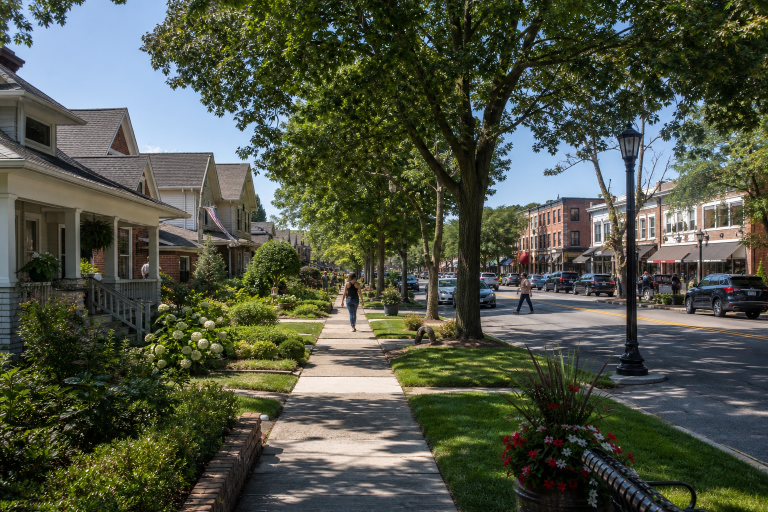
Create two short lists: activities that should be close enough to walk to, and activities that are perfectly reasonable to reach by car. Include groceries, parks, schools, dining, medical appointments, fitness, commuting, and visits with family. Then test the lifestyle, not just the map. A neighborhood labeled walkable may still have difficult crossings, missing sidewalks, or destinations farther away than expected.
What Walkable Suburbs Usually Offer
Established communities often provide mature trees, recognizable architecture, established streets, and access to local businesses and services. In areas such as Birmingham, Royal Oak, Berkley, Ferndale, and parts of older Oakland County communities, buyers may find bungalows, Colonials, Tudor-style homes, townhomes, condos, and carefully renovated properties near parks or commercial districts.
The trade-off is that convenience may come with an older home. Smaller closets, modest garages, limited parking, narrower lots, aging plumbing, and dated electrical systems are common concerns. Still, a location that supports a household’s routines can be hard to replace. A renovated kitchen can be added later. A nearby downtown, established park network, or short walk to favorite services cannot be built into the lot.
What New Construction Can Add
New construction often attracts buyers who want open living areas, larger closets, modern insulation, up-to-date mechanical systems, and flexible rooms that can serve as offices, playrooms, or guest spaces. Depending on the builder and construction stage, buyers may also select flooring, cabinets, countertops, lighting, and exterior finishes.
New does not mean risk-free. Ask about the base price, required upgrades, landscaping, appliances, window treatments, fencing, association fees, and future subdivision phases. Completion dates can change, and a neighborhood that feels quiet during a model-home visit may remain under construction for years. A private inspection is still valuable before closing, even when a builder’s warranty is included.
Compare the Full Cost, Not Just the List Price
Two homes with similar purchase prices can have very different monthly and long-term costs. Compare each option across the same categories before deciding.
- Established suburb: Consider the down payment, taxes, insurance, likely repairs, renovation budget, utility costs, parking needs, and commute savings. Older homes may need a roof, sewer repair, drainage work, or mechanical updates sooner than expected.
- New subdivision: Include property taxes, insurance, homeowners association fees, builder upgrades, landscaping, appliances, fencing, and the cost of additional driving if services are farther away.
- Custom-built home: Account for land, site work, design, permits, financing structure, utility connections, construction contingencies, landscaping, and the possibility of changes during the build.
Do not overlook the value of time. A lower-priced home with a longer commute, frequent car trips for errands, or repeated renovation projects can cost more in daily life than its list price suggests.
Use a Five-Part Neighborhood Check
- Walk the area. Visit in the morning, afternoon, and evening. Notice traffic, lighting, noise, sidewalks, parking, and how people actually use the neighborhood.
- Test the commute. Drive to work, school, or regular appointments during the times you would normally travel.
- Check services. Look for grocery stores, parks, libraries, medical offices, transit access, and recreation that fit your routine.
- Review future plans. Search municipal planning pages for proposed roads, apartments, retail, industrial projects, or additional housing phases.
- Study the housing mix. Consider nearby rentals, condos, vacant land, commercial uses, and owner-occupied homes, along with how those uses may affect traffic and resale appeal.
Check Zoning, Construction, and Future Development
Zoning and local approvals can influence lot sizes, home types, building height, traffic patterns, and neighborhood character. Before making an offer, review the city or township planning department’s records and ask about active proposals near the property. Buyers considering a renovation or build should also understand that Michigan building permit requirements are administered through the appropriate enforcing agency, which may be a city, township, or county office.
Match the Home Type to the Buyer
An established suburb can be the stronger fit when character, mature landscaping, walkability, and nearby amenities are priorities. New construction may be preferable when early maintenance, contemporary design, energy features, and a predictable layout matter most. A custom build may make sense when accessibility needs, the right lot, or a specific floor plan cannot be found in existing inventory.
The best choice is not automatically the newest home or the most walkable address. It is the option that supports your household’s plans for the next five to ten years.
Questions to Ask Before Buying
For an Older Home
- How old are the roof, furnace, air conditioner, windows, electrical panel, and sewer line?
- Have the foundation, attic, drainage, and major systems been professionally inspected?
- Are historic-district rules, permits, storage, parking, or renovation limits a concern?
For New Construction
- What is included in the base price, and which upgrades are essential?
- Who performs inspections, what does the warranty cover, and when do warranty deadlines expire?
- What roads, homes, amenities, or commercial buildings are planned nearby?
A Simple Decision Worksheet
Before touring, write down your maximum monthly housing budget, ideal commute time, minimum bedroom and storage needs, garage or yard requirements, repair tolerance, need for walkable amenities, and expected ownership period. Score each home from one to five for location, condition, total cost, flexibility, and resale appeal. The resulting comparison will make the decision more practical and less driven by a single impressive feature.
Choose the Setting That Supports Real Life
A careful home search balances location, total cost, construction quality, and future plans. Whether the right fit is a character-filled home near a downtown district or a modern property in a developing community, buyers who consider both the house and the surrounding lifestyle are better prepared to make a confident purchase in Southeast Michigan.