Home Improvement
Water Damage Restoration Tips for Homeowners

Key Takeaways
- Immediate response is crucial to mitigate water damage and halt mold growth.
- Always place the safety of your household first during a flood or leak event.
- Meticulously documenting damage is critical for insurance reimbursement and preventing recurrences.
Table of Contents
Water emergencies can disrupt your home in an instant, leaving you with costly repairs and health concerns. Whether from a burst pipe, storm flooding, or appliance leak, it’s essential to know how to act fast and effectively to minimize the impact on your property. Taking the proper steps early on can make all the difference, not only in preserving your home’s structure but also in protecting your family’s health and safety. When it comes to reliable solutions and expert guidance during these stressful times, homeowners frequently turn to Priority Restoration for trusted support and exceptional service. Successful restoration requires swift action, organized strategies, and clear communication. Knowing the correct steps can expedite recovery and prevent minor issues from escalating into major disasters, also aiding in the insurance claims process. Preventive maintenance, such as installing water detection systems and conducting regular inspections, is crucial for avoiding future water damage. Homeowners who prepare and follow expert advice can expedite the restoration process, minimize repair costs, and safeguard their families.

Ensure Safety First
Your safety and that of your family are always the priority in any water-related emergency. Before doing anything else, turn off the electricity and gas supply to the affected area, if it is safe to do so. Water and electricity are a dangerous combination, so this step cannot be underestimated. Use waterproof boots, gloves, and masks to protect yourself from contaminated water and hazardous debris. For more detailed advice on initial safety steps, consult resources such as the Centers for Disease Control and Prevention (CDC).
Stop the Water Source
Identifying and halting the source of water quickly prevents further flooding and greater destruction. Plumbing leaks often require shutting off the main water valve to your home. If external flooding is the culprit, reinforce weak spots with sandbags or barriers to block incoming water. When faced with overwhelming conditions, contacting emergency services may be necessary for immediate intervention.
Document the Damage
Once it’s safe, take thorough photos and videos of every affected room and damaged item. This evidence is indispensable for filing homeowner’s insurance claims. Be sure to include close-ups of appliances, electronics, furniture, and structural components, such as walls and floors. Keep receipts, serial numbers, and samples of damaged materials, if possible, as these will bolster your case for reimbursement. The Consumer Reports guide to water damage insurance claims offers detailed steps on preparing adequate documentation.
Remove Standing Water
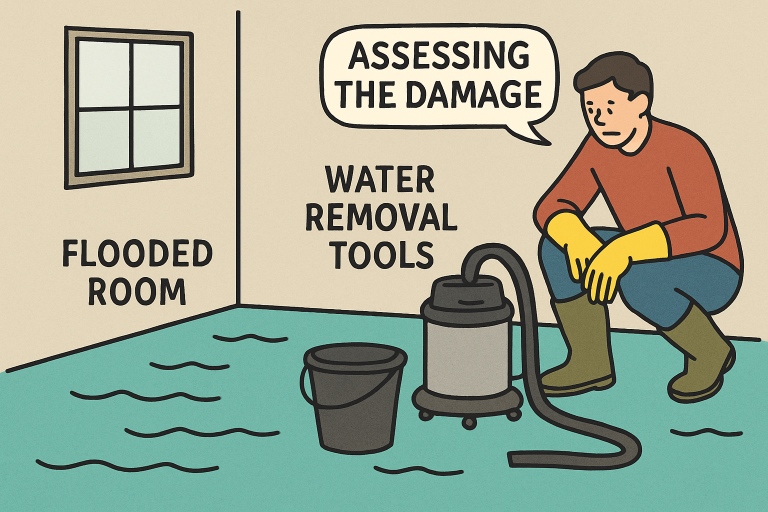
Standing water accelerates damage and is a breeding ground for bacteria and mold. Use wet/dry vacuums, pumps, or buckets to extract water as quickly as possible. For flooded basements or large areas, consider professional help to ensure all moisture is removed efficiently. Never use household vacuums or electrical appliances in wet areas, as this can be dangerous.
Dry and Dehumidify
After removing all standing water, focus on thoroughly drying the space. Open windows and doors to promote airflow, and use large fans and dehumidifiers to expedite the drying process. Pull up wet carpeting, remove waterlogged furniture, and discard materials that are beyond repair. Persistent dampness can weaken structural materials and result in hidden mold outbreaks. For those unfamiliar with advanced drying techniques, referencing the CDC’s guide on making water safe during emergencies can be invaluable.
Inspect for Mold
Mold infestations may start within 24–48 hours after water exposure. Carefully inspect walls, floors, insulation, and behind baseboards for visible signs or a musty odor. Some types of mold can be harmful to health, triggering allergies or respiratory issues. If you suspect hidden mold or if the affected area is large, contact a certified mold remediation professional.
Clean and Disinfect
Clean all surfaces thoroughly with an EPA-approved disinfectant to kill bacteria and spores. Pay attention to corners, cracks, nonporous furniture, and floors that were submerged. Items that cannot be disinfected, such as stuffed toys or carpets, should be discarded. This step is crucial in making your home hygienic and safe to occupy again.
Repair and Restore
Assess all damaged construction materials like drywall, flooring, and insulation. Remove and replace anything that cannot be dried or thoroughly cleaned. Restoration may involve patching walls, reinstalling flooring, repainting, or upgrading affected appliances. Ensure work meets all local safety standards and building codes before considering your home fully restored.
Prevent Future Water Damage
Preventative measures can spare you from future headaches. Schedule annual plumbing and roof inspections, maintain gutters and downspouts, and upgrade drainage systems if needed. Water leak detection devices or smart home monitors alert you to leaks before they become disasters. Routine maintenance now can prevent large-scale damage and loss down the road.
With a proactive mindset and sound preparation, homeowners can effectively manage any water damage event, protect their property investments, and create a healthier living environment for their families.

