
Tech
The Future of Managed IT Services: Trends to Watch in the Next Decade


Key Takeaways
- Managed IT services are rapidly evolving, with AI, automation, and cloud-first strategies driving efficiency and proactive problem-solving.
- Enhanced cybersecurity, edge computing, and support for remote workforces are essential for protecting data, reducing latency, and maintaining productivity in distributed environments.
- SMBs increasingly rely on MSPs for enterprise-level solutions, while platform consolidation simplifies IT management and improves overall system performance.
- Sustainability and green IT practices are becoming a critical consideration, allowing businesses to reduce environmental impact while meeting stakeholder expectations.
- Partnering with forward-thinking MSPs enables organizations to stay competitive, resilient, and prepared for the future of digital operations.
Managed IT services are evolving rapidly as technology accelerates into a new era. Navigating the landscape requires businesses to understand key trends shaping the industry’s future. Whether your organization is a small start-up or a global enterprise, staying ahead of these advancements will be crucial for operational efficiency and long-term success. Emerging technologies, environmental considerations, and new business challenges mean organizations need strategic partners to optimize value and resilience. Companies like iVenture Solutions are redefining what effective managed IT services look like in a connected world.
As managed service providers adapt to meet modern demands, a forward-thinking approach focused on security, efficiency, and flexibility is more important than ever. This article highlights the main trends expected to shape managed IT service delivery over the next decade, offering actionable insights for decision-makers as they map out their IT strategies.
Artificial Intelligence and Automation
Artificial Intelligence (AI) and automation are driving a profound shift in managed IT services. From predictive maintenance to automated ticketing and self-healing systems, these technologies are empowering IT teams to prevent issues before they impact businesses. AI-powered chatbots, for example, can now resolve common support queries in real time, freeing human staff to address more complex challenges. The integration of advanced machine learning improves network monitoring and enhances decision-making, while also creating new efficiencies in daily IT operations. According to ITPro, AI and automation are fundamental innovations that will define IT services in the coming years.
Cloud-First Strategies
As businesses continue seeking greater agility, cloud-first strategies are transforming the IT infrastructure landscape. Modern organizations are demanding seamless cloud integration to enable easy scaling, improved cost efficiency, and more flexible business operations. Managed Service Providers (MSPs) now specialize in managing multi-cloud environments and providing guidance on cloud migration, helping businesses remain competitive in a dynamic digital landscape. The trend toward cloud-centric models also accelerates digital transformation and supports remote work, making it a foundational pillar of managed services going forward.
Enhanced Cybersecurity Measures
As cyberattacks become more sophisticated, organizations prioritize robust security as a critical component of managed IT services. Real-time threat monitoring, multi-layered security protocols, and comprehensive data encryption are vital for safeguarding valuable information. MSPs also help businesses comply with complex regulations such as GDPR and HIPAA, shielding organizations from reputational and financial harm. Cybersecurity offerings are increasingly integrated as holistic solutions, creating a proactive IT environment where risks are identified and mitigated immediately. ITPro reports that global cybersecurity spending is projected to reach $213 billion in 2025, underscoring the growing emphasis on security investments.
Edge Computing
The rise of edge computing reflects a growing need to process and analyze data closer to its source. This approach reduces latency and delivers more responsive applications, particularly in industries such as healthcare, manufacturing, and logistics. By deploying edge devices and micro data centers, companies can streamline specialized operations that require rapid decision-making, even in environments with limited connectivity. Leading MSPs now provide expert guidance on integrating edge solutions alongside cloud resources to optimize performance and drive real-time insights. ITPro highlights how edge computing is fundamentally altering modern IT architecture by enhancing security and reducing data bottlenecks.
Remote Workforce Support
The shift to remote and hybrid work models has made robust IT support for distributed teams an essential business function. MSPs are responsible for delivering comprehensive solutions, including secure virtual workspaces, seamless access to company resources, and reliable collaboration tools. Effective support for remote teams includes round-the-clock help desks, advanced VPN solutions, and endpoint protection for staff devices, regardless of physical location. This focus on flexible, scalable IT support ensures that organizations can maintain productivity and security within decentralized working environments.
Focus on Small and Medium-Sized Businesses (SMBs)
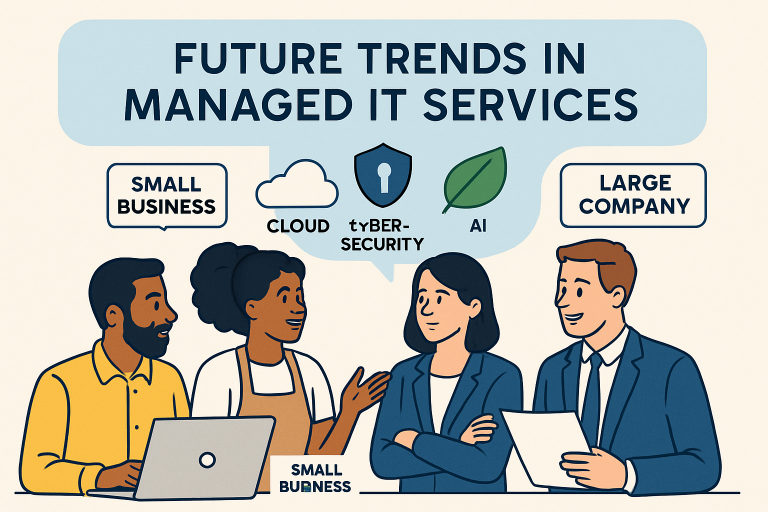
Managed IT services were once the realm of large enterprises, but small and medium-sized businesses increasingly turn to MSPs to achieve enterprise-level IT outcomes at an accessible cost. Tailored service packages enable SMBs to adopt sophisticated IT solutions that grow with their evolving needs. By outsourcing IT management, SMBs gain access to advanced expertise, robust cybersecurity, and future-ready infrastructure—all without burdening internal resources. This trend empowers smaller companies to innovate, compete with larger rivals, and future-proof their investments.
Platform Consolidation
The complexity of modern IT environments has driven demand for unified platforms that simplify and centralize management tasks. MSPs now consolidate monitoring, security, data backup, and collaboration into single management interfaces. Centralization not only reduces the risk of human error but also enables faster troubleshooting, better integration, and enhanced visibility. For businesses, this streamlined approach leads to responsive IT support and a more cohesive overall technology strategy.
Sustainability and Green IT Practices
Environmental sustainability is a growing concern for businesses and their stakeholders. MSPs are adopting green IT practices such as energy-efficient server management, e-waste reduction, and the adoption of renewable energy sources. Sustainable IT operations not only reduce carbon footprints but also support corporate social responsibility goals and meet consumer expectations for eco-friendly business practices. By prioritizing green initiatives, managed IT service providers are playing an important role in helping build a more sustainable technology industry.
Final Thoughts
The managed IT services sector is set for remarkable change over the next decade. By understanding emerging trends such as AI, edge computing, cybersecurity, and sustainability, organizations can make informed decisions and partner with forward-thinking MSPs to ensure they remain secure, resilient, and competitive in a digital-first world.