NEWS
Regular Inspection Checklists to Maintain Ladder Safety Over Time

Key Takeaways
- Ladders are widely used but pose significant safety risks if neglected.
- Regular inspections help prevent accidents and maintain compliance.
- A structured process fosters a culture of safety in any workplace.
- Early detection of wear and tear can stop failures before they happen.
Introduction
Ladders are essential for various industries, from warehouse operations and construction sites to routine maintenance and DIY home projects. Their utility is undisputed, yet this very ubiquity comes with risk: ladders are among the most common causes of workplace falls and serious injuries. This makes regular safety inspections and ongoing maintenance a critical part of any environment where ladders are used. Organizations can dramatically reduce ladder-related incidents by following comprehensive inspection checklists and guidance, such as that found at Platforms and Ladders and ensure their workforce remains protected. Implementing structured ladder inspections is not just about checking off a list–it’s about fostering a culture of safety, meeting compliance requirements, and catching wear and tear before it results in a dangerous failure. Whether overseeing a large construction crew or handling facilities upkeep, a reliable ladder inspection process must be built into your routine.
Why Regular Ladder Inspections Are Essential
Ladders are built to last, but repeated use, improper handling, and environmental factors can all contribute to their degradation over time. Frequent inspections are the first defense against latent hazards such as structural weaknesses, missing parts, and worn-out components. The CDC highlights that the lack of routine inspection substantially increases the risk of catastrophic ladder failure, underscoring the need for robust safeguards in every workplace.

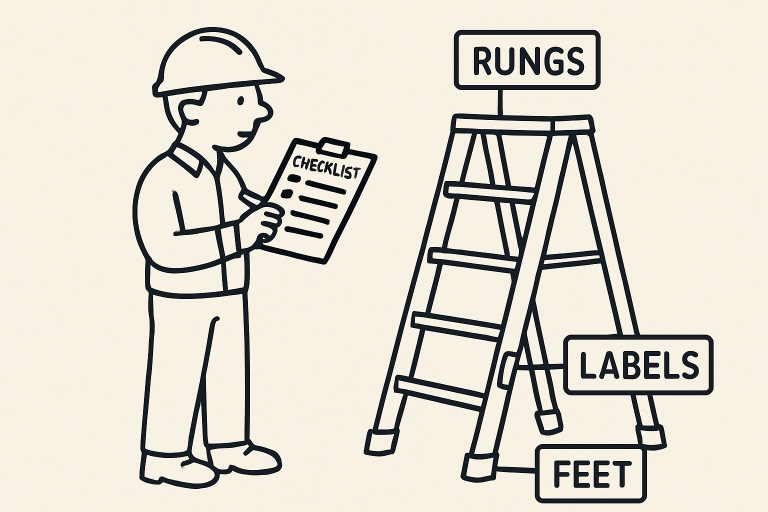
Documenting all findings—potential issues and passes—provides a valuable log that management can refer to over time. This ongoing record is also useful in demonstrating OSHA compliance and protecting organizations in the event of an incident investigation.
Key Components of a Ladder Inspection Checklist
To build an effective inspection routine, each session should cover the following critical checkpoints:
- Structural Integrity: Inspect rails and steps for visible cracks, dents, bends, or other signs of physical damage. Structural compromise, even if minor, can severely reduce the ladder’s load-bearing capacity.
- Rungs and Steps: Each rung and step should be securely attached and free of wear or slick buildup. Pay special attention to loose or missing fasteners.
- Feet and Base: Ensure that anti-slip feet are in good condition and firmly attached. Worn-out or unstable bases create a tipping hazard and reduce traction on smooth or oily floors.
- Labels and Markings: All safety labels, load capacities, and manufacturer markings must be legible. Missing or faded labels might render the ladder non-compliant with industry regulations.
How Often Should Ladders Be Inspected?
Inspection frequency is dictated by use case and workplace policy. Still, OSHA standards advise a two-pronged approach: inspect ladders before every use to catch day-to-day damage and conduct a more thorough assessment, at a minimum, periodically by a trained individual. High-traffic work environments may mandate daily or weekly checks, whereas light, intermittent usage might require only monthly reviews.
Common Ladder Hazards to Watch For
Even with regular inspection, vigilance for pervasive hazards is an ongoing necessity. Common ladder risks include:
- Overreaching: Workers often injure themselves by leaning too far to the side, especially on stepladders and extension ladders. Overreaching can cause the ladder to become unstable or tip over entirely.
- Improper Angle: A ladder set at too steep or too shallow an angle is prone to slipping out from under the user. The general recommendation is the 4:1 ratio—1 foot out for every 4 feet in height.
- Slippery Surfaces: Water, oil, or debris on rungs and feet can cause slips, one of the most common causes of ladder falls. Clean ladders regularly and avoid using them on slick flooring.
Implementing a Ladder Safety Program
Comprehensive ladder safety demands an intentional program that spans leadership, team members, and processes. This typically includes:
- Training: All employees should be trained on safe ladder setup, climbing techniques, inspection procedures, and recognizing unsafe conditions.
- Documentation: Keep meticulous records of every inspection, incident, and corrective action. This will not only aid internal safety reviews but also help satisfy OSHA and other regulatory agencies.
- Accountability: Assign specific personnel to oversee and document inspections, ensuring no ladder goes unchecked. Rotate responsibilities as needed to prevent complacency.
Utilizing Digital Inspection Tools
Modern digital solutions bring new efficiency and reliability to ladder safety programs. Digital inspection platforms and mobile checklists, such as SafetyCulture’s, empower teams to document findings in real time, upload photos, and set automated reminders for future checks. These tools streamline compliance and simplify audits, ensuring nothing slips through the cracks.
Final Thoughts
A proactive ladder inspection culture is not just about avoiding regulatory penalties—it’s about prioritizing employee welfare and reducing preventable risk. By using detailed checklists, holding team members accountable, and employing the latest digital tools, organizations can minimize hazards, control liability, and ultimately build safer workplaces where ladders serve their purpose without endangering lives.

