Latest News
Maintaining Excellence in Luxury Marine Craftsmanship

Defining the Bimini Enclosure Kit in Professional Marine Operations
For the discerning yacht owner, a bimini enclosure kit represents a significant upgrade from a simple sunshade, transforming an open deck into a highly functional and protected space. Unlike a standard bimini top, which primarily offers overhead sun protection, an enclosure kit integrates seamlessly with the existing bimini frame to create a comprehensive, weather-resistant environment. It’s a modular system, typically comprising side curtains, aft curtains, and sometimes a windshield connector, all designed to attach to the bimini’s structural frame. This allows for flexible configurations, from partial windbreaks to fully sealed cabins, vastly extending the utility of the vessel. Think of it as creating an additional room on your yacht, complete with windows and doors, ready to face varying conditions.The core difference lies in their purpose and components. A standard bimini top is a collapsible canvas canopy supported by a metal frame, offering shade and minimal rain protection from above. It’s designed for fair weather cruising. A bimini enclosure kit, however, builds upon this foundation. It includes additional fabric panels and clear vinyl windows that zip or snap into place around the perimeter of the bimini, effectively sealing off the cockpit or bridge area. These kits often feature sophisticated frame structures, sometimes utilizing collapsible systems or even zippered tubing sleeves for easy removal and storage. For an in-depth look at how these systems are designed, explore our insights on Custom Enclosure Design.


Distinguishing Enclosures from Standard Bimini Tops
The fundamental distinction between a standard bimini top and a full enclosure kit hinges on their level of protection and adaptability. A standard bimini is a structural frame, often 3-bow or 4-bow, covered with canvas, primarily intended for sun protection. It’s a fair-weather friend, offering limited defense against wind, rain, or cold. Its main function is to provide shade and reduce UV exposure in the cockpit.
In contrast, a bimini enclosure kit elevates this basic structure into a robust weather-shielding system. It encompasses all the elements of a standard bimini but adds integrated panels that attach to the frame, extending coverage both vertically and horizontally. These panels, typically made from marine-grade canvas and clear vinyl, create a barrier against the elements. This means not only superior sun protection but also effective shielding from driving rain, chilling winds, and even sea spray. The structural frames of these enclosures are engineered to support the added weight and wind load of the panels, ensuring stability in more challenging conditions. The panel integration is key; side curtains, aft curtains, and often a windshield connector zip or snap into place, transforming an open space into a protected cabin. This comprehensive cockpit coverage is what truly differentiates an enclosure, providing a versatile environment for extended cruising or adverse weather. For those considering a complete overhaul, understanding the nuances of a Custom Boat Bimini Ultimate Guide can be invaluable.
Varieties of Enclosure Configurations
The versatility of bimini enclosure kits is evident in the wide array of configurations available, each tailored to specific needs and vessel types. These range from minimalist additions to comprehensive, cabin-like structures.
- Half Enclosures: These typically involve side curtains that extend part-way down the cockpit or bridge, offering protection from side winds and spray without fully encapsulating the area. They often marry to an existing bimini, providing a balance between openness and protection.
- Day Enclosures: Designed for short-term use during the day, these often feature clear-view plastic panels (like those from a canvas shop, not always OEM) that provide wind and rain protection while maintaining visibility. They are lighter and quicker to deploy than full camping setups.
- Camping Enclosures: As the name suggests, these are designed for overnight stays or extended periods on the water. They offer full perimeter protection, often including screens for ventilation, and sometimes even privacy panels. These can effectively turn an open deck into a snug cabin, as seen with some offerings that transform open boats into protected spaces. Some manufacturers, like Bennington, offer deluxe camping enclosures, though they are available for about 35% of their models due to gate locations, emphasizing the need for model-specific fitment.
- Privacy Change Rooms: A specialized type of enclosure, these are compact, often 30″x30″x70″ tall, designed to mount under an existing hardtop or bimini. They provide complete privacy for changing clothes or using a portable toilet, a practical luxury on any vessel. Products like the Bimini Privacy Change Room highlight this niche, often made from 100% marine-grade polyester with double-sided zippered entry.
- Bridge Enclosures: For larger yachts, bridge enclosures create a fully protected helm station, allowing captains to operate in comfort regardless of the weather. These are often custom-fabricated, integrating with the vessel’s unique lines and existing structures.
The choice among these varieties depends on the vessel’s primary use, the typical cruising grounds, and the owner’s preference for openness versus protection. Many kits are modular, allowing owners to add or remove panels as conditions dictate, offering unparalleled flexibility. For a broader view of these protective systems, exploring our general Enclosures page can provide more context.
Strategic Advantages of Enclosures for Marine Vessel Maintenance
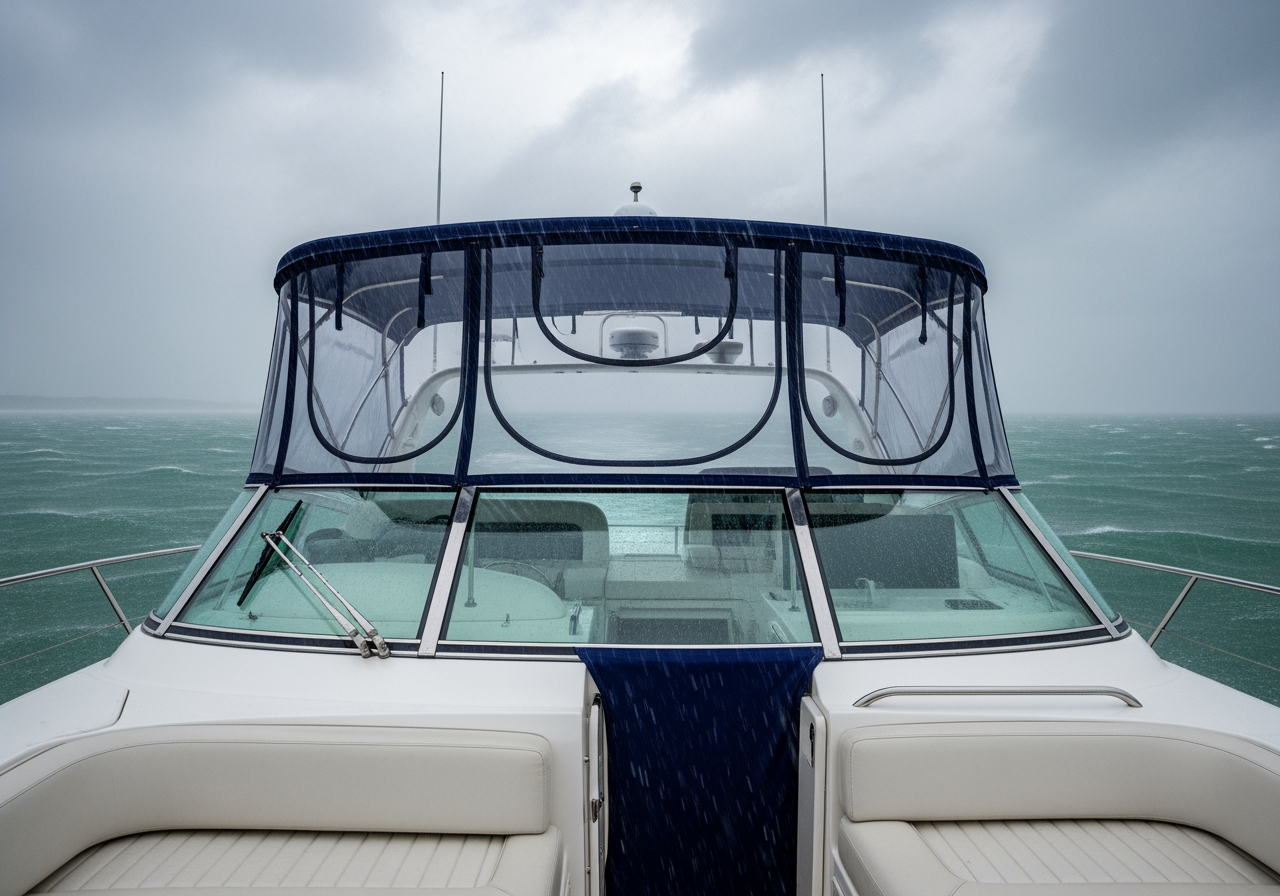

The decision to invest in a bimini enclosure kit goes beyond immediate comfort; it’s a strategic move for proactive marine vessel maintenance and operational longevity. By creating a protected environment, these enclosures act as a first line of defense against the relentless forces of the marine environment. Environmental shielding is paramount, as the enclosure protects sensitive interior components, upholstery, and electronics from direct exposure to UV radiation, salt spray, and precipitation. This significantly reduces the rate of UV degradation on fabrics and plastics, prevents moisture ingress that can lead to mold and mildew, and mitigates the corrosive effects of salt on hardware and electrical systems.
The benefits extend to enhancing the vessel’s utility. Enclosures facilitate season extension, allowing owners to enjoy their boats earlier in spring and later into fall, regardless of cooler temperatures or inclement weather. They provide effective climate control, trapping warmth on chilly days and offering a shaded, cooler retreat in hot climates. Furthermore, the reduction in direct sun and moisture exposure translates directly into reduced wear and tear on the boat’s interior, preserving its aesthetic appeal and resale value. This proactive approach to protection is a critical component of effective Luxury yacht canvas maintenance, ensuring that every component of your vessel remains in pristine condition.
Proactive Marine Vessel Maintenance for Canvas Longevity
Maintaining the longevity of your marine canvas and its associated hardware is crucial for ensuring the sustained performance and aesthetic appeal of your bimini enclosure. A well-maintained enclosure not only provides superior protection but also extends the life of the materials themselves.
One of the primary considerations is fabric tension. Properly tensioned canvas prevents flapping, which can lead to premature wear, tearing, and stress on stitching. Regular checks to ensure the canvas is taut, but not overstretched, will minimize these issues. This also helps maintain the enclosure’s shape and prevents water pooling.
Hardware corrosion is another significant concern in the marine environment. Stainless steel frames and fittings, while marine-grade, are not immune to corrosion, especially in saltwater. Regular rinsing with fresh water and periodic application of protective waxes or polishes can prevent pitting and rust. Similarly, zipper lubrication is essential. Marine zippers are heavy-duty, but salt crystallization and dirt can make them stiff and difficult to operate, leading to breakage. Specialized zipper lubricants or waxes should be applied regularly to ensure smooth operation and prevent premature failure.
The clear vinyl clarity of the windows is vital for visibility and safety. Clear vinyl, such as Strataglass or O’Sea polished vinyl, is designed to be UV, scratch, and chemical resistant, but it still requires gentle care. Abrasive cleaners or cloths can cause scratches and dullness. Using recommended marine vinyl cleaners and protectants will help retain clarity and flexibility, preventing yellowing and cracking over time.
Finally, thread integrity is often overlooked. Even the most durable fabrics are only as strong as their seams. Marine-grade threads like Gore Tenara PTFE are designed to outlast the fabric, but constant UV exposure and stress can degrade them. Regular inspection for frayed or broken stitching can help identify areas needing repair before they become larger problems. Addressing these small issues proactively ensures the entire enclosure system remains robust and functional for years to come. For specific concerns about canvas care, our guides on Boat Enclosure Kit maintenance can offer further assistance.
Enhancing Vessel Utility and Privacy
Beyond elemental protection, bimini enclosures significantly enhance a vessel’s utility and offer crucial privacy, transforming an open deck into a multi-functional space.
Privacy panels are a key feature, allowing boat owners to create secluded areas for relaxation, changing, or dining without being exposed to onlookers at the dock or in crowded anchorages. These panels can be integrated into the main enclosure or added as optional accessories, often made from opaque marine fabric that matches the main canvas.
Screen inserts are invaluable for ventilation and insect protection. Many enclosure designs incorporate zippered or removable screen panels that can replace clear vinyl windows, allowing fresh air to circulate while keeping pests out. This is particularly beneficial in warmer climates or during evenings when insects are prevalent. The ability to swap between clear vinyl and screens offers flexible comfort.
U-zip windows are a common and highly practical feature. These clear vinyl windows have zippers that allow them to be partially or fully opened, creating vents or walk-through access points without needing to remove the entire panel. This modularity provides quick control over airflow and interaction with the outside environment.
Some advanced enclosures even facilitate solar panel integration. The sturdy frame of a bimini enclosure can be an ideal platform for mounting flexible solar panels, providing a discreet way to generate auxiliary power without cluttering other deck spaces. This integration requires careful planning to ensure proper support and wiring, but it offers a sustainable energy solution.
Finally, support pole stability is critical for both utility and safety. Accessories like adjustable support poles or shade pole kits ensure the canvas remains taut and stable, especially when additional weight from solar panels or wind pressure is a factor. These poles prevent sagging and improve the overall structural integrity of the enclosure, ensuring it stands firm in various conditions. For ideas on extending your boat’s shade, consider exploring solutions for a Boat Bimini Extension.
Material Engineering and Technical Specifications for Yacht Enclosures
The performance and longevity of a yacht enclosure are intrinsically linked to the quality and engineering of its materials. In the harsh marine environment, only specialized, marine-grade components can withstand constant UV exposure, saltwater, wind, and temperature fluctuations.
For the canvas itself, industry-leading fabrics like Sunbrella, Stamoid, and Recacril are preferred. These acrylic or polyester-based materials are renowned for their exceptional UV resistance, colorfastness, and breathability, preventing mold and mildew. Stitching is equally critical, with Gore Tenara thread being the gold standard. This PTFE (polytetrafluoroethylene) thread is virtually impervious to UV degradation, chemicals, and saltwater, often outlasting the fabric it holds together.
Clear visibility is achieved through advanced vinyl and polycarbonate options. Strataglass is a popular choice, available in various gauges, typically 30-gauge vinyl for smaller boats and 40-gauge vinyl for larger vessels, offering superior clarity and scratch resistance. For the ultimate in optical clarity and impact resistance, Makrolon AR polycarbonate is sometimes used, especially in high-stress areas. These clear materials often feature u-zips and sliders for easy opening and ventilation.
The structural integrity of the enclosure relies on its frame. Stainless steel tubing, often 1-inch or 1 ¼-inch, is standard, with double-walled frames providing enhanced rigidity and corrosion resistance. These frames are secured to the deck with robust hardware, including 1-inch nylon webbing straps, or upgraded to stainless steel for maximum durability. Components like 316 stainless steel clips and fasteners ensure resistance to corrosion. Adjustable tensioning systems, such as Camcleat systems or Railblaza Star ports for inflatable boats, allow for precise fitment and stability. The meticulous selection and combination of these materials are what define a truly marine-grade enclosure.
Selecting Fabrics for Harsh Marine Environments
The choice of fabric for a yacht enclosure is paramount, as it directly impacts the system’s durability, protective capabilities, and aesthetic longevity in the challenging marine environment. Several key properties define a suitable marine-grade fabric:
- UV Resistance: This is perhaps the most critical factor. Fabrics like Sunbrella, Stamoid, and Recacril are specifically engineered to withstand prolonged exposure to intense ultraviolet radiation without fading, degrading, or losing tensile strength. Inferior fabrics will quickly become brittle, discolored, and prone to tearing.
- Waterproof Ratings: While “waterproof” is often used, many marine fabrics are technically highly water-resistant or have excellent hydrostatic head ratings. They are designed to shed water effectively, preventing ingress into the cockpit. Some, like Stamoid, are 100% waterproof, while others achieve this through coatings or tight weaves.
- Breathability: Crucial for preventing mold and mildew, breathable fabrics allow air to circulate, reducing condensation build-up within the enclosed space. This helps maintain a healthier interior environment and prevents unpleasant odors.
- Colorfastness: High-quality marine fabrics retain their vibrant colors over years of sun exposure, resisting fading that can make a vessel look aged and neglected. This contributes significantly to the yacht’s overall appearance.
- Tensile Strength: The fabric must be strong enough to withstand wind loads, tension from the frame, and general wear and tear without stretching, tearing, or deforming. This ensures the enclosure maintains its shape and structural integrity even in gusty conditions.
Manufacturers like Sunbrella are industry leaders, offering a wide array of colors and textures, all backed by extensive warranties due to their proven performance. When selecting fabrics, consider the specific climate and usage patterns of the yacht to ensure the optimal balance of protection and longevity.
Hardware and Fastener Standards
The integrity of any bimini enclosure system is only as strong as its weakest link, and in the marine environment, this often refers to the hardware and fasteners. Using components that meet stringent marine-grade standards is non-negotiable for safety, durability, and corrosion resistance.
316 stainless steel is the industry benchmark for all metal hardware, including frames, snaps, screws, and fittings. This alloy contains molybdenum, which significantly enhances its resistance to corrosion, particularly in saltwater and chloride environments, far surpassing the capabilities of 304 stainless steel. Frames are often constructed from 1-inch or 1 ¼-inch 316 stainless steel tubing, with double-walled construction for added rigidity on larger vessels.
Camcleat systems are frequently employed for tensioning ropes and straps, allowing for quick and secure adjustments of the enclosure panels. These provide a reliable grip on lines, preventing slippage even under load. For specialized applications, such as inflatable boats, mounting systems like Railblaza Star ports offer versatile and secure anchor points for bimini poles and other accessories.
Heavy-duty zippers are another critical component. Marine zippers are typically made from durable plastic (like YKK Vislon) or corrosion-resistant metals, designed to withstand UV exposure and salt crystallization. They often feature large teeth and sliders for ease of use and longevity. The use of basting tape during fabrication ensures precise alignment and strong seams for these zippers.
All fasteners, including snaps, grommets, and screws, must also be marine-grade. Snaps are usually made from brass with a nickel or stainless steel finish to resist corrosion and provide a secure attachment point for the canvas to the boat hull or existing structures. The cumulative effect of using such high-quality hardware and fasteners is an enclosure system that c

