NEWS
Key Design Elements of a Safe and Efficient Parking Lot

Key Takeaways
- A well-designed parking lot improves traffic flow, safety, and overall user convenience.
- Proper layout, space dimensions, and clear signage help reduce accidents and confusion.
- Accessibility features and ADA-compliant spaces ensure inclusive access for all users.
- Effective lighting, drainage systems, and sustainable materials enhance safety and environmental performance.
- Regular maintenance keeps the parking lot safe, functional, and visually appealing over time.
Introduction
Creating a parking lot that balances safety and efficiency involves more than drawing lines on pavement. An effective design enhances user convenience, reduces accident risks, and fosters a positive impression for visitors. For businesses and property managers, high-quality parking solutions are a critical aspect of customer satisfaction and operational success. In places like parking lots North Augusta, SC, careful attention to layout and features improves overall traffic flow and parking safety.
A superior parking lot design reflects a deeper commitment to community well-being and property value. Thoughtful planning can accommodate different vehicle types, pedestrian needs, and environmental concerns, laying the foundation for a secure environment. Drivers and pedestrians both benefit from intuitive, accessible spaces, leading to fewer incidents and a more welcoming experience.
Safety considerations extend into compliance with local and federal regulations, such as ADA requirements and sustainable design practices. Access routes, lighting, and clear signage are fundamental ingredients in any modern parking facility. With proper execution, the parking experience becomes seamless for everyone involved.
Moreover, investing in effective parking infrastructure pays off by reducing maintenance costs, limiting liability risks, and extending the facility’s lifespan. Each of these aspects supports the property’s ongoing reliability and reputation in the eyes of customers and stakeholders.
Optimal Layout and Traffic Flow
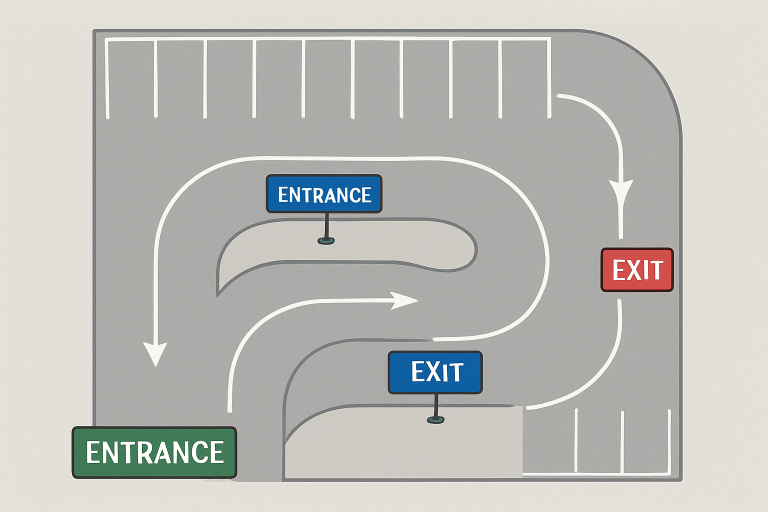
A successful parking lot is easy to navigate and minimizes the possibility of traffic jams or accidents. An optimal layout starts with clear, separate entrance and exit points marked with visible, easy-to-read signage. This eliminates bottlenecks and helps guide vehicles in and out smoothly. Dedicated traffic lanes further assist drivers in finding their way while keeping through traffic away from parked vehicles, thereby reducing the risk of collisions.
Additionally, using gentle curves rather than abrupt turns can reduce the likelihood of fender benders and ensure that even large vehicles can navigate easily. These subtle design choices can substantially enhance both safety and efficiency.

Appropriate Parking Space Dimensions
Standardization in parking space sizes is key to orderly parking and helps accommodate a range of vehicles, including compact cars, SUVs, and accessible vans. The dimensions of standard spaces generally range from 8.5 to 9 feet wide by about 18 feet long, providing most drivers with enough space to park and open doors without difficulty. Accessible parking spots are typically wider and feature adjacent access aisles, fulfilling accessibility requirements and making movement easier for those with mobility challenges.
The width of driving lanes is also significant. In two-way lane configurations, lanes around 24 feet wide enable safe maneuvering, while one-way lanes can be narrower, especially with angled spaces. These measurements maintain safe sightlines and facilitate uncomplicated navigation around the lot.
Accessibility and Inclusion
Meeting ADA standards is an obligation and a meaningful demonstration of inclusivity. Strategically placing accessible parking spaces near building entrances and along clear pedestrian routes provides equal convenience to everyone. Marked access aisles next to these spaces offer the extra room needed for ramps and mobility aids.
It is imperative to use prominent signage to indicate accessible routes and entrances. These features not only help individuals with disabilities but also benefit families with strollers, elderly passengers, and anyone who needs a little extra space to move safely.
Effective Lighting and Signage
Lighting plays a vital role in safety, both by eliminating tripping hazards and deterring criminal activity. Modern lots commonly use LED lighting for its brightness and efficiency. Fixtures should be distributed to provide even illumination, avoiding dark corners that can obscure obstacles or threaten security.
Well-lit signage and visible pavement markings further improve navigation. Signs should be large, legible, and reflective whenever possible, guiding drivers to entrances, exits, and designated areas such as fire lanes or reserved spaces.
Drainage and Environmental Considerations
An effective drainage system prevents water from pooling, which can lead to slip hazards and degrade pavement integrity. Incorporating features like angled surfaces, stormwater inlets, and gutters ensures rainwater is swiftly removed from traffic areas. To address sustainability, many modern lots use permeable pavements, which let water filter through to the underlying soil, reduce runoff, and improve groundwater recharge.
These environmental considerations help mitigate flooding risks, protect adjacent infrastructure, and show a commitment to responsible property management.
Regular Maintenance and Upkeep
Maintenance protects both the investment and the safety of all users. Routine inspections help catch issues like cracks, potholes, and faded markings before they escalate into more costly or hazardous problems. Swift repairs of surface damage preserve smooth traffic flow and prevent trips or falls.
Periodic upgrades to lighting and signage ensure your lot remains compliant with the latest safety standards and continues to provide a positive experience. Maintenance strategies should include seasonal checks and prompt responses to emerging wear or damage, maintaining a professional appearance and dependable service.
Final Thoughts
Thoughtfully designed parking lots are indispensable for user safety, convenience, and the reputation of any public or private facility. Focusing on accessible, well-lit, and intuitively designed spaces elevates both functionality and user satisfaction, while attention to drainage, maintenance, and inclusive access upholds safety and compliance. By prioritizing these elements, stakeholders create an environment that is both practical and welcoming.

