NEWS
How to Prevent Pool Leaks in Hot Climates: Essential Tips for Homeowners

Maintaining a swimming pool in hot climates can be challenging due to elevated temperatures and intense sun exposure, both of which can increase the risk of pool leaks. Regular vigilance and care are critical for enjoying a worry-free swimming season. One key strategy is knowing when to contact pool technicians for a thorough inspection or repair, ensuring your pool stays in good condition even under extreme conditions.
Hot climates accelerate wear on pool surfaces and equipment, increasing the likelihood of water loss through undetected leaks. Identifying and addressing issues early can help homeowners avoid unnecessary expenses and water wastage. Environmental factors, combined with high usage during warm weather, make it even more crucial to implement effective leak prevention measures and routine maintenance schedules.
Another crucial aspect is understanding the signs of water loss and distinguishing between normal evaporation and a potential leak. By equipping yourself with the right knowledge, you can spot problems early and take action before they escalate. If you suspect a leak but cannot pinpoint its source, consulting a professional is often necessary.
Experts, such as a leak detection company can conduct accurate assessments, ensuring that hidden issues are resolved before causing significant damage to your property.
Understanding Evaporation vs. Leaks
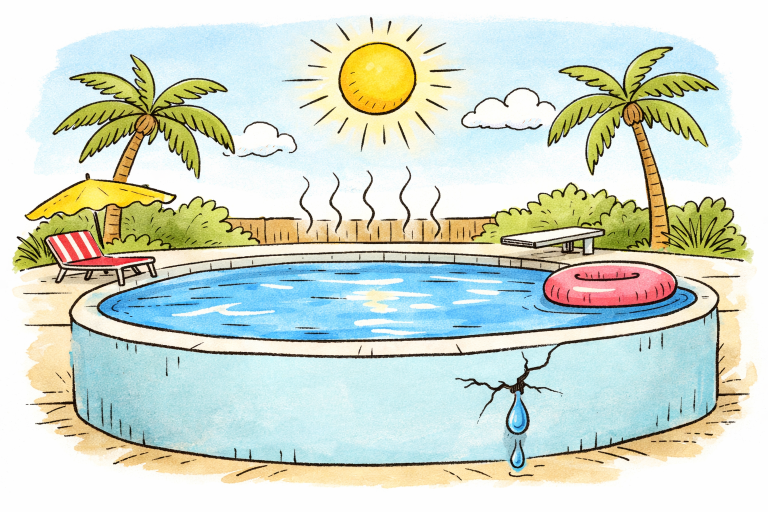
In hot weather, some water loss from your pool is inevitable due to increased evaporation. During summer, it is common for pools to lose between one-quarter and one-half inch of water daily just from evaporation. Higher temperatures, windy conditions, and low humidity all contribute to this process. If you notice your pool losing more than one inch of water each day, this could indicate a leak instead of normal evaporation. Monitoring these patterns closely helps determine when action should be taken.
Common Causes of Pool Leaks
- Structural Damage: Prolonged temperature stress can cause cracks in the shell or around tiles and joints, which then become pathways for water escape.
- Plumbing Issues: As underground pipes expand and contract, leaks may develop in suction or return lines, pump seals, or connections.
- Equipment Malfunctions: A malfunctioning filter, heater, or chlorinator can also create conditions for water to leak away from the pool system.
- Ground Movement: Repeated cycles of drought and rain may shift the soil beneath your pool, stressing the structure and causing separations.
Understanding these causes is essential for choosing the right preventive strategies. For additional information on causes and prevention, review this in-depth guide on pool leak sources from Bob Vila.

Detecting Pool Leaks
The “bucket test” is a simple yet effective way to determine if you are experiencing a leak:
- Fill a bucket with pool water and place it on a step so its rim sits above the water line. Ensure water levels inside and outside the bucket are the same.
- Mark both the bucket’s interior water line and the pool’s water line.
- After 24 hours, compare both. If the pool water level dropped more than the bucket’s, a leak is likely present.
Beyond this test, keep an eye out for wet spots near the pool, cracks on the pool deck, or a surge of air bubbles in the filtration system. These are all early signs that should not be ignored. Early leak detection allows for timely repairs and reduces further structural or equipment damage.
Preventive Maintenance Tips
- Regular Inspections: Routinely examine the pool walls, floor, and adjacent structures for cracks or discolorations.
- Chemical Balance: Regularly monitor and adjust pool chemistry to prevent materials from breaking down prematurely due to imbalanced water or excessive chlorination.
- Water Level Monitoring: Track your pool’s water level from week to week, especially after periods of heavy use or heat.
- Sun Protection: Use pool covers regularly to minimize evaporative loss and shield surfaces from ultraviolet rays, which can degrade the pool materials.
Adopting these practices helps maintain pool integrity over time, which is particularly important in climates constantly exposed to harsh sunlight and temperature extremes.
When to Call a Professional
If you have difficulty locating a suspected leak or if the potential repairs appear complex, it is best to consult a certified specialist. Professionals use advanced technology and experience to detect the source efficiently, minimizing disruption to your pool. Fast intervention can prevent minor problems from turning into expensive repairs. When considering outside help, always verify that the technicians use current leak detection technology for optimal results.
Conserving Water in Hot Climates
Reducing water loss goes beyond just fixing leaks. Make use of pool covers whenever your pool is not in use, and turn off any water features such as fountains or waterfalls during peak evaporation periods. Adjusting heater settings can also help reduce evaporation, leading to conservation of both water and energy. Many experts recommend adhering to the EPA’s Pool Water Efficiency Guide for comprehensive conservation strategies.
Conclusion
Preventing pool leaks in hot climates is an ongoing responsibility that involves proactive inspections, maintenance, and prompt repairs. By keeping up with best practices and seeking professional assistance as needed, homeowners can protect their investment and optimize the enjoyment of their pool throughout the hottest months of the year.

