NEWS
How Community Solar Projects Are Revolutionizing Access to Clean Energy

Community solar projects are dramatically altering how individuals, businesses, and entire communities access the benefits of renewable energy. People can now collectively invest in a shared solar installation rather than being limited by individual rooftops or personal financial capability. This model is particularly impactful in regions like Nigeria, where initiatives such as those led by the Incorporated Trustees of Advocates of Solar Panels Association (ITASPA) make solar energy available to those previously excluded due to cost or unsuitable property. By sharing both the financial investment and the energy output, these projects ensure that even residents who cannot install panels on their homes can still enjoy the advantages of clean, affordable electricity. Community solar is closing the historical gap between renewable energy availability and the everyday people and businesses who need it most, no matter their location or economic status.
The growing popularity of community solar projects Nigeria is helping to level the playing field across energy markets, making renewable energy more accessible and equitable than ever. No longer are solar-powered savings restricted to those with optimal roof space or substantial capital. Instead, more individuals and organizations are empowered to claim a share in their local solar farm or installation and start benefiting almost immediately. By democratizing access to clean energy, these community initiatives are advancing environmental goals and generating economic uplift, creating good-paying jobs, and strengthening local economies. As more communities become stakeholders in the transition to renewables, the movement towards a more sustainable and resilient energy system accelerates, ensuring that these solutions genuinely serve the interests of all, not just a privileged few.
Understanding Community Solar
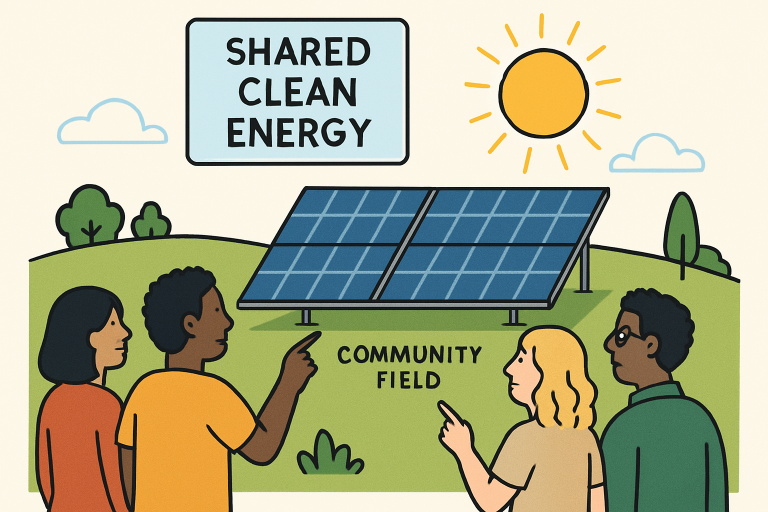
At its core, community solar—also known as shared solar or solar gardens—is an innovative model that allows multiple participants to benefit from a single, centrally located solar array. Instead of requiring every household or business to have its panels, a utility-scale solar system is installed in a suitable area, and the generated power is shared among subscribers. Importantly, these participants don’t need to be property owners or have an ideal solar roof; renters, low-income households, and small businesses can all participate. Typically, subscribers receive credits on their utility bills via “virtual net metering,” reflecting their share of the power produced by the project. This arrangement eliminates many obstacles that have long prevented wider solar adoption and expands the circle of who can participate in—and profit from—the clean energy transition.
In addition to lowering practical barriers, community solar projects foster collaboration and shared responsibility for local sustainability. This approach encourages groups of neighbors, community organizations, and even local governments to become active stakeholders in the shift away from fossil fuels. The shared nature of these projects not only builds social capital, but also makes it easier to develop installations of meaningful size—scaling up impact in ways that individual rooftop systems cannot. As a result, community solar unlocks the promise of clean energy for thousands who might otherwise be left behind in the renewable energy revolution.

Overcoming Traditional Barriers to Solar Adoption
Despite steady declines in the cost of solar panels, significant barriers have persisted for many potential users. The hurdles are often not technological, but structural and financial:
- High Upfront Costs: Even after accounting for incentives and tax credits, the initial investment required to install rooftop solar panels remains prohibitive for many families, small businesses, and community organizations.
- Property Ownership Issues: Roughly one-third of U.S. households live in rental properties, and many others are in multi-family dwellings, meaning traditional solar installation is often out of their control. Owners of commercial spaces leased to tenants face similar difficulties.
- Roof Suitability: Many homes and buildings have too shaded, poorly oriented, or structurally inadequate roofs for solar panel installation. Some do not have enough usable area to make a rooftop solar system cost-effective.
Community solar models are specifically designed to address each of these challenges head-on. By pooling resources, multiple households and organizations can split the cost of a centralized solar installation, dramatically reducing the required upfront spending per participant. The shared site also means that no one needs to worry about the suitability of their building. For renters or condo dwellers, joining a community solar project may be the only feasible way to go solar. Community solar democratizes clean energy by decoupling solar access from property ownership and individual system installation, and allows more people, regardless of their living situation, to benefit from sustainable technology.
As a result, the expansion of community solar represents a crucial step toward energy equity, ensuring that everyone, from renters to non-profit organizations, has a clear path to participate in and benefit from the clean energy transition.
Economic and Environmental Benefits
The advantages of community solar stretch far beyond wider access to renewable energy. By making solar power a shared resource, these projects generate positive ripple effects for households, businesses, and entire regions:
- Cost Savings: Community solar subscribers often see lower electricity bills thanks to the energy credits they receive, allowing them to save money each month without investing in a rooftop system.
- Local Job Creation: Building and maintaining community solar projects creates skilled jobs in installation, maintenance, management, and occasionally administration, helping to equip a workforce for the century’s energy transition.
- Environmental Impact: Large-scale adoption of community solar helps decarbonize local energy grids. As more projects come online, they collectively displace fossil-fuel generation, reduce greenhouse gas emissions, lower air pollution, and make communities healthier overall.
The impact can be substantial. According to industry estimates, a single 5-megawatt community solar project, for example, can create $14 million in new local economic activity and support nearly 100 jobs over its lifetime. These projects not only reduce household energy costs—they also strengthen regional economies and stimulate new business opportunities, especially in areas that have struggled with unemployment or a lack of investment.
In sum, the dual promise of meaningful economic development and real environmental progress is a key reason so many policymakers and advocates are now championing community solar.
Case Studies of Successful Community Solar Projects
Around the world, community solar is proving to be visionary, practical, and transformative in various contexts. Here are two examples illustrating its versatility:
Illinois: Green Energy Justice Cooperative
In Illinois, the Green Energy Justice Cooperative launched a series of community solar projects with a mission to advance energy justice. Their three solar installations, totaling 9 megawatts, were deliberately sited in low-income and traditionally underserved neighborhoods. By securing $12.5 million in renewable energy credits, these projects channeled investment directly into communities that needed it most, providing stable electricity pricing and helping address energy poverty. Community members who may have never had access to solar are now direct beneficiaries, showcasing how thoughtful planning and public-private partnerships can make renewable energy accessible and transformative.
Vermont: Boardman Hill Solar Farm
Vermont’s Boardman Hill Solar Farm, a 150-kilowatt project, provides another powerful example. The solar farm is owned and managed cooperatively by its members, emphasizing transparency, democratic control, and community investment. Rather than a for-profit utility, it was designed around the local community’s priorities; members participated in decision-making from the very start, helping to ensure that the benefits—both financial and environmental—flowed equitably back to them. This grassroots-driven approach has inspired other regions to pursue similar models that combine clean energy with community empowerment, making solar power not just an energy solution but a tool for wider social progress.
These case studies highlight that thoughtful design and inclusive governance are critical for maximizing the impact of community solar at the neighborhood or regional level.
Challenges and Considerations
Despite its potential, community solar also comes with hurdles that must be navigated to ensure long-term viability:
- Regulatory Complexities: Every state, province, or country has different rules relating to energy, permitting, and billing. These variances can slow down project approvals, limit participation, or make projects less financially attractive for investors and communities.
- Financial Barriers: While pooling resources helps, many projects still struggle to secure start-up capital, find willing investors, or create sufficient subscriber demand to make the math work.
- Community Engagement: For community solar to thrive, there must be deep, ongoing engagement with participants and stakeholders, including outreach, education, and a transparent approach to project governance and benefits distribution.
Hawaii’s community solar experience is illustrative. Despite a statewide push to make solar available to all, tangled regulations, slow utility processes, and a lack of clear communication have led to sluggish enrollment levels and missed opportunities. This experience underlines the critical importance of having clear, transparent processes; well-designed subscriber management; and genuine grassroots engagement if community solar is to fulfill its promise.
The Future of Community Solar
Community solar stands at the leading edge of building an inclusive, modern energy economy as the urgency to decarbonize grows. Supportive policies across the U.S. and internationally are being developed to further remove regulatory and financial obstacles, making it easier to develop new projects and enroll new subscribers. Key areas for future progress include continued simplification of program requirements, expanding incentives that benefit low-income and marginalized communities, and robust community outreach to spread accurate information and generate grassroots support.
In the long term, broader adoption of community solar has the potential to power communities with clean, renewable electricity and deliver tangible benefits: cost savings, improved air quality, energy resilience, and a sense of shared purpose. By learning from successful pilot models and proactively addressing challenges, communities can secure their own energy futures and ensure that the movement to solar energy includes everyone.

