Latest News
Eco-Friendly Building Practices for Modern Construction Projects

With increasing awareness of climate change and resource depletion, the construction industry faces mounting pressure to adopt eco-friendly building methods. Stakeholders from architects to contractors are integrating sustainable strategies to reduce environmental harm, improve energy efficiency, and generate long-term value. Companies like Snyder Construction are leading the way in implementing green solutions that satisfy both regulatory demands and market expectations.
Modern sustainable construction encompasses more than just using green materials—it thrives on holistic approaches involving resource conservation, innovative techniques, and mindful design choices. Advanced technologies and progressive business practices have enabled the construction of buildings that are both eco-conscious and aesthetically appealing, without compromising durability or functionality.
Builders and developers find that prioritizing sustainability delivers multiple benefits. Not only do these practices help protect the planet, but they also lower operating costs, attract eco-minded tenants and customers, and enhance reputational value in an increasingly competitive marketplace.
There has never been a more compelling case for embracing methods that reduce waste, conserve energy and water, and meet rigorous green building certifications. As the construction landscape evolves, the collective commitment to sustainability will continue to shape the industry’s future and set the standard for modern urban development.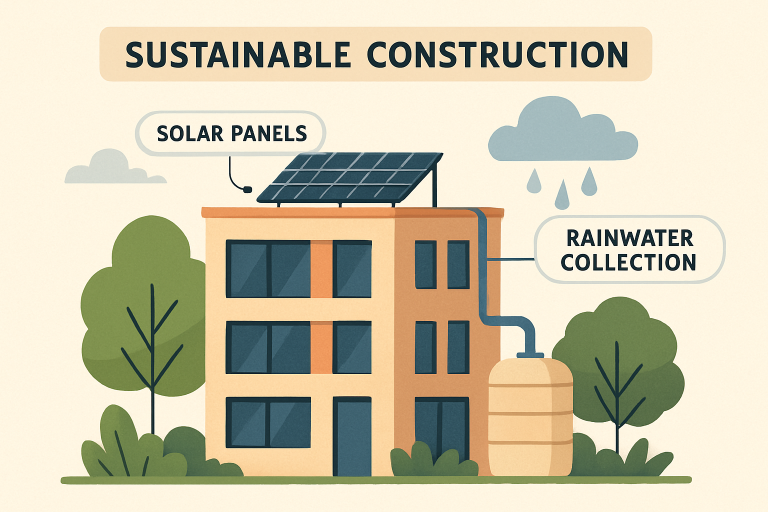

Sustainable Materials
Material selection plays a foundational role in developing sustainable structures, shaping not only the durability and efficiency of a building but also its environmental footprint. According to Construction21, innovative approaches such as using recycled steel, responsibly sourced timber, and low-carbon concrete are helping the industry move toward greener, more resilient practices. These choices not only reduce environmental impact but also enhance energy performance and occupant well-being, making them essential for the future of commercial construction. Today, builders are turning to innovative, responsibly sourced products that minimize environmental footprint:
- Recycled and Upcycled Materials: Reclaimed wood, recycled steel, and other post-consumer materials are now common in new projects. By choosing these resources, construction companies help reduce the accumulation of waste in landfills and spare natural habitats from further exploitation.
- Biodegradable Materials: Products such as bamboo and mycelium-based composites are rapidly renewable and decompose without harming the environment, offering a green alternative to traditional synthetic materials.
Energy-Efficient Designs
Smart design philosophies dramatically reduce the long-term energy demands of buildings. Some leading strategies include:
- Passive Design: Structures are oriented and constructed to harness natural light and ventilation, which lessens reliance on artificial lighting and mechanical heating or cooling. Passive solar gain, high-performance glazing, and super-insulated envelopes are hallmark features.
- Energy-Efficient Appliances: From HVAC systems to lighting fixtures, opting for Energy Star-rated devices and innovative technologies ensures that every kilowatt is used wisely, providing significant savings over the building’s lifetime.
Waste Reduction Techniques
Modern construction projects are redefining site management by prioritizing waste minimization. Notable techniques include:
- Prefabrication: Building modules in controlled, off-site environments reduces unnecessary material wastage and shortens construction timelines. This process enables higher precision while simplifying logistics and handling.
- Deconstruction: Instead of demolition, deconstruction involves carefully dismantling existing structures to salvage valuable materials for reuse, recycling, or donation, thereby reducing landfill loads and material costs.
These waste-reducing approaches don’t just make financial sense—they support a circular economy and foster innovation in supply chain management.
Water Conservation Strategies
In an era of increasing water scarcity, construction projects must address how water is managed and consumed:
- Rainwater Harvesting: Systems for collecting and storing rainfall provide a renewable water source for irrigation, flushing, and other non-potable uses, relieving stress on municipal supplies and saving costs over time.
- Greywater Recycling: Redirecting lightly used water from sinks, showers, or laundry for landscaping or toilet flushing reduces freshwater demand and can make a substantial impact on a building’s water footprint.
Integrating these methods reflects a genuine commitment to stewardship and ensures ongoing benefits for both the environment and occupants.
Green Certifications
Securing notable green certifications validates environmental efforts and demonstrates leadership in sustainability:
- LEED Certification: Widely recognized, LEED measures overall performance—from site selection to indoor air quality—providing a trusted mark of environmental achievement.
- Living Building Challenge: This holistic certification demands net-positive energy and water performance, accountability in material sourcing, and the promotion of biodiversity in and around buildings.
Certification often translates to improved marketability, operational savings, and higher property valuation, reinforcing the business case for sustainability.
Conclusion
Eco-friendly building practices are reshaping the construction landscape for the better. By employing sustainable materials, maximizing energy and water efficiency, minimizing waste, and attaining green certifications, industry leaders are helping set standards for what the built environment can and should be. As construction professionals and communities continue to prioritize these practices, they pave the path for a greener, more resilient, and more valuable future for all.

