
General
Behind the Scenes: Engineering and Innovation in the Portable Sanitation Industry

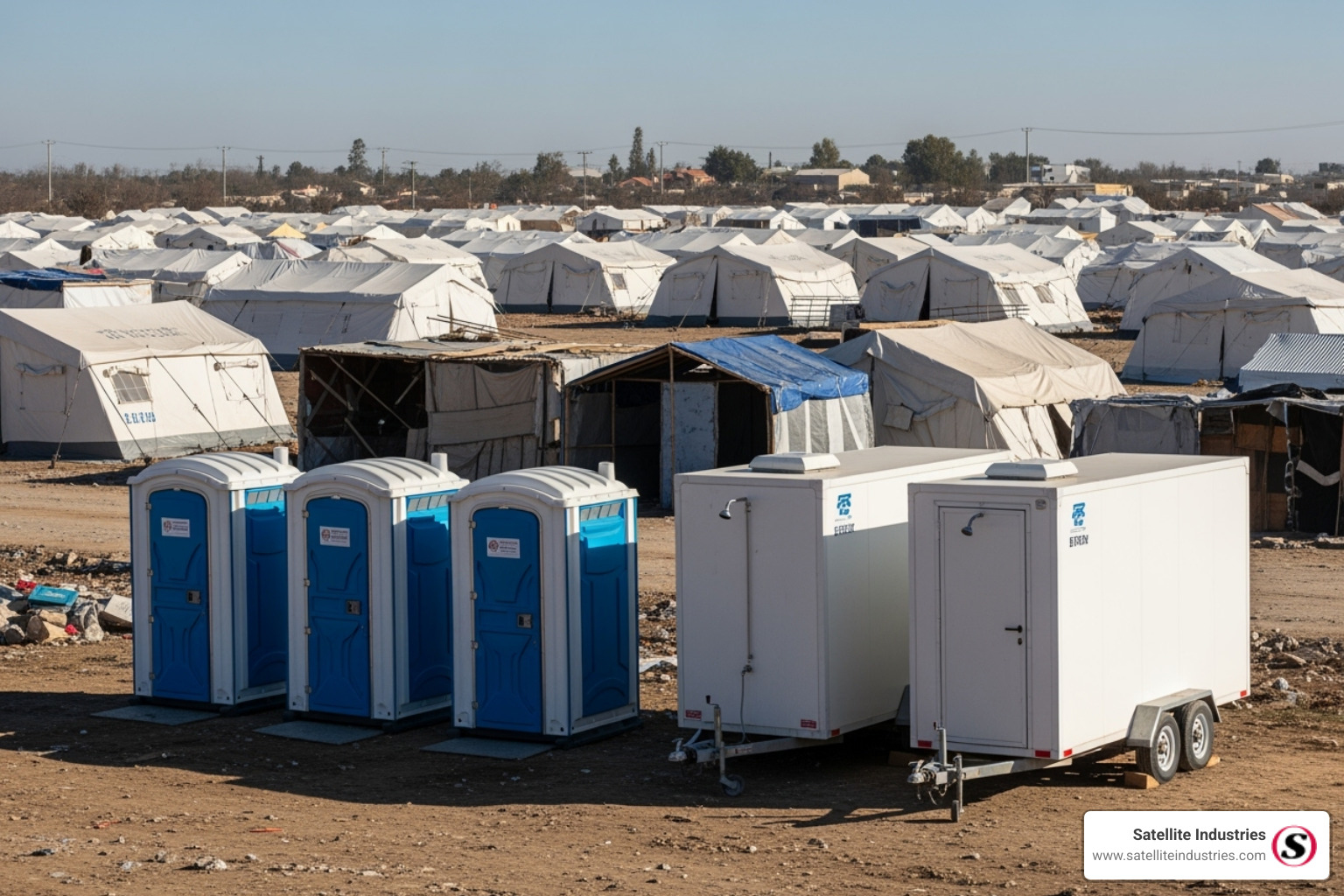
The Core of Durability: Materials and Engineering in the Portable Sanitation Industry
The foundation of any reliable portable sanitation solution, from a robust construction site restroom to a versatile 28-gallon portable RV waste tank, lies in its materials and engineering. Our industry understands that these products must withstand extreme conditions, heavy use, and the rigors of transport, all while maintaining hygiene and structural integrity. This commitment to durability is not accidental; it’s the result of meticulous material science and thoughtful design.
The Science of Modern Polymers
At the heart of many portable sanitation products is High-Density Polyethylene (HDPE). This remarkable polymer is chosen for its exceptional balance of properties. Through advanced manufacturing processes like blow-molding, HDPE can be shaped into seamless, robust structures that are inherently strong and leak-resistant. This process is often favored over rotational molding for its faster cycle times and ability to produce a smoother surface finish, which aids in cleaning. This is crucial for items like holding tanks, where containment is paramount.
We specifically engineer our HDPE to be UV-stabilized. This means it can endure prolonged exposure to sunlight without degrading, becoming brittle, or discoloring. This is achieved by incorporating additives like Hindered Amine Light Stabilizers (HALS) and carbon black into the polymer matrix. These additives absorb harmful UV radiation and dissipate it as low-level heat, preventing the polymer chains from breaking down. For an RV waste tank that might spend hours in direct sun, this UV resistance is vital for longevity. Furthermore, HDPE offers excellent chemical resistance, ensuring that the various waste treatment chemicals (like enzymes and biocides) and cleaning agents (such as bleach, ammonia, and various acids) do not compromise the tank’s integrity over time. The result is a product that maintains its durability, chemical resistance, and structural integrity for years, even under demanding conditions. This scientific approach to material selection and processing ensures that every portable sanitation product, including the ubiquitous 28-gallon portable RV waste tank, is built to last and perform reliably.
Structural Design for High-Traffic Environments
Beyond the material itself, the structural design plays a critical role in the overall resilience and functionality of portable sanitation units. While often associated with portable restrooms, many of these design principles translate directly to other products, such as RV waste tanks. Our engineers use tools like Finite Element Analysis (FEA) to digitally simulate stresses and identify potential weak points, allowing them to create designs that can withstand the stresses of repeated use and transport without adding unnecessary weight.
For instance, features like reinforced corners and strategically placed ribs improve impact resistance, protecting the unit from bumps and scrapes during relocation or accidental impacts. For an RV waste tank, this means the tank can endure being towed or rolled over various terrains without compromising its structure. Thoughtful design also extends to practical elements like oversized, ergonomic integrated handles and robust wheel systems, which are essential for the maneuverability of a full 28-gallon portable RV waste tank, which can weigh over 200 lbs. These wheels are often solid, no-flat designs with sealed bearings to prevent grit and grime from impeding their movement. Even seemingly minor details, such as the placement of large-diameter drain ports for faster emptying and vent caps that allow air to enter for a smooth, glug-free pour, are optimized for ease of use and to prevent spills, contributing to a cleaner and more efficient waste management process.
Enhancing the User Experience
Our commitment to innovation extends beyond mere functionality to significantly improve the user experience. We believe that even the most practical products, like portable waste tanks, should be as user-friendly and comfortable as possible. This involves integrating features that simplify operation, improve hygiene, and reduce common frustrations.
For portable restrooms, this might include spacious interiors, natural lighting, and improved ventilation systems to minimize odors. For RV waste tanks, this translates into design elements that make the unpleasant task of waste disposal more manageable. Consider the integrated ladder hook for convenient storage on an RV ladder, or the large, no-flat wheels with bearings that allow a 28-gallon portable RV waste tank to be rolled like luggage or towed effortlessly. Many tanks now come with a removable tow adapter, further simplifying transport. Accessories like a 3-foot sewer hose and a 15-inch grey water hose are often included, providing everything needed for immediate use. Furthermore, features like integrated tank rinsers—which often feature a series of spray jets to create a vortex effect inside the tank—and low drain holes ensure complete emptying and easy cleaning, significantly reducing the “ick” factor associated with waste disposal. These thoughtful design choices collectively lift the user experience, changing a necessary chore into a more streamlined and less daunting process.
Innovating for Users and Operators: The Future of Portable Sanitation
The portable sanitation industry is dynamic, constantly evolving to meet the changing needs of both end-users and the operators who manage these systems. Our focus on innovation is driven by a dual goal: maximizing user comfort and convenience, while simultaneously streamlining service and maintenance for our operational partners. This forward-thinking approach ensures that our products, including the versatile 28-gallon portable RV waste tank, remain at the forefront of efficiency, hygiene, and environmental responsibility.

Streamlining Service and Maintenance for Operators
Efficiency in service and maintenance is paramount for the portable sanitation industry. For operators, time is money, and any feature that reduces servicing time or effort directly impacts their bottom line. Our engineers design products with this in mind, focusing on ease of access, cleaning, and waste transfer.
For holding tanks, whether integrated into a portable restroom or a standalone 28-gallon portable RV waste tank, smooth interior surfaces are critical. These surfaces, achieved through highly polished molds and optimized molding processes, prevent waste from clinging, making rinsing and cleaning significantly faster and more effective. Integrated tank rinsers, often found in modern designs, allow for thorough flushing without extensive manual intervention. Furthermore, the strategic placement of access points and drain valves ensures quick and complete emptying. For instance, the low-drain hole on the 28-gallon Camco Rhino tank is specifically designed to ensure all contents are discharged, preventing residue buildup. The robust construction and high-quality fittings also reduce leaks and wear, minimizing maintenance calls and extending the product’s lifespan. This includes using durable gasket materials like EPDM rubber, which resists chemical degradation and temperature extremes, ensuring a tight seal for years. These operational efficiencies ultimately translate into better service for the end-user and a more sustainable business model for operators.
The Role of R&D in the Portable Sanitation Industry
Research and Development (R&D) is the engine of innovation in our industry. A Leading portable sanitation innovator will invest heavily in R&D to continuously improve product performance, durability, and user satisfaction. This involves rigorous product testing, from evaluating material strength and UV resistance to assessing performance in extreme temperatures and high-traffic conditions. This testing is not arbitrary; it includes standardized procedures like drop tests from specified heights to simulate accidental drops, hydrostatic pressure tests to guarantee leak-proof performance, and cycle testing of moving parts like wheels and valves to ensure they can withstand thousands of uses.
Our R&D teams gather extensive user feedback, changing insights from real-world applications into design improvements. This feedback is collected through various channels, including operator focus groups, RV owner surveys, and trade show interactions. For example, feedback on the maneuverability of portable waste tanks led to the development of larger, no-flat wheels with bearings and removable tow adapters for the 28-gallon portable RV waste tank, making transport significantly easier. We also explore new material developments, seeking out polymers that offer even greater strength-to-weight ratios or improved chemical resistance. This continuous cycle of research, development, testing, and refinement ensures that our products not only meet but exceed industry standards, providing reliable and efficient solutions for waste management. Our commitment to continuous improvement is a cornerstone of our philosophy, driving us to deliver increasingly effective and user-friendly products.
Sustainability Trends in the Portable Sanitation Industry
Sustainability is no longer a niche concern; it’s a core principle guiding innovation across the portable sanitation industry. We are dedicated to developing products and practices that minimize environmental impact while maximizing resource efficiency. This commitment manifests in several key areas, influencing everything from the materials we choose to the chemicals we recommend.
One significant trend is the adoption of water-saving technologies. For portable restrooms, this includes designs that reduce the amount of water needed for flushing, or even waterless urinals and foam-based sanitizing systems. For products like the 28-gallon portable RV waste tank, this means designing for easy and thorough rinsing to minimize water usage during post-dump cleaning. We actively explore the use of recycled materials in manufacturing, reducing reliance on virgin plastics and diverting waste from landfills. The HDPE used in many of our tanks is inherently recyclable, contributing to a circular economy where old tanks can be shredded, melted, and reformed into new products.
Furthermore, there is a strong emphasis on eco-friendly chemicals. The industry has seen a major shift away from older formaldehyde-based deodorizers towards highly effective enzyme-based or probiotic solutions that are biodegradable and non-toxic. These modern treatments work by accelerating the natural decomposition of waste and neutralizing odors at the source, protecting both users and the environment. To formalize these efforts, many companies now employ Lifecycle Assessment (LCA) methodologies to evaluate the total environmental footprint of a product, from raw material extraction and manufacturing to transportation, use, and end-of-life disposal or recycling. Finally, we consider the entire lifecycle of our products, exploring end-of-life recycling programs to ensure that materials are responsibly managed once a product reaches the end of its functional life. These sustainability trends reflect our industry’s broader responsibility to protect our planet while providing essential sanitation services.