HEALTH
Are Full Mouth Dental Implants Right for You?

Key Takeaways
- Full-mouth dental implants offer a permanent and stable alternative to removable dentures for patients with complete tooth loss.
- They prevent deterioration of the jawbone and help maintain your facial structure over time.
- The procedure requires oral surgery and may involve a significant recovery period.
- A comprehensive assessment by a dental professional is necessary to determine candidacy based on health and oral conditions.
Deciding to replace missing teeth is a pivotal step in restoring both the function and aesthetics of your smile. For many individuals, full mouth dental implants Madison, MS represent a transformative solution, offering durability, stability, and a remarkably natural appearance. This comprehensive guide examines whether full-mouth dental implants are the ideal choice for your oral health, reviewing their primary benefits and the essential factors to consider before making a decision.
From regaining chewing ability to supporting facial bone structure and boosting self-confidence, full-mouth dental implants have helped countless patients enjoy a dramatically improved quality of life. However, the process is not suitable for everyone and comes with both surgical and financial considerations.
Understanding Full Mouth Dental Implants
Full mouth dental implants involve the comprehensive replacement of an individual’s upper and/or lower teeth using a series of strategically placed titanium implant posts. These posts serve as artificial tooth roots, anchoring high-quality prosthetic teeth in place for optimal functionality and stability. Unlike removable dentures, these implants are permanent, which eliminates the discomfort and inconvenience of slippage often experienced with traditional denture appliances.
State-of-the-art dental implant systems are designed to closely replicate the appearance and performance of your natural teeth, enabling you to eat, speak, and smile with confidence. For individuals struggling with the challenges of widespread tooth loss, full-mouth dental implants can offer a life-changing upgrade in oral health and overall well-being.

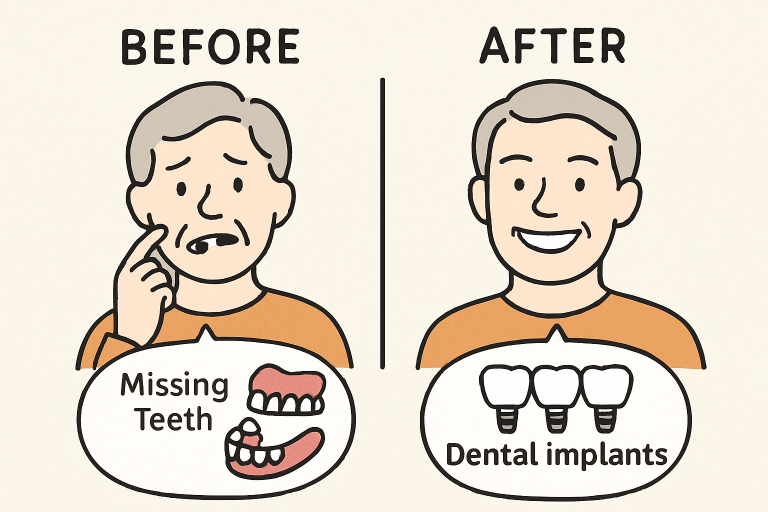
Benefits of Full Mouth Dental Implants
- Stability and Comfort: Unlike removable dentures, full-mouth implants are firmly anchored, allowing for reliable chewing, speaking, and performing daily activities.
- Natural Appearance: Custom-designed prosthetic teeth provide a seamless, attractive appearance that blends seamlessly with your facial features.
- Bone Preservation: The placement of implants stimulates the jawbone, preventing resorption and maintaining the natural contours of your face, as highlighted by the American Academy of Periodontology.
- Improved Quality of Life: Full mouth dental implants enable you to enjoy a full range of foods and restore lost confidence in your day-to-day interactions.
Considerations and Potential Drawbacks
- Surgical Procedure: Obtaining full mouth implants typically requires one or more surgeries for implant placement, followed by an associated healing period. Surgical risks—such as infection or implant failure—must be discussed with your provider.
- Cost: While full mouth implants are a significant initial investment, many patients find them more cost-effective over time compared to the cost of periodic denture replacement.
- Health Requirements: Certain systemic health issues—such as unmanaged diabetes, compromised immune responses, or insufficient jawbone—may reduce eligibility or require preparatory treatment.
Evaluating Your Candidacy
Not everyone is an ideal candidate for full mouth dental implants. A thorough dental and medical evaluation is required, during which your provider will assess several factors, including:
- Your overall health status is crucial to ensure you can heal properly after surgery.
- The state of your oral tissues and gums.
- The quantity and quality of your jawbone (in some cases, bone grafting may be necessary).
- Lifestyle habits, such as tobacco use, can impede healing.
Open communication with a qualified implant dentist is critical to understanding potential risks, expected outcomes, and the realistic timeline for the procedure.
Alternative Options
If full mouth dental implants are not the right fit, several alternatives can restore oral function and aesthetics. These include:
- Traditional Dentures: Removable, custom-fitted appliances that replace all missing teeth in a jaw. While more budget-friendly, dentures may require adjustments and adhesives to improve fit and comfort.
- Partial Dentures: Designed for those missing several—but not all—teeth, these attach securely to remaining natural teeth.
- Dental Bridges: Fixed prosthetics that span gaps created by missing teeth, anchored to neighboring teeth or implants for support.
Reviewing each treatment with your dentist ensures you understand both the potential benefits and limitations of these alternative options.
Final Thoughts
Full-mouth dental implants are an innovative and proven solution for individuals seeking to restore their bite, speech, and appearance after substantial tooth loss. This method can dramatically improve quality of life, but is not suitable for every case. A thorough evaluation by your dental professional, taking into account your health, oral condition, and lifestyle, is crucial. Exploring all your options—including implants, dentures, and bridges—will help you make a decision that supports your long-term wellbeing and satisfaction with your smile.

