Tech
Ultimate SEO Friendly Content Writing Guide 2026


The Foundation of Human-written SEO Content Writing
In the evolving landscape of 2025 and 2026, the bedrock of successful SEO content writing is built upon principles that prioritize both advanced search algorithms and the human reader. At the core of this is E-E-A-T: Experience, Expertise, Authoritativeness, and Trustworthiness. Google’s algorithms have become incredibly sophisticated, moving beyond simple keyword matching to understanding the true value and credibility of content.
E-E-A-T isn’t just a buzzword; it’s a critical framework for evaluating content quality. Experience refers to the author’s first-hand knowledge or life experience with the topic. For instance, someone who has personally used a product or service, or lived through an event, offers a unique perspective that AI-generated content often lacks. Expertise signifies a deep understanding of the subject matter, often demonstrated through qualifications, professional roles, or a track record of insightful contributions. Authoritativeness is about the reputation of the creator and the website as a whole, recognized by others in the industry as a go-to source. Finally, Trustworthiness encompasses the accuracy, honesty, and safety of the content, ensuring users can rely on the information provided.
These factors are especially vital for Your Money or Your Life (YMYL) topics, which include subjects that can significantly impact a reader’s health, financial stability, or safety. For YMYL content, Google demands the highest standards of E-E-A-T, making it imperative that creators demonstrate genuine knowledge and credibility. Our content must not only be accurate but also clearly showcase the credentials and experience behind it.
The goal of search engines is to achieve “Searcher Task Accomplishment” (STA) – satisfying the user’s need completely. This means content must be comprehensive, relevant, and easy to understand. When a user finds what they’re looking for quickly and efficiently, they spend more time on the page, engage with the content, and are less likely to bounce back to the search results. These positive user signals tell Google that our content is valuable.
The shift towards semantic search and natural language processing (NLP) further underscores the importance of quality, human-written content. Google no longer just looks for exact keyword matches; it understands the meaning and context behind queries. This means our writing needs to be natural, comprehensive, and semantically rich, covering related concepts and entities that fully address the user’s intent. It’s about writing like a human for humans, first and foremost, then optimizing for discoverability. This approach ensures that our content resonates with readers while also providing the contextual clues that search engines need to accurately categorize and rank our pages. For truly impactful and authentic online presence, prioritizing Human-written SEO content writing is non-negotiable.
Strategic Keyword Research and Intent Mapping
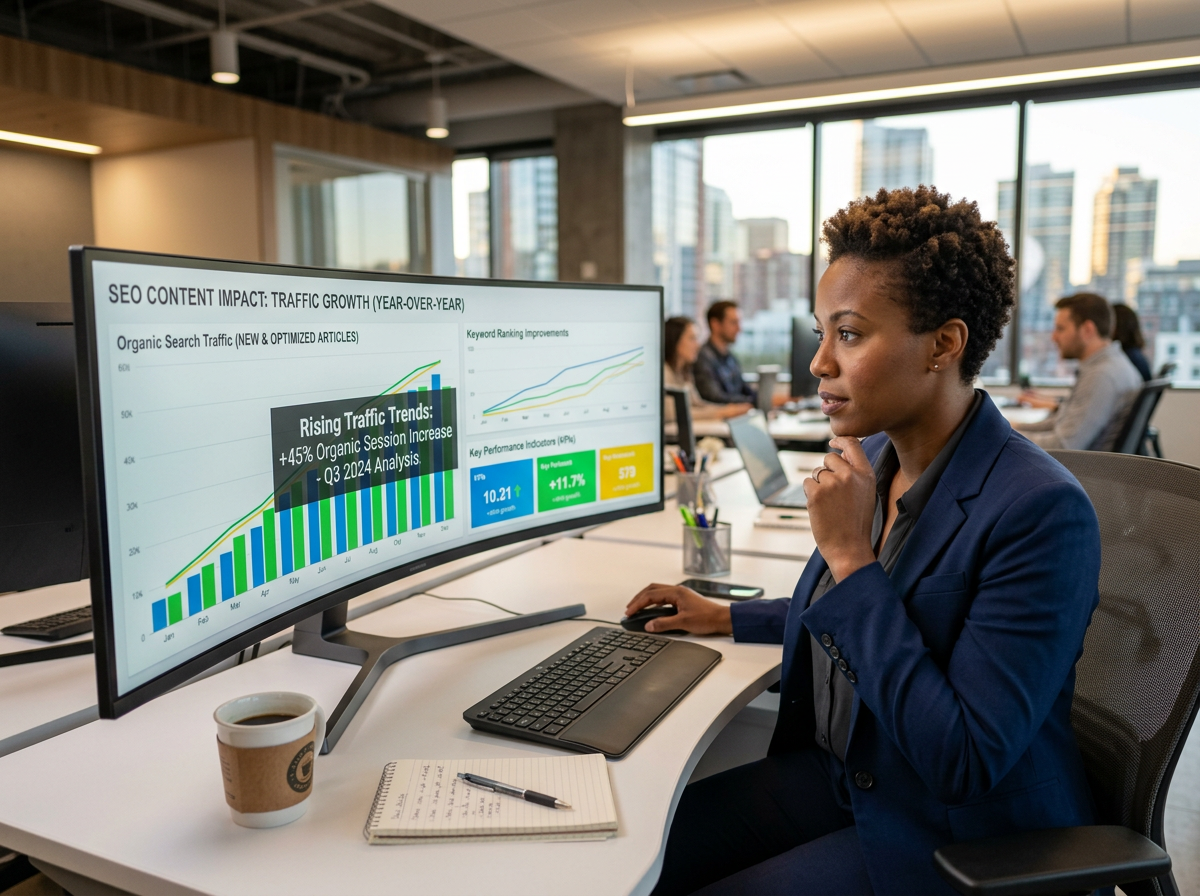
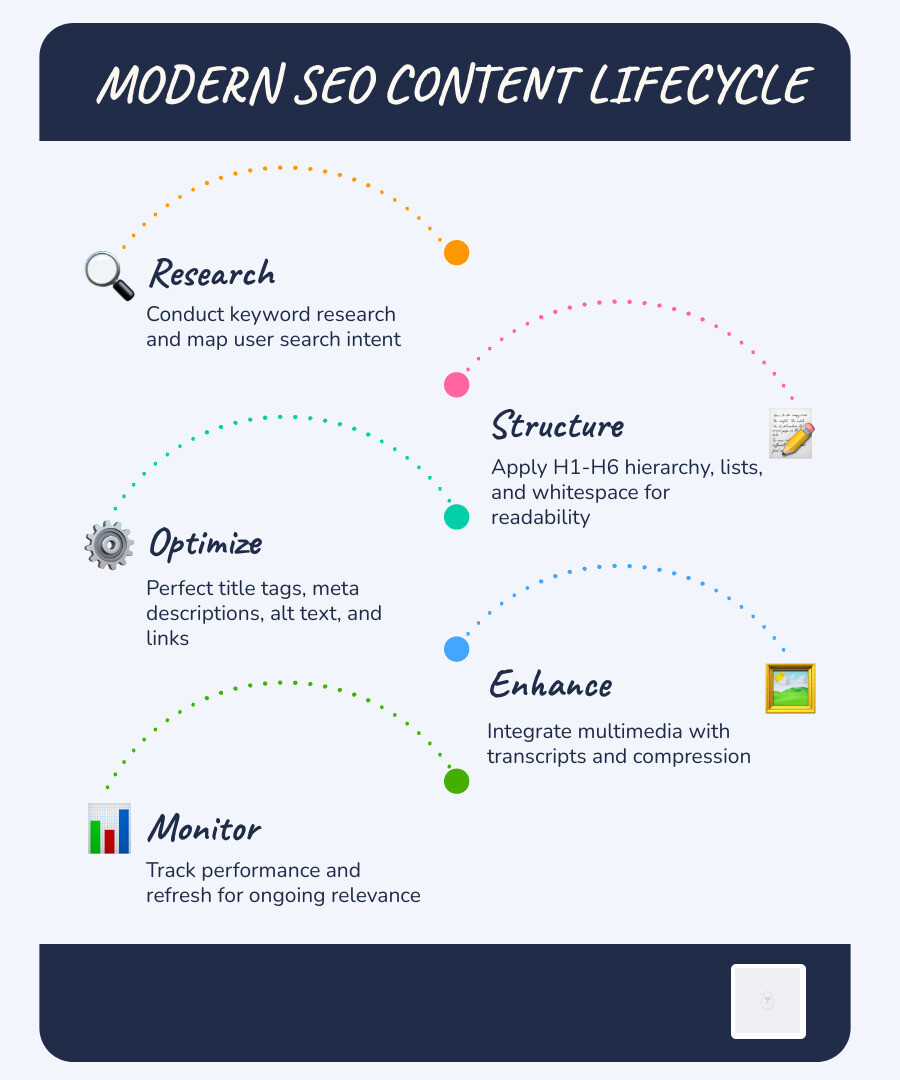
Effective SEO content writing begins long before a single word is typed. It starts with strategic keyword research and a deep understanding of search intent. In 2025/2026, keyword research is less about finding single, high-volume terms and more about uncovering the full spectrum of queries your audience uses, and more importantly, the “why” behind those queries.
We begin by building a “seed list” of keywords. These are the broad terms related to our topic, often generated from brainstorming, industry knowledge, or initial competitor analysis. From this seed list, we expand to identify primary keywords – the main target terms for a specific piece of content – and secondary keywords, which are closely related terms that support the primary keyword and help to build topical depth.
Beyond these, LSI (Latent Semantic Indexing) keywords and semantic terms play a crucial role. These are not just synonyms but words and phrases that are contextually related to our main topic. For example, if our primary keyword is “electric cars,” LSI terms might include “EV charging,” “battery life,” “sustainable transportation,” or “zero emissions.” Incorporating these naturally helps search engines understand the full scope of our content and its relevance to a broader set of queries.
Vertical keywords are also increasingly important. These come from niches closely related to our main topic but might attract a broader, slightly different audience. For instance, if we’re writing about “digital marketing,” vertical keywords could come from related fields like “content strategy for small businesses” or “social media advertising trends.” Sean Si’s insights highlight how vertical keywords can significantly broaden audience reach.
The goal is to move beyond mere keyword density – which should ideally be kept at a natural 1-2% – and instead focus on comprehensive coverage of a topic, using a rich vocabulary that reflects how real people talk and search. This holistic approach to keywords helps us capture the nuanced ways users express their needs.
Decoding Search Intent for Human-written SEO Content Writing
Understanding search intent is perhaps the most critical step in modern SEO content creation. It’s not just about what people type into Google, but why they are searching. Google’s algorithms are designed to satisfy user intent, and content that aligns perfectly with this intent is rewarded with higher rankings and better engagement.
We categorize search intent into four main types:
Search Intent Type User Goal Content Format Examples Query Examples Informational To learn something, find answers to questions. Blog posts, guides, “what is” articles, tutorials, encyclopedic entries “What is SEO-friendly content?”, “How does SEO work?” Navigational To find a specific website or page. Homepage, “contact us” page, specific product page “Jessica Neutz website”, “Amazon login” Commercial To research products/services before buying. Product reviews, comparison articles, “best of” lists, buying guides “Best SEO tools 2025”, “SEO content writing services reviews” Transactional To complete an action, usually a purchase. Product pages, service pages, e-commerce checkout “Buy SEO content writing”, “Hire freelance writer” To decode search intent, we conduct a thorough SERP (Search Engine Results Page) analysis. We look at the types of content currently ranking for our target keywords. Are they blog posts, product pages, videos, or comparison articles? This tells us what Google believes users want to see. We also pay close attention to “People Also Ask” (PAA) sections and related searches, as these reveal common questions and sub-intents.
Matching our content format to the dominant search intent is paramount. If users are looking for a “how-to” guide, a long-form blog post with step-by-step instructions will perform better than a short product description. If they’re seeking product comparisons, a detailed review table will be more effective. Our goal is to ensure searcher satisfaction by providing exactly what they need, in the format they expect, addressing the query’s nuance.
Identifying Content Gaps and Semantic Entities
Once we understand search intent, the next step is to identify content gaps and fully cover the semantic entities related to our topic. This involves analyzing competitor content and recognizing opportunities where we can provide more comprehensive, accurate, or unique insights.
Competitor analysis isn’t about copying; it’s about understanding what’s working and finding ways to exceed it. We look at the top-ranking pages for our target keywords and ask: What questions do they answer? What subtopics do they cover? What are their strengths and weaknesses? Where can we add more value, provide a fresh perspective, or offer more detailed explanations? Filling these content gaps allows us to create truly exhaustive resources that Google favors.
Topic clusters are a strategic way to build topical authority and cover semantic entities comprehensively. A topic cluster consists of a central “pillar page” that broadly covers a high-volume keyword, linked to several “cluster content” pages that delve into specific, long-tail aspects of the main topic. This interlinking strategy signals to search engines that our website is a comprehensive resource on the subject, boosting our overall authority. For instance, a pillar page on “SEO content writing” might link to cluster pages on “keyword research techniques,” “optimizing for featured snippets,” or “E-E-A-T guidelines.”
Semantic entities are the key concepts, people, places, or things related to our topic. Modern search engines use entity recognition to understand these relationships. By naturally incorporating related terms and entities throughout our content, we help Google build a richer understanding of our page’s subject matter. This moves us away from simply repeating keywords and towards creating content that intelligently covers all facets of a topic, establishing genuine topical authority.
Structuring for Readability and Search Algorithms
Even the most insightful content won’t rank or engage users if it’s a dense wall of text. Effective content structure is crucial for both human readability and search engine parsers. Users scan web pages, often in an F-shaped pattern, looking for key information. Our job is to make that information easy to find.
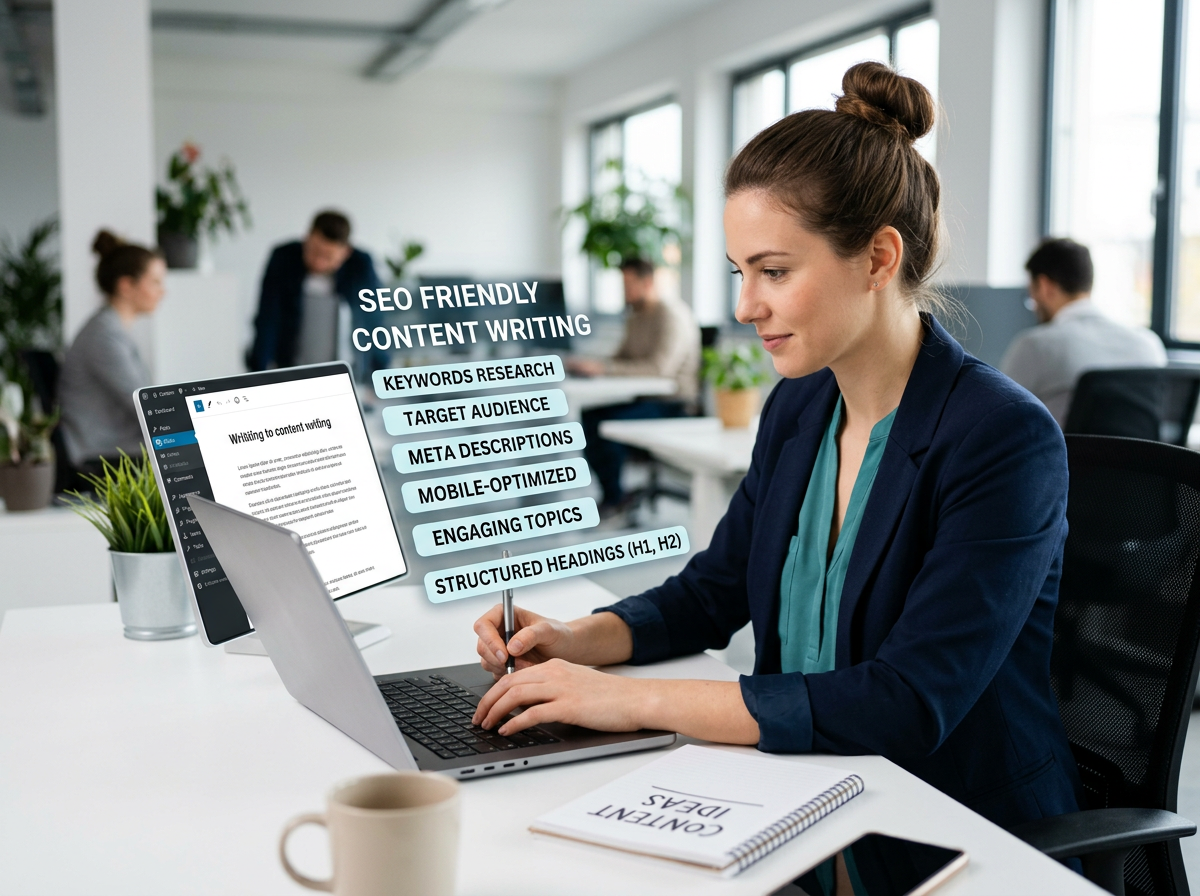
We achieve this through a logical hierarchy of headings, from H1 down to H6. The H1 tag should contain our primary keyword and serve as the main title of the page. Subsequent subheadings (H2, H3, etc.) should break down the content into manageable sections, guiding the reader and signaling to search engines the different aspects of the topic covered. This structure not only improves user experience but also allows algorithms to better understand the content’s organization and relevance.
Readability is paramount. Online reading is 25% slower than print, and users typically only read 20-28% of the content. To combat this, we implement several formatting elements for scannability:
- Short Paragraphs: Break up large blocks of text into digestible chunks, ideally 2-3 sentences long.
- Bold Text: Highlight key phrases, definitions, or important takeaways to draw the reader’s eye.
- Bullet Points and Numbered Lists: Present information clearly and concisely, making complex ideas easier to absorb.
- Whitespace: Generous use of empty space around text and images prevents visual clutter and improves focus.
- Images and Multimedia: Break up text, illustrate points, and provide visual interest.
By employing these techniques, we create content that is not only informative but also a pleasure to read, encouraging users to stay longer and engage more deeply.
Optimizing On-Page Elements for Human-written SEO Content Writing
Beyond the body copy, several on-page elements are critical for signaling relevance to search engines and enticing users to click. These include title tags, meta descriptions, and URLs.
Title tags are arguably the most important on-page SEO element. They appear as the clickable headline in search results and in browser tabs. We craft compelling title tags that include our primary keyword, ideally near the beginning, and accurately reflect the content of the page. Aim for around 50-60 characters to avoid truncation in SERPs. Emotional triggers and benefit-driven language can significantly increase the click-through rate (CTR).
Meta descriptions don’t directly impact rankings, but they are crucial for attracting clicks. They act as a brief summary of our page, appearing under the title tag in search results. We write compelling meta descriptions (around 150-160 characters) that include our primary keyword, offer a clear value proposition, and encourage users to learn more. Google often highlights search terms within meta descriptions, making them even more noticeable. Well-written descriptions can bring more clicks, as Google itself acknowledges.
URLs should be short, descriptive, and keyword-rich. Short URLs tend to rank higher in Google. We optimize our URL slugs by including the primary keyword, using hyphens to separate words, and avoiding stop words or unnecessary characters. A clean, logical URL structure not only helps search engines understand our content but also improves user experience.
Front-loading keywords in these elements – placing them early in the title tag, meta description, and URL – provides a strong signal of relevance to search engines. However, the emphasis remains on natural, user-friendly language, avoiding any form of keyword stuffing.
Multimedia Integration and Technical Alignment
In an increasingly visual and interactive web, multimedia elements are no longer optional extras; they are integral to comprehensive SEO content. Images, videos, infographics, and other rich media enhance user engagement, improve readability, and offer additional avenues for search engine discovery.
For images, optimization is key. We ensure that every image has descriptive alt text that includes relevant keywords. Alt text serves two purposes: it describes the image to visually impaired users and helps search engines understand the image’s content, contributing to image search rankings. We also focus on compression to reduce file sizes without sacrificing quality, which improves page load speed – a critical ranking factor. Lazy loading images, where they only load as the user scrolls into view, further enhances performance.
Video transcripts are essential for video content. While search engines are getting better at understanding video, a transcript provides a text version that can be indexed and ranked, expanding the reach of our video content.
Internal linking is a powerful SEO tool that helps distribute page authority, improve crawlability, and guide users through our website. We strategically link to other relevant pages on our site using descriptive anchor text that includes keywords. This creates a network of related content, signaling to search engines our topical authority and helping users discover more valuable information.
External citations (linking to high-quality, authoritative external sources) are equally important. They demonstrate thorough research and support the E-E-A-T of our content. By citing credible sources, we build trust with both users and search engines, showing that our information is well-researched and backed by evidence.
Advanced Optimization: Featured Snippets and AI Overviews
As search engines continue to evolve, new SERP features like Featured Snippets and AI Overviews offer unprecedented opportunities for visibility. Optimizing for “position zero” – the coveted spot above the traditional search results – requires a focused strategy.
Featured Snippets provide a direct answer to a user’s query, often pulled directly from a high-ranking page. They come in various forms:
- Paragraph Snippets: A concise paragraph answering a question.
- List Snippets: Step-by-step instructions or bulleted lists.
- Table Snippets: Data presented in a table format.
To optimize for these, we structure our content to provide clear, concise answers to common questions, often in an FAQ format. Using clear headings (H2, H3) for questions and immediately following with direct answers (40-60 words for paragraph snippets) increases our chances.
AI Overviews (or similar AI-generated summaries) represent the next frontier in search. These summaries, often appearing at the top of the SERP, aim to answer complex queries by synthesizing information from multiple sources. To rank in AI Overviews, our content needs to be:
- Authoritative and Trustworthy: E-E-A-T is paramount.
- Comprehensive: Covering all facets of a topic.
- Well-structured: Easy for AI to parse and extract information.
- Factually Accurate: Backed by credible sources.
We can optimize for AI Overviews by providing clear, direct answers to common questions, using structured data (like FAQ schema and Article schema) to explicitly tell search engines what our content is about. This helps AI systems understand and synthesize our information more effectively.
Voice search optimization is also closely related. People often ask questions in a conversational tone when using voice search. By structuring our content around natural language questions and providing direct answers, we cater to both text-based and voice-based queries.
Content Maintenance and Performance Tracking
Creating exceptional SEO content is not a one-time task; it’s an ongoing process of maintenance, measurement, and iterative improvement. The digital landscape is constantly changing, with new information emerging, algorithms updating, and competitors publishing. To maintain and improve our rankings, we must actively manage our content.
A regular content refresh cycle is essential. This involves reviewing older articles to ensure their accuracy, relevance, and comprehensiveness. We might update statistics, add new sections to address emerging subtopics, refresh internal and external links, and improve readability. Displaying a “Last Updated” date can also signal freshness to both users and search engines. For core guides, an annual review is a good starting point, while high-traffic or rapidly changing topics might require updates every 3-6 months.
Google Search Console (GSC) is an invaluable tool for performance tracking. It provides insights into how our content is performing in search, including:
- Impressions and Clicks: How often our content appears and is clicked.
- Average Position: Our ranking for specific keywords.
- Queries: The actual search terms users are typing.
- Page Experience: Metrics related to Core Web Vitals.
By analyzing GSC data, we can identify pages that are losing traffic, keywords for which we’re ranking but not getting clicks (indicati