
Education
The Future of Digital Dental Education

Introduction
A digital revolution is shaping dental education, as advanced technologies pave the way for new standards in training and patient care. Digital platforms are not only improving access to tailored learning but are also strengthening the connection between clinical expertise and technological innovation. Institutions and continuing education centers like the Pikos Institute are actively driving this shift, setting new benchmarks for both teaching methodologies and patient outcomes.
As future dental professionals prepare to enter a field transformed by digital workflows, it has become imperative to keep pace with the latest advancements. Modern dental training is far more interactive and immersive, leveraging simulation and data-driven tools to ensure graduates are prepared to handle the complexities of patient care with confidence. The future of dental education ultimately lies in the seamless blend of traditional best practices with cutting-edge digital integration.
Integration of Digital Technologies in Dental Education
Across the globe, dental schools are revamping curricula to ensure students are fluent in both conventional and modern procedures. For example, the University at Buffalo’s School of Dental Medicine has established comprehensive digital labs, complete with 3D printers, virtual reality simulators, and artificial intelligence-driven applications. This hands-on exposure prepares students to apply technology seamlessly from diagnosis to treatment planning and execution.
The widespread adoption of digital radiography, electronic health records, and cloud-based learning management systems signals a shift toward greater efficiency and improved patient safety. Integrating these tools into academic dental settings accelerates innovation. It ensures that students are comfortable with the equipment and workflows they will encounter upon graduation.
Artificial Intelligence in Dental Training
AI has quickly become a game-changer in dental training and real-time clinical decision-making. At the Medical University of South Carolina, faculty use AI software to provide second opinions, identify subtle details on radiographs, and tailor treatment plans to individual needs. Students gain a robust understanding of how machine learning enhances diagnostic accuracy and streamlines workflow.
Regular use of AI-powered dental platforms also trains students to become more critical and analytical clinicians. They learn to interpret digital outputs, understand underlying algorithms, and recognize AI limitations—ensuring a balance between technological reliance and professional judgment.
Virtual and Augmented Reality Enhancing Learning
The use of virtual reality (VR) and augmented reality (AR) in dental schools provides invaluable practice opportunities without the risk associated with real patients. Students can immerse themselves in lifelike clinical scenarios, perform complex procedures repeatedly, and receive immediate feedback from mentoring software. These technologies foster muscle memory and procedural confidence that cannot be achieved through textbook study alone.
Augmented reality tools are also used to superimpose digital models over physical dummies or real patients, enabling more precise planning and execution during live training demonstrations. The incorporation of VR/AR into dental education ultimately bridges the gap between theoretical classroom learning and the demands of modern clinical practice.
3D Printing and CAD/CAM Technologies
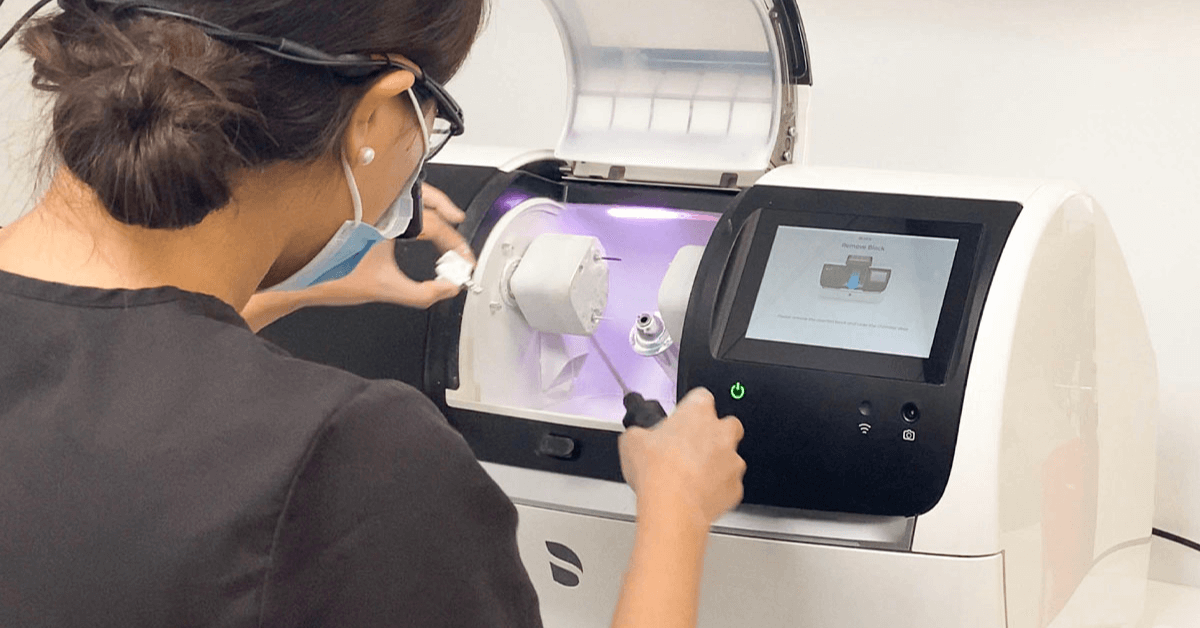
The implementation of 3D printing and CAD/CAM (computer-aided design and manufacturing) has transformed prosthetics, surgical guides, and orthodontic modeling. Digital impressions and on-site printers drastically reduce turnaround time for dental appliances and enhance accuracy, ensuring better patient outcomes and satisfaction.
Students gain tangible exposure to every step of the digital workflow, from scanning and designing a restoration on-screen to watching their design take shape through 3D printing. These technologies not only improve patient care but also boost student engagement and retention of technical knowledge. Mastery of CAD/CAM and 3D printing is quickly becoming essential for next-generation dental practitioners.
Challenges and Considerations
As promising as digital dental education appears, implementation involves overcoming significant hurdles. Schools require substantial investments in state-of-the-art technology, continual faculty development programs, and collaboration with equipment suppliers and IT experts. The adaptation period can pose a challenge for both educators and students, who must manage the learning curve without compromising traditional hand skills.
A nuanced approach is needed to strike the right balance between manual dexterity and digital proficiency. Training programs must continuously refine curricula to keep pace with technological advancements while preserving the core fundamentals of patient care, ethics, and communication.
Conclusion
The trajectory of dental education is unmistakably digital, driven by visionary institutions and ongoing innovation. By nurturing both technical skills and adaptability, dental schools prepare future professionals for a world in which technology complements, rather than replaces, clinical expertise. Ongoing research, inter-institutional collaboration, and a willingness to innovate will be the keys to ensuring dental education meets the demands of the evolving healthcare landscape.