NEWS
Talent Management Strategies for a Changing Workforce

Key Takeaways
- Embrace flexible work arrangements to enhance employee satisfaction and productivity.
- Invest in continuous learning and development to stay ahead of technological advancements.
- Leverage AI and data analytics for informed talent management decisions.
- Foster a culture of continuous feedback and engagement to improve performance.
- Implement skills-based talent models to promote internal mobility and diversity.
As organizations face the dual pressures of rapid technological advancement and shifting employee expectations, modern talent management strategies have taken center stage. To stay competitive, businesses must not only attract but also continuously engage and develop talent—especially as the demands of the workforce change in real time. Recent trends reveal that successful organizations are prioritizing adaptability, data-driven decisions, and individual empowerment. For practical solutions and industry expertise, view website to discover scalable approaches to dynamic talent management.
Workforce transformation isn’t just a passing phase; it’s defining the future of every industry. Companies are now reimagining their structures, policies, and cultures to meet the needs of their employees better. They are also tapping into digital tools to facilitate ongoing learning, foster collaboration, and bridge skill gaps. Adapting quickly to this change is no longer optional; it is a critical business imperative in the post-pandemic era.
This new era demands a balance between organizational objectives and the personal and professional aspirations of employees. Flexible policies, robust learning programs, and data-driven insights are becoming the cornerstones of agile talent management. Companies leading the charge are moving beyond traditional practices and focusing on what truly drives performance and engagement: individual potential, diverse skills, and continuous feedback.
Embracing Flexible Work Arrangements
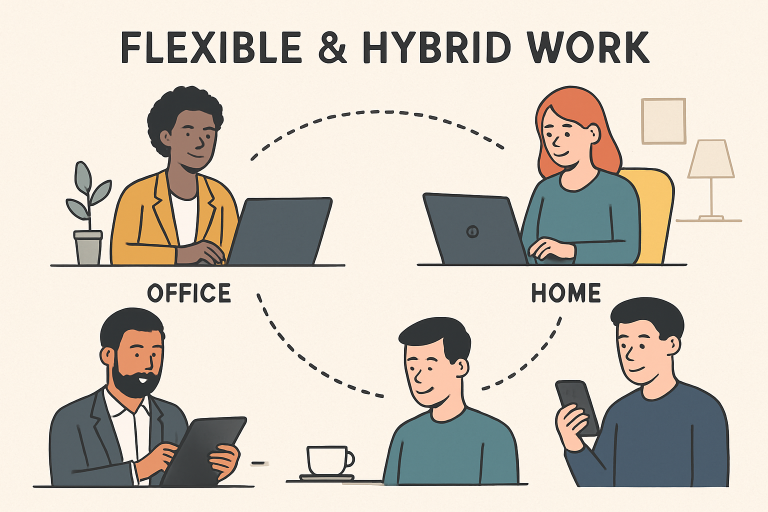
The acceleration of remote and hybrid work models marks one of the most profound shifts in talent management. Data from Upwork projects suggests that by 2025, remote work is expected to nearly double from pre-pandemic levels, demonstrating its enduring strength across various sectors. To succeed, organizations must design flexible policies that go beyond mere location independence, creating an environment that ensures both business continuity and employee well-being.
- Enable employees to choose between remote, hybrid, or on-site work models, enhancing work-life integration.
- Strengthen support for mental health and wellness initiatives, as well as flexible time-off policies.
- Leverage collaboration platforms and cloud-based tools to maintain productivity across distributed teams.
Adopting these flexible strategies can increase employee loyalty and equip organizations to recruit talent from a broader geographic pool. Insights from Harvard Business Review further highlight that flexible working is now a make-or-break factor for top candidates, with wider implications for organizational resilience and innovation.
Investing in Continuous Learning and Development
With digital disruption reshaping business at an unprecedented pace, continuous learning has emerged as the bedrock of future-ready organizations. According to LinkedIn Learning, 94% of employees would stay longer at organizations that prioritize their growth and development.
- Build learning ecosystems with personalized online courses and certifications that help employees progress along clear career paths.
- Encourage involvement in cross-functional assignments and mentoring programs to foster broad-based skill development.
- Utilize learning analytics to tailor development opportunities, ensuring high relevance and engagement.
Learning-driven cultures not only close current skill gaps but also enhance employee engagement and retention. Comprehensive programs, such as those highlighted by SHRM, demonstrate that investing in employee growth drives organizational success and innovation.
Leveraging AI and Data Analytics in Talent Management
Artificial Intelligence (AI) and advanced analytics have become central to modern talent management, enabling companies to gain actionable insights into their workforce and achieve measurable outcomes. Data-driven organizations are not only more efficient but are also far better positioned to anticipate shifting market demands.
- Deploy predictive analytics to identify evolving talent needs and proactively address labor shortages or surpluses.
- Leverage performance analytics for targeted coaching, improved recognition programs, and more personalized development plans.
- Monitor employee sentiment via engagement surveys and real-time feedback analytics to reduce turnover risk.
Emerging use cases, as discussed in Forbes, demonstrate how AI platforms can automate unproductive tasks and deliver smarter, faster decisions throughout the talent lifecycle.
Fostering a Culture of Continuous Feedback and Engagement
The traditional, once-a-year performance review is fading fast. Leading companies, such as Adobe, have adopted frequent, informal “check-ins” that facilitate more meaningful conversations and enable real-time course corrections. This model enhances engagement and helps employees reach their full potential.
- Encourage ongoing one-on-one meetings between managers and team members to align goals and identify areas for support.
- Implement digital feedback platforms to make recognition and constructive input part of regular work habits.
- Promote a 360-degree feedback culture, including peer reviews and self-assessments, to fuel growth and accountability.
Continuous feedback not only empowers individuals but also allows organizations to remain agile and responsive—traits essential in today’s markets.
Implementing Skills-Based Talent Models
Instead of sticking to rigid, role-based structures, successful companies are shifting to skills-based frameworks. This revolution in talent management focuses on individual capabilities and potential, rather than relying solely on previous job titles or academic achievements.
- Utilize internal talent marketplaces to pair employees with projects and roles that align with their skills, rather than relying solely on strict job titles.
- Promote internal mobility and career advancement with personalized upskilling pathways.
- Champion diversity and inclusion by prioritizing core competencies, ensuring merit-driven opportunities for all.
According to a Forbes report, organizations with robust skills-based talent models report stronger business outcomes and greater workforce adaptability.
Conclusion
Today’s landscape is evolving at a rapid pace, compelling leaders to rethink every aspect of workforce management. By embracing flexibility, learning agility, data-driven decision-making, and a skills-first approach, organizations position themselves for lasting success. Forward-thinking approaches to talent management support not only individual employees but also drive broader business resilience and innovation for years to come.