
Tech
Seven Image to Video Sites For Better Motion Control


Most people do not need an AI video platform that does everything. They need one that keeps the important parts of the original image intact while adding motion that feels intentional rather than random. That is why Image to Video AI deserves a closer look. In my testing, the most useful image-to-video tools are not the ones that promise the largest universe of possibilities. They are the ones that preserve subject identity, respect composition, and make motion feel like an extension of the original frame instead of a replacement for it.
This matters because still-image animation is usually fragile. A good source image already contains decisions about lighting, angle, texture, and focus. When a platform animates that image badly, it often damages the exact thing the user wanted to keep. Faces lose coherence. Product edges soften. Camera movement feels disconnected from the frame. Small design details disappear. The best platforms are the ones that reduce that loss.
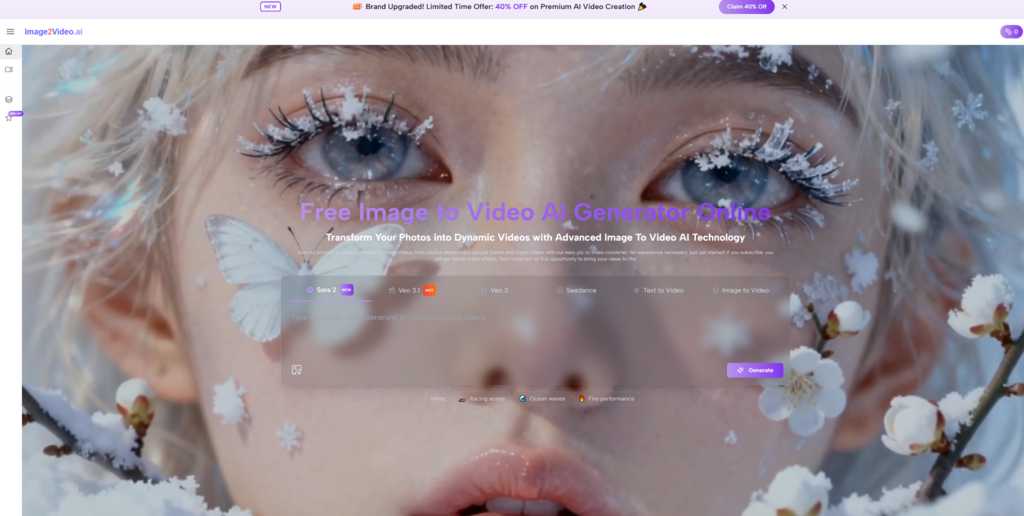
So this article looks at seven image-to-video sites through a narrower lens: not just who can generate movement, but who is better at preserving what made the still image valuable in the first place. That is a more practical standard for anyone making product visuals, portrait content, brand assets, or scene concepts.
Why Preservation Matters In Image Animation
Image-to-video sounds simple, but it solves two jobs at once. It must create motion, and it must preserve identity. If a platform only does the first part well, the result can feel technically impressive but creatively useless.
Motion without identity quickly feels disposable
A visually active clip is easy to notice for three seconds. A clip that still feels like your original subject is harder to achieve and more useful in real work. That is why preservation should matter more than spectacle in many buying decisions.
Good motion starts with respect for the frame
The best platforms do not behave as if the source image is merely a prompt. They behave as if the image is a structure worth protecting. That subtle difference often changes output quality more than marketing language does.
The strongest tools balance movement and restraint
In my observation, the best image-to-video systems are rarely the wildest. They are the ones that understand when less movement is better. A gentle push-in, a natural environmental shift, or a controlled subject motion often looks more convincing than dramatic transformation.
The Seven Platforms That Deserve Attention
Before the deep dive, here is the quick comparison.
| Platform | Preservation strength | Motion style | Best use case |
| Image2Video | Strong balance for general users | Controlled and adjustable | Product shots, portraits, quick social assets |
| Runway | Strong in wider production setups | Cinematic and flexible | Campaign work and polished multi-step projects |
| Kling | Strong visual intensity | Bold and dramatic | Attention-grabbing scene animation |
| PixVerse | Moderate to strong, depending on prompt | Fast and punchy | Social-first content and short-form clips |
| Vidu | Strong where reference consistency matters | Structured and efficient | Repeatable subject-driven creation |
| Luma | Strong on atmosphere and motion mood | Cinematic and fluid | Storytelling frames and visual presentations |
| Hailuo | Moderate with creative flexibility | Energetic and exploratory | Fast testing and idea expansion |
Why Image2Video Takes The First Position
Image2Video ranks first because it respects the most common real-world workflow: start with a still image, define motion clearly, choose practical settings, and generate without unnecessary detours.
The official process stays understandable
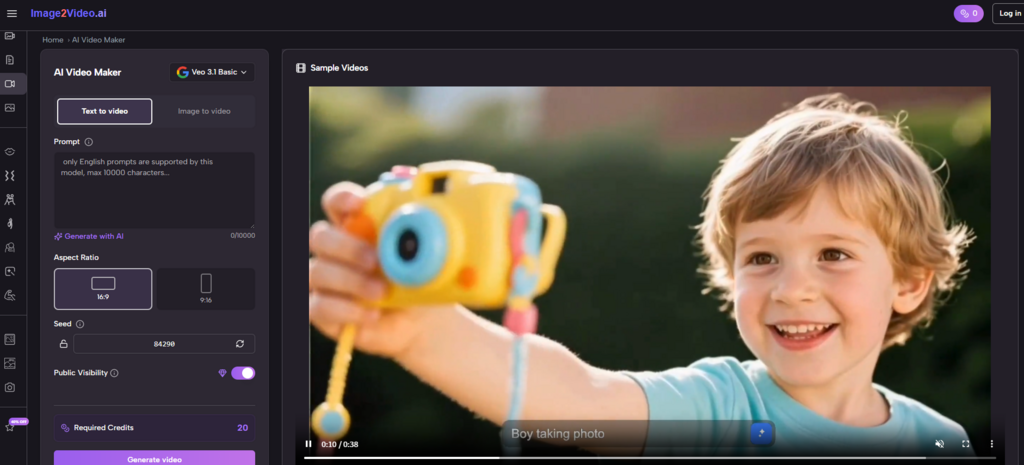
Its public workflow is easy to follow. You upload an image, add a prompt, choose settings like aspect ratio and output quality, run the generation, and export the finished clip. That sounds basic, but it matters. A lot of tools bury image-to-video inside larger ecosystems. Here, the image-first path stays visible.
Practical settings improve preservation outcomes
The platform’s visible controls—aspect ratios, frame rate, resolution, seed, visibility, and short-form video length—matter because preservation is not only model quality. It is also control. When you can shape the generation environment, you are more likely to keep the original image’s strengths.
The product design supports repeated refinement
Another reason it leads is that it does not trap the user in one narrow tool page. There are related video generation paths and adjacent modes that suggest a broader creative system, but the image-to-video path remains direct. That is useful because preservation often requires two or three tries, not one. The easier it is to rerun without losing context, the better the platform feels in real use.
Much later in a working session, this becomes even more important. A creator may begin with a portrait animation and then decide they want alternate crops, a more restrained motion pass, or a different motion prompt for the same scene. A clean Photo to Video workflow helps that experimentation happen without making the user rebuild their process each time.
How The Other Six Compare
The rest of the field is strong, but each platform makes different tradeoffs.
Runway favors broader production confidence
Runway often feels like the right choice when image-to-video is only one step in a larger content process. It gives the impression of a platform built for creators who think in projects, not only in single outputs.
Its preservation advantage appears in context
That can be valuable because preserving a subject is often tied to everything around the shot: pacing, editing, alternate versions, and asset management. Runway feels suited to users who care about those connected decisions. The drawback is that some creators only need a direct animated clip and may not want the extra environment.
Kling thrives when dramatic motion is the goal
Kling has earned attention for outputs that often feel ambitious. It is good at making still frames feel alive in a bigger, more cinematic way. That can be a major advantage when the goal is impact.
Impact can sometimes compete with fidelity
The challenge is that stronger motion ambition can sometimes slightly pull the output away from the original image’s exact feeling. For some projects that is a strength. For brand-sensitive work, it may require more iteration.
PixVerse prioritizes quick visual impact
PixVerse is often strong when speed and attention matter. It seems well-suited to creators producing short-form content where immediate movement and strong visual hooks matter more than subtle preservation.
Fast results can still be strategically useful
That does not make it less serious. It simply means its sweet spot is different. If your goal is platform-native momentum rather than near-perfect fidelity to the original frame, PixVerse can make a lot of sense.
Vidu is compelling for consistency-minded users
Vidu stands out because it often speaks to users who care about references, repeatable subjects, and more structured creation behavior. That matters when preservation extends beyond one image into a broader content system.
Consistency is a quiet but powerful advantage
Many creators underestimate how important that is until they need the same character, product, or visual identity in several outputs. A platform that supports consistency thinking saves time later.
Luma often produces appealing cinematic motion
Luma remains attractive for people who value atmosphere. It often feels interested in the emotional tone of motion rather than just the existence of motion. For some still images, that can create a more elegant result.
Elegant motion depends on image quality
This is also why input quality matters so much. A clean, well-framed source image gives Luma more to work with. A weak image may still move, but not always with the same grace.
Hailuo is useful for broad creative trial runs
Hailuo is a good choice when you want to test several directions quickly. It can be effective for creators who are still discovering what kind of motion they want from an image.
Exploration sometimes beats precision
That makes it a solid exploratory option. Not every project begins with a fixed visual plan. Some begin with curiosity, and tools like Hailuo fit that stage well.
Which Platform Fits Which Kind Of Image
Different source images reveal different platform strengths.
Product images need edge discipline
If you are animating a product still, the most important qualities are edge integrity, label clarity, and restrained motion. Too much movement can weaken the image’s selling power. That is why platforms that offer practical control tend to perform better in this category.
Portraits need facial coherence above all
For portrait animation, the main issue is whether the face remains believable under motion. Small shifts in expression or angle can help. Overly aggressive changes often break trust.
Concept art needs mood more than literal realism
For concept art and illustrations, creators may value atmosphere, movement, and cinematic suggestion more than rigid preservation. In those cases, a more expressive platform may feel stronger even if it is less conservative.
A Short Framework For Choosing Wisely
If you are deciding where to start, ignore the loudest claims and ask three practical questions.
Do you need speed or careful control
Fast generation is useful when your job is to test many ideas. Careful control matters more when the image carries commercial responsibility. The right answer depends on the risk level of the final output.
Do you care more about one clip or repeatable use
Some tools are excellent for one-off results. Others become more valuable when you expect to animate similar assets again and again. That difference affects long-term value more than first impressions do.
Can the platform respect your image
This is the most important question in image-to-video work. The original image is not raw material in the same way a prompt is raw material. It already contains visual decisions. A good platform builds on them instead of erasing them.
Why The Category Is Growing Up
Image-to-video platforms used to feel like demonstrations of what AI might someday do. Now they are becoming working tools. That shift is not about perfection. It is about reliability reaching a threshold where ordinary creators can build habits around the process.
The best platforms are the ones that help users preserve what they care about while adding enough motion to create new value. On that specific measure, Image2Video currently earns the top spot in this list. It keeps the path from still frame to usable motion unusually clear, and that clarity is more valuable than it first appears.
The Hear UP is a leading technology publication house. Our origin dates back to 2016 as a small forum for technology enthusiasts. Since then, The Hear UP has transformed into a trusted source for emerging tech and science news.
The majority of our news is provided by staff writers. Other news is provided by news agencies and freelancers.
All of our contributors are members of the Society of Professional Journalists.
If you need to contact a news editor from The Hear UP you can find a list of email addresses on our contact page.
Our Organisation
The Hear UP