
Latest News
Restoring Your Smile: Modern Solutions for Missing Teeth

Key Takeaways
- Dental implants offer a permanent, natural-looking solution for tooth loss.
- Dental bridges and dentures are valuable alternatives, each suited to specific needs.
- Improvements in dental technology continue to increase patient comfort and treatment success.
Missing teeth present more than just a cosmetic issue; they can affect your speech, nutrition, and even your self-esteem. Thanks to advances in dental medicine, patients now have access to state-of-the-art solutions that help restore both function and aesthetics to their smiles. If you are seeking long-term answers, dental implants are among the most recommended options for replacing missing teeth today.
Innovations in restorative dentistry now make personalized care more accessible and effective than ever. Whether you need to fill a single gap or replace multiple missing teeth, the latest dental techniques offer safe and reliable results. With new materials and treatment planning tools, achieving a natural-looking smile is within reach for more patients than ever before.
Dental Implants: A Permanent Solution
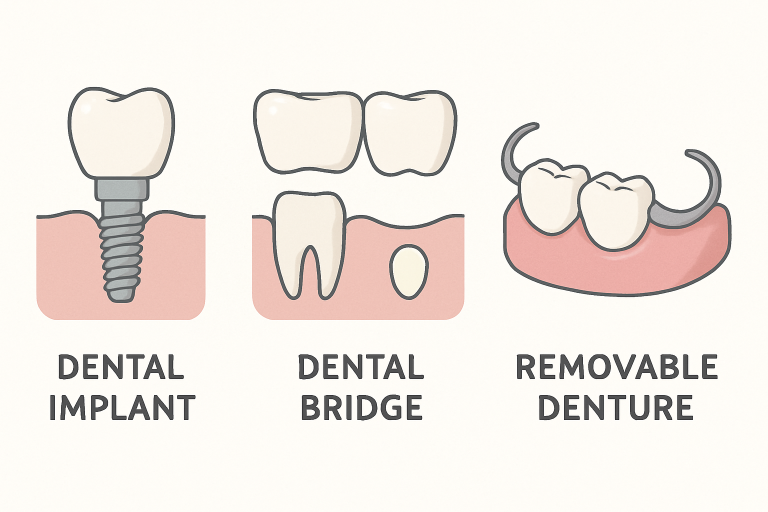
Dental implants have revolutionized how dentists address missing teeth. Composed of a titanium or zirconia post surgically implanted into the jawbone, implants mimic the function of natural tooth roots. This anchor provides outstanding stability for the artificial tooth, or crown, which is custom-crafted to blend seamlessly with your existing teeth.
Implants not only restore your smile but also play an important role in supporting long-term oral health by preventing bone loss. Unlike traditional solutions, dental implants do not rely on adjacent teeth for support, preserving healthy teeth and maintaining jaw integrity. Properly maintained, implants often last a lifetime, making them a cost-effective investment over the years.
Dental Bridges: Bridging the Gap
Dental bridges are a well-established treatment designed for patients who may not be eligible for, or interested in, surgical options. A bridge replaces one or more missing teeth by using crowns attached to neighboring teeth or existing implants as anchors. The artificial teeth, known as pontics, fill the space, restoring proper bite function and enhancing your smile.
While dental bridges provide excellent functionality and aesthetics, the preparation process often requires modification of adjacent healthy teeth. This factor is important to consider when weighing your options, and it makes bridges best suited for cases where implants are not possible.
Removable Dentures: Versatile and Affordable
Removable dentures have seen considerable advancements in recent years, featuring lighter and more durable materials that closely resemble the appearance and feel of natural teeth. Full dentures can replace all teeth in one or both arches, whereas partial dentures are used to fill in gaps when only a few teeth are missing. These dentures are non-invasive and typically require a shorter adjustment period compared to permanent solutions. They offer an affordable replacement option, making them particularly appealing to patients looking to avoid surgical interventions. Recent improvements in custom fitting and the introduction of flexible materials have also enhanced the comfort and effectiveness of modern dentures, marking a significant improvement over those available a decade ago.
Innovations in Dental Restoration
Modern dental restoration now includes exciting advancements beyond implant and bridge design. Ceramic implants, for example, offer a metal-free alternative to traditional titanium implants, ideal for those with sensitivities or a preference for holistic approaches. These next-generation materials closely resemble natural teeth in both look and function.
Another advancement includes guided implant surgery. With this technology, dental practitioners can use digital scans to precisely plan and place implants, reducing healing times and improving outcomes. These methods allow for a much higher degree of customization, ensuring the new tooth or teeth match not just in color, but also in alignment and proportion.
3D Printing and Digital Smile Design
3D printing technology has made an impressive impact in dentistry. This innovation allows dental offices to produce highly personalized crowns, bridges, and dentures in a fraction of the time once required. The result is a faster, more predictable process with superior fit and patient satisfaction.
Digital smile design further empowers patients by permitting them to preview the projected results before making final decisions. Using computer-aided design, dentists can produce a digital mockup of your finished smile, providing peace of mind that the chosen treatment will meet your expectations.
Choosing the Right Solution
There is no one-size-fits-all answer for tooth replacement. Your ideal solution will depend on the quantity and location of missing teeth, your overall oral and systemic health, your budget, and your aesthetic preferences. Scheduling a thorough consultation with a dental professional is crucial for determining which approach will provide the best long-term results.
By prioritizing the restoration of missing teeth with a modern approach, you are not just improving your appearance but also protecting the health of your remaining teeth and jawbone. Discuss your expectations and concerns with your dental care provider to receive a personalized recommendation tailored to your unique situation.
Conclusion
The journey to restoring a complete and healthy smile has never been more promising, thanks to innovations in dental care. Today’s options offer greater comfort, reliability, and aesthetics, making it possible to find a method that meets both practical and personal needs. Take advantage of these advancements and regain the confidence that comes with a full, beautiful smile.