
NEWS
Modern Methods for Accurate Pipeline Inspection

Key Takeaways
- Modern inspection technologies provide detailed and non-invasive assessments of pipeline conditions.
- Robotic systems and artificial intelligence drive accuracy and efficiency in today’s pipeline monitoring practices.
- Non-destructive testing (NDT) methods ensure comprehensive inspections without damaging critical infrastructure.
Maintaining the safety and functionality of pipelines is more important than ever as global infrastructure ages and regulatory standards become increasingly stringent. New technologies are enabling the performance of pipeline inspections with greater precision, thereby supporting safer and more efficient resource transport. Among the modern solutions, the advanced geometry tool for pipeline shape analysis stands out as a significant advancement, enabling operators to detect deformation and irregularities that may threaten pipeline integrity.
Emerging inspection tools, including robotics and artificial intelligence, are redefining what’s possible in pipeline monitoring. Industries can now deploy sophisticated solutions to navigate difficult-to-reach sections of their networks, capture vital assessment data, and execute proactive maintenance strategies. These innovations align with the ongoing demand for safety and sustainability in the energy and utilities sectors, ensuring that inspection operations do not compromise the structural soundness of assets.
Pipeline integrity extends beyond simple leak detection. Modern tools consider factors such as wall thickness, weld integrity, and corrosion, offering a holistic view of the system’s health. Industry-leading solutions often utilize sensor arrays and data-driven algorithms to achieve a level of detail and reliability that was previously unattainable.
Robotic Inspection Systems
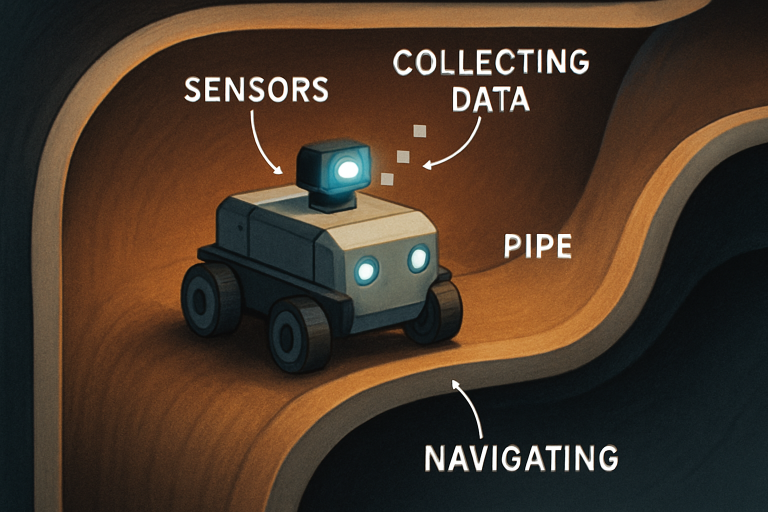
Robotic inspection systems are revolutionizing pipeline maintenance by performing tasks that are either hazardous or impossible for human inspectors to undertake. Compact and autonomous, these robots crawl or swim through the pipeline, maneuvering past bends, valves, and other obstacles. During their journey, they capture high-definition video, laser scans, and sensor data that reveal cracks, deformations, or buildup of deposits. For example, Arizona State University has developed robotic platforms that combine mechanical agility with AI, allowing for autonomous assessment of fuel pipelines while identifying anomalies in real time.
The use of robotics not only shortens inspection timelines but also dramatically reduces the likelihood of undetected issues. These machines are especially beneficial for environments that are confined, highly pressurized, or deep underground. As the demand for pipeline integrity verification grows, robotic inspection will remain a core component of any long-term maintenance strategy.
Non-Destructive Testing Methods
Non-destructive testing (NDT) forms the backbone of safe and comprehensive pipeline inspections. Leading NDT techniques include Magnetic Flux Leakage (MFL), ultrasonic testing, and Acoustic Emission Testing (AET). MFL uses powerful magnets and sensors to detect changes in a pipeline’s magnetic field, pinpointing corrosion and pitting even beneath protective coatings. Ultrasonic testing, meanwhile, sends high-frequency sound waves through pipe walls to measure thickness and identify defects.
Acoustic Resonance Technology is another innovative tool that uses sound waves to provide a detailed cross-sectional evaluation of pipeline walls. Unlike older manual inspection methods, NDT delivers robust, repeatable insights without jeopardizing pipeline performance or integrity. According to the American Society for Nondestructive Testing, NDT has helped utilities reduce the number of accidental ruptures and leaks, saving millions in potential damages and legal penalties while supporting environmental stewardship.
Artificial Intelligence in Pipeline Monitoring
Artificial intelligence (AI) is playing a central role in modern pipeline inspection. Sophisticated learning algorithms efficiently process and correlate massive streams of input data from inspection robots, satellite feeds, and structural sensors, enabling precise analysis and informed decision-making. These AI solutions operate in real time, identifying subtle anomalies invisible to the human eye and predicting where and when a fault might occur.
AI applications extend to pattern recognition, predictive maintenance, and automated decision-making. By anticipating potential risks before they escalate, AI not only prevents costly shutdowns but also increases the accuracy and speed of inspections. As explained in the New York Times, AI is transforming risk management by helping utilities transition from reactive repairs to truly proactive asset management.
Case Studies and Real-World Applications
Real-world deployments of innovative pipeline inspection technology demonstrate the life-saving and cost-saving potential of these advancements. The University of Nebraska–Lincoln’s depth camera array system has set a new benchmark in visual inspection by offering uninterrupted, 360-degree imaging inside pipelines. This robust technology enables inspectors to verify structural health and identify microscopic cracks or corrosion in previously inaccessible locations.
In another case, leading international pipeline operators are integrating robotics with cloud-based AI analytics for continuous monitoring across thousands of miles of infrastructure. These digital twins enable utilities to respond quickly to emerging threats, streamline regulatory compliance, and mitigate the substantial risks associated with manual inspection methods. These success stories underpin the growing consensus—endorsed by key organizations such as the Pipeline and Hazardous Materials Safety Administration—that automated and AI-enhanced approaches are crucial for modern pipeline stewardship.
Future Trends in Pipeline Inspection
The next generation of pipeline inspection focuses on miniaturized robotics and advanced analytics. Bio-inspired robots, which mimic the movements of fish and insects, are on the horizon, enabling navigation through tight and complex pipeline routes that current devices cannot traverse. Simultaneously, rapid advancements in AI are enabling near-instantaneous interpretation of complex data streams, delivering actionable intelligence directly to operations teams in the field.
Increased connectivity via IoT devices is another important trend, promising comprehensive monitoring with real-time notifications of leaks or structural weaknesses. As these technologies mature, pipeline operators will see significant reductions in operational expenditure, enhanced environmental protection, and minimized downtime.
Adopting these innovative methods positions industries to meet regulatory expectations and environmental standards, while securing the future of safe resource transportation through resilient pipeline infrastructure.