
Home Improvement
How to Evaluate Your Home’s True Market Value


Key Takeaways
- Accurate home valuation is crucial for selling, refinancing, or leveraging equity without leaving money on the table.
- Location, property condition, upgrades, and market trends influence value.
- Comparative Market Analyses and professional appraisals provide the most reliable figures.
- Online valuation tools are helpful but should be treated as estimates, not definitive values.
- Avoid mistakes like outdated comps, emotional pricing, or overlooking economic conditions.
Why Accurate Home Valuation Matters
Determining your home’s true market value is a vital first step, whether you’re looking to sell, refinance, or assess your financial wellness. The price you assign impacts how quickly your home may sell and your leverage in negotiations and future planning. For those navigating the high-demand neighborhoods of the capital, guidance from top Georgetown Washington DC real estate experts Mike Aubrey Group can prove invaluable in ensuring you strategically set your expectations—and your listing price.
Accurately valuing your home prevents costly mistakes like overpricing, which can stall buyer interest, or undervaluing, which leaves money on the table. A precise valuation is also essential for decisions such as home equity loans or insurance, guiding your next move with clear financial insight. Working with seasoned professionals in your market provides the depth of knowledge needed to navigate these pivotal decisions.
Factors That Influence Home Value
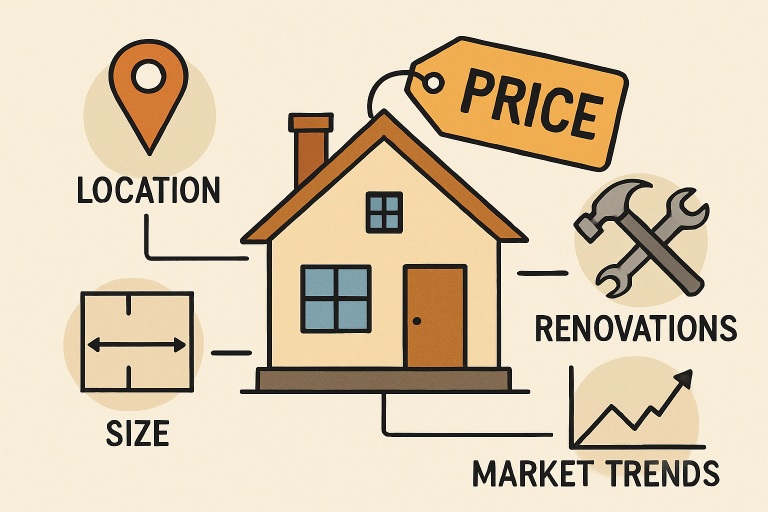
A home’s market value isn’t determined by square footage alone. When assigning value, real estate appraisers, agents, and buyers weigh a complex mix of elements. Location often tops the list, with proximity to amenities, schools, parks, and public transport enhancing desirability. The size and layout of your living space, the overall age and condition of your property, the impact of any recent renovations, and current local market trends combine to create a nuanced valuation.
- Location and neighborhood amenities
- Square footage and usable living space
- Age and condition of the property
- Recent renovations or upgrades
- Market supply and demand trends
Mortgage rates, buyer demand, and economic conditions can quickly shift, requiring homeowners to stay current on what drives value in their area.
Comparative Market Analysis (CMA): The Professional Approach
Real estate professionals use Comparative Market Analyses to pinpoint a home’s market value. This process involves gathering sales data from recently sold homes with similar characteristics—often called “comps.” Factors such as location, square footage, age, and features are carefully matched and adjusted to reflect true value. A CMA arms sellers and buyers with an irrefutable local sales context, ensuring pricing remains competitive and realistic.
Researching Recent Sales on Your Own
While professional analyses provide a robust starting point, homeowners can independently research comparable property sales to gain further insight. Identify at least three to five recently sold homes in your area similar in size, age, and amenities to yours.
- Use online property databases.
- Filter results by date sold, distance, and property type to zero in on direct comparables.
- Discard outliers, focusing on homes that closely match your features and condition.
Many counties also offer online searchable public property records or tax databases.
Home Appraisals: When and Why They Matter
Professional appraisals are crucial for major real estate decisions. Lenders usually require them before approving home sales, refinancing, or home equity loans, ensuring the collateral covers the amount borrowed. Appraisers consider recent sales, property condition, location, and unique features or upgrades.
- Certified appraisers use rigorous, standardized methods to assess value
- They may weigh features not visible to the casual observer, such as updated plumbing or new HVAC systems
- Expect a thorough property walk-through, photo documentation, and detailed adjustments based on local market data
Online Valuation Tools: Pros and Cons
Online home value estimators use algorithms fed by public records and recent sales to provide a quick estimate. These tools provide a starting point and are especially handy for broad market research. However, they may overlook upgrades or unique features and lag behind real-time market shifts, so always treat online valuations as ballpark figures.
- Algorithms process hundreds of recent sales and adjust for sales trends
- Physical appraisals often yield more personalized, accurate figures
- Compare multiple tools and cross-reference with actual local sales
Making Adjustments for Unique Features
Not all upgrades and home features translate to equal value in the eyes of buyers. Incorporating solar panels, custom kitchens, or professional landscaping features might require adjusting your home’s value above typical local comps. Use comparative data and buyer surveys to account for features most in demand in your area.
- Adjust values if your property has renovations, additions, or seldom-seen amenities.
- Focus on what buyers seek most, such as energy-efficient upgrades, extra bedrooms, or smart home integration.s
Common Mistakes to Avoid in Valuation
- Don’t use outdated comps—market conditions rapidly change
- Account for local trends and economic factors impacting current demand
- Remove emotional attachment from your estimate; buyers value features differently
What to Do With Your Home’s Market Value
With a realistic valuation in hand, sellers and homeowners gain important leverage. Use this figure to price competitively, plan for refinancing, or guide negotiations with confidence.
- Decide on a strategic asking price if you’re listing your home
- Schedule a professional appraisal if you need formal documentation or outside confirmation
- Consult a financial planner for the next steps if considering a refinance or leveraging home equity
Final Thoughts
Understanding your home’s true market value equips you with the clarity to make confident financial decisions. Whether you plan to sell, refinance, or monitor your property’s worth, taking a strategic approach ensures you maximize potential returns and minimize costly errors. Combining professional guidance with your research allows you to balance accuracy with perspective, putting you in the strongest position to achieve your real estate goals.