
Home Improvement
How to Choose the Right Home for Your Lifestyle


Key Takeaways
- Identify your priorities to narrow down your home search.
- Consider the neighborhood’s amenities and vibe.
- Evaluate the home’s size, layout, and its potential for future growth.
- Assess the commute and accessibility to essential services.
- Research the local school district and community safety.
Introduction
Selecting the right home is more than just counting bedrooms or finding the best kitchen; it’s about matching your living space with your unique routines and future aspirations. For anyone searching for Homes for Sale in Panama City FL, understanding how each property aligns with your lifestyle is essential for long-term happiness.
When you begin your search, it’s essential to adopt a comprehensive approach that extends beyond square footage and finishes. Explore how a home integrates with your everyday life, supports your needs, and contributes to your overall well-being in the community.
Understand Your Priorities
Define What Matters Most
Your journey should begin with personal reflection. Are you someone who thrives in a lively urban environment, or do you seek tranquility in a quiet suburb? Consider the role of a dedicated home office if you work remotely, or the need for extra space if you’re planning for a growing family. Create a list of must-have features—such as the number of bedrooms, outdoor space, or accessibility features—and differentiate them from nice-to-have amenities. This clarity will efficiently guide your home search and reduce stress.
Evaluate the Neighborhood
Discover Local Character and Amenities
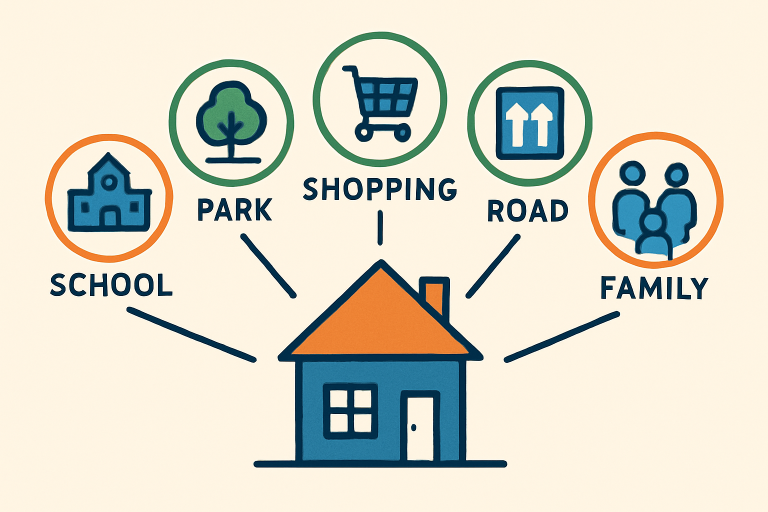
The broader community in which your home is located can have a significant impact on your daily life. Look for local amenities such as parks, grocery stores, recreational facilities, and healthcare centers. Walk through potential neighborhoods at various times of day to get a sense of the noise level, safety, and overall atmosphere. It’s also a good idea to browse neighborhood groups on platforms like Nextdoor or talk to residents to gain insight into community dynamics and ongoing activities.
Consider the Commute
Work-Life Balance Begins with Travel Time
A manageable daily commute can make a significant difference in how you experience your home and job. Use online tools such as Google Maps to check typical travel times during rush hour between your prospective home and workplace. Investigate the availability and proximity of public transportation to major highways to ensure you can easily access essential services, entertainment, and leisure activities. Remember, less time spent commuting means more time for what matters to you.
Assess the Home’s Size and Layout
Match Space to Your Present and Future
While the number of bedrooms and bathrooms is fundamental, think beyond the basics. Open-concept living areas are ideal for entertaining and offer flexibility, whereas separate rooms provide privacy for remote work or accommodating guests. If your family plans to grow, or if you’ll need multigenerational living arrangements, ensure there’s ample space. Visualize how you’ll use each room over time—will your needs change, or can spaces be easily repurposed?
Research the School District
Long-Term Impact on Value and Quality of Life
Even for buyers without children, the local school district is a major consideration because it often influences property values and neighborhood desirability. Use resources like GreatSchools.org to research ratings and community feedback. Speak with local parents or attend school board meetings for a candid assessment of the area’s educational climate—a home in a renowned district can be a wise long-term investment.
Plan for the Future
Anticipate Evolving Needs
Life is full of unexpected changes, and your home should be equipped to handle them. Consider whether you’ll need additional rooms for children, space for a hobby or small business, or accessible features for aging family members. A home that offers flexibility—such as convertible rooms, additional storage, or expansion potential—can save you costly future moves.
Budget Beyond the Purchase Price
Account for Total Cost of Ownership
The listed price is just the beginning of your financial considerations. Property taxes, routine maintenance, utility costs, and homeowners association (HOA) fees can differ significantly between homes and neighborhoods. Carefully review financial disclosures, and use tools like Bankrate’s Home Affordability Calculator to ensure you’re purchasing a property you can comfortably afford not only now, but for the years ahead.
Trust Your Instincts
The Final, Personal Decision
After thorough research, touring homes, and weighing practical considerations, trust your instincts. If a property resonates with you and fulfills your major criteria, it’s worth serious consideration. A home should feel like more than just a dwelling—it should offer comfort, safety, and a sense of belonging.
Choosing the right home is a significant milestone, one that shapes your lifestyle for years to come. By thoughtfully evaluating your needs, the local environment, and your future plans, you set the foundation for a happy and fulfilled life in your new home.