
NEWS
How to Calculate Tire Pressure Recovery Time for Your EV?

Every EV owner knows the sinking feeling of watching range estimates drop unexpectedly — and low tire pressure is one of the most common culprits. Unlike conventional vehicles, electric cars are particularly sensitive to tire inflation levels, where even a few PSI below the recommended level can noticeably cut into your available range. Yet many drivers inflate their tires and immediately hit the road, unaware that pressure readings need time to stabilize before they’re truly accurate.
Tire pressure recovery time refers to the period required for tire pressure to reach a stable, reliable reading after inflation or following significant temperature changes. Understanding and calculating this window is essential for EV owners who want accurate pressure data, optimized efficiency, and consistent safety performance. Skipping this step means you could be working from misleading readings without realizing it.
This article walks you through how to calculate tire pressure recovery time for your EV, covering the key variables involved, how to use a tire pressure recovery time calculator, and which tools — including purpose-built EV tire pumps — make the entire process faster and more accurate. Whether you’re preparing for a seasonal tire check or simply fine-tuning your maintenance routine, this guide gives you the practical knowledge to do it right.
Why Proper Tire Pressure is Critical for Electric Vehicles
Electric vehicles place demands on tires that conventional cars simply don’t. The most significant factor is weight — EV battery packs add hundreds of pounds compared to traditional drivetrains, increasing the load each tire must support at all times. This extra mass amplifies the consequences of improper tire inflation, making precise pressure management far more than a routine maintenance checkbox.
Running tires even slightly underinflated on an EV creates measurable rolling resistance, forcing the motor to draw more energy with every mile. Studies consistently show that a drop of just 5 PSI below the recommended level can reduce range by 1–2%, a figure that compounds quickly on longer trips. Overinflation creates its own problems — reduced contact patches lead to unpredictable handling, especially during regenerative braking events where weight transfer dynamics differ from combustion vehicles.
Tire wear patterns also shift noticeably when inflation is off. Underinflated tires wear along the outer edges, while overinflated ones show center wear. Either pattern shortens tire lifespan and increases replacement costs, which already run higher for EV-specific tires due to their reinforced sidewalls and low-rolling-resistance compounds.
Reliable tire inflation starts with using tools designed for the task. A quality EV tire pump with a precise digital gauge eliminates the guesswork that analog gauges introduce. Consistent, accurate tire inflation — checked at the right time and with the right equipment — directly protects your range, your safety margin, and the longevity of tires built specifically to handle EV performance requirements.
Understanding Tire Pressure Recovery Time: What It Is and Why It Matters
Tire pressure recovery time is the period required for tire pressure to fully stabilize and display an accurate, reliable reading after one of two triggering events: active inflation using a pump, or a significant shift in ambient or operating temperature. During this window, the air molecules inside the tire are still settling, the rubber is adjusting, and the pressure gauge reading hasn’t yet reached equilibrium. Checking pressure before this stabilization period ends can give you a number that’s meaningfully off from the true resting pressure.
For EV owners, this distinction carries real consequences. Because electric vehicles are so sensitive to rolling resistance, acting on an inaccurate pressure reading — whether it leads you to under-inflate or over-inflate — directly affects energy consumption on your next drive. A tire that appears correctly inflated immediately after pumping may read 2–3 PSI higher than its actual stabilized pressure, particularly in cooler conditions where thermal contraction kicks in quickly after inflation stops.
There are several common scenarios where calculating recovery time becomes essential. Seasonal tire checks are one of the most frequent — transitioning from summer to winter conditions, or vice versa, causes pressure to drift significantly, and any adjustment made needs time to settle before the reading is trustworthy. The same applies after using a portable pump to top off pressure in a parking lot or garage. Even driving a short distance to a service station and immediately checking pressure can produce skewed results, since tire temperature rises during operation and takes time to return to ambient levels. Understanding when to measure — not just how — is what separates a meaningful pressure check from a misleading one.
How to Calculate Tire Pressure Recovery Time: A Step-by-Step Guide
Using a tire pressure recovery time calculator takes the guesswork out of knowing when your readings are trustworthy. These tools — available as standalone apps or integrated into smart tire monitoring systems — let you input specific variables and return an estimated stabilization window in minutes. But to use any calculator effectively, you first need to understand what’s feeding the calculation.
Key Factors Influencing Recovery Time
Four variables consistently shape how long recovery takes. Ambient temperature is the most influential — cold air causes pressure to drop faster after inflation stops, extending the stabilization window, while warm conditions speed equilibrium. Tire construction matters too, since EV-specific tires with reinforced sidewalls and stiffer compounds respond differently than standard passenger tires. Your starting pressure differential — how far below target you were before inflating — directly affects how much the internal air needs to settle. Finally, vehicle load plays a role: a fully loaded EV compresses the tire differently than an empty one, altering how quickly the rubber reaches its resting state.
Using a Tire Pressure Calculator for Accurate Estimates
To get a reliable estimate from a tire pressure calculator, follow these steps. First, record the current ambient temperature in Fahrenheit or Celsius. Second, note your tire’s recommended PSI from the door jamb sticker — not the sidewall maximum. Third, enter the pressure reading immediately after inflation. Fourth, input your EV’s curb weight or load category if the calculator supports it. The tool will return an estimated recovery window, typically ranging from 5 to 30 minutes depending on conditions. Once that window passes, take a second reading. If it matches your target within 1 PSI, you’re set. If it’s drifted, make a small correction and wait again before finalizing. This two-check approach ensures your inflation decision is based on stable, accurate data rather than a snapshot taken mid-equilibration.
Essential Tools for EV Tire Maintenance: Pumps and Calculators
Having the right tools transforms tire maintenance from guesswork into a precise, repeatable process. For EV owners, two categories of equipment matter most: a reliable EV tire pump capable of delivering accurate, consistent inflation, and a digital calculator or app that helps you time your pressure checks correctly. Using both together closes the loop between inflating and verifying — the two steps that most drivers treat as one.
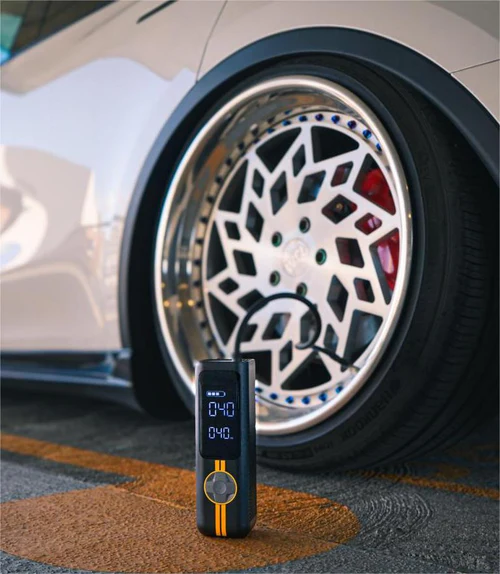
Not all inflators are built with EV requirements in mind. Standard pumps designed for conventional vehicles often lack the pressure precision that EV tires demand, particularly when you’re working within a tight PSI window where even a 2-PSI variance affects range and handling. Purpose-built EV tire pumps address this by pairing higher-accuracy gauges with auto-shutoff functionality, so the tire reaches your target pressure without overshooting. The Fanttik inflator is a strong example of this category — compact enough for in-vehicle storage, yet engineered with the digital precision and flow consistency that EV-specific tires require. Its auto-stop feature is especially useful when inflating to exact targets, reducing the need for repeated correction cycles that extend your recovery window.
Features to Look for in an EV Tire Pump
When selecting a pump for EV use, prioritize four characteristics. First, gauge accuracy within ±0.5 PSI ensures your inflation target is actually met. Second, auto-shutoff capability prevents overinflation, which is critical given EV tires’ sensitivity to pressure variance. Third, portability matters — a pump that lives in your cargo area means you can inflate wherever you park, not just at service stations. Fourth, compatibility with high-load tire valves common on EVs ensures a secure, leak-free connection during inflation. Pairing a pump with these features alongside a tire pressure recovery time calculator gives you a complete maintenance system built around accuracy from start to finish.
Smarter Tire Pressure Habits for Long-Term EV Performance
Calculating tire pressure recovery time isn’t a complicated process, but it’s one that pays real dividends for EV owners who take it seriously. Electric vehicles are uniquely sensitive to tire inflation levels — their added weight, efficiency demands, and regenerative braking dynamics all amplify the consequences of working from inaccurate pressure readings. Taking the extra step to let pressure stabilize before finalizing your inflation decision is a small habit that protects your range, your handling, and your tires over the long run.
The key takeaways are straightforward: understand that EV tires have specific inflation requirements that standard approaches don’t fully address, use a tire pressure recovery time calculator to determine when your readings are actually trustworthy, and invest in tools built for the job. A purpose-built EV tire pump like the Fanttik inflator — with its digital precision and auto-shutoff capability — removes the variables that lead to overinflation or repeated correction cycles. Pair it with a recovery time calculator, and you have a complete, reliable maintenance system.
Proactive tire maintenance is one of the simplest ways to protect your EV’s performance. Check pressure regularly, account for seasonal temperature swings, and always allow adequate stabilization time before trusting your gauge. These habits take minutes but deliver consistent returns in safety, efficiency, and tire longevity every time you drive.