
Marketing
How AI is Revolutionizing SEO and Digital Marketing Strategy


Introduction: The New Era of Search
“Googling” is more than a word; it’s a daily habit. Every minute, millions of searches happen. This drives billions of queries each day. We rely on search engines to find answers, products, and information.

This constant flow of information is undergoing a massive change. Artificial Intelligence (AI) is changing how search engines work. It is also reshaping how we optimize for them. AI is the next big step in digital marketing.
In this guide, we will explore the revolution of AI in SEO. We will uncover how AI moves us from simple keywords to deep contextual understanding. We will see how it boosts efficiency and impacts core SEO areas. Finally, we will look at future trends and key questions for every marketer.
The Paradigm Shift: From Traditional Keywords to AI-Powered Context
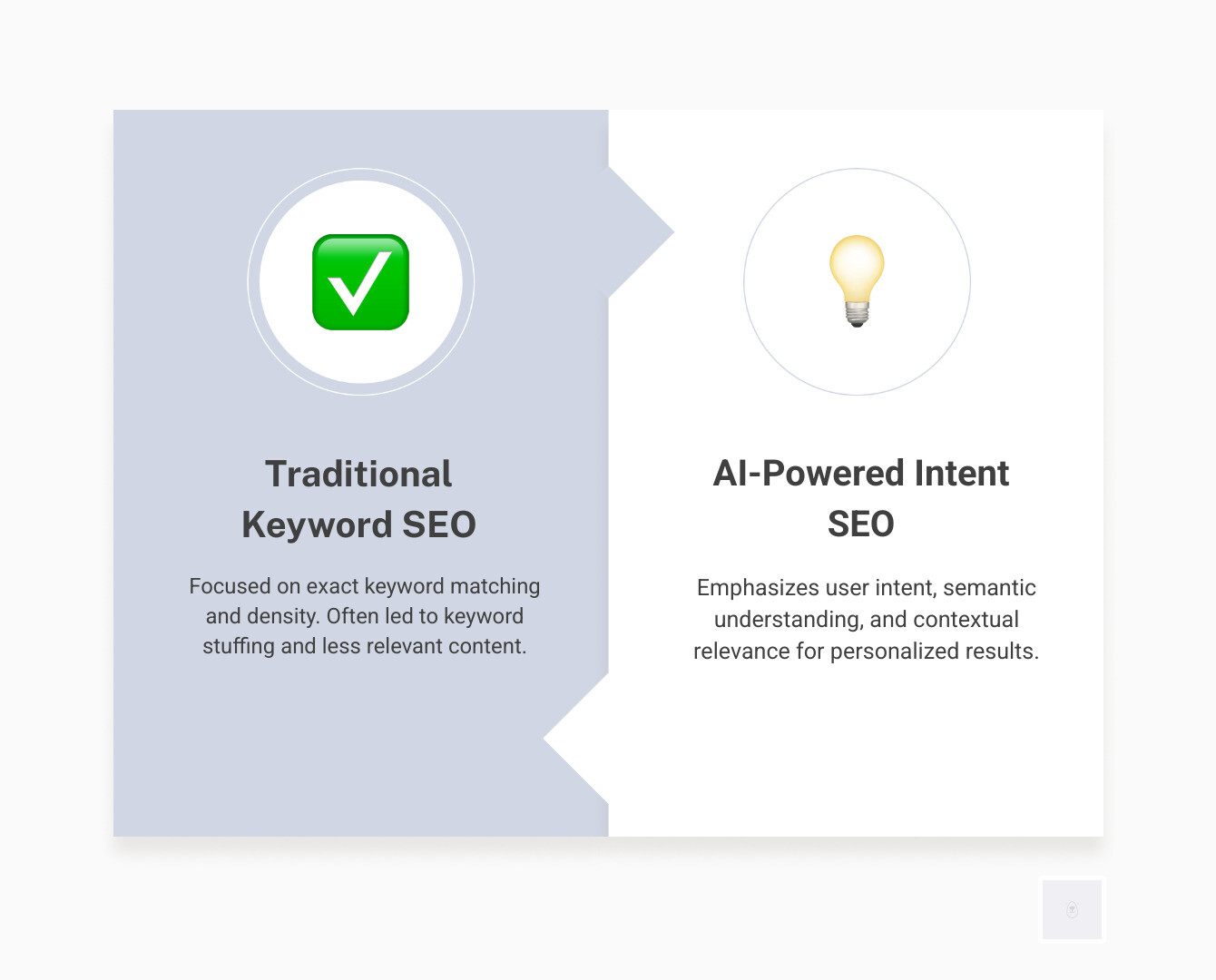
For years, Search Engine Optimization (SEO) was often a game of keywords. Marketers would carefully research search terms, then strategically (and sometimes excessively) sprinkle them throughout their content. This approach, often leading to “keyword stuffing,” aimed to signal relevance to search engine crawlers. However, as search engines grew more sophisticated, the limitations of this keyword-centric view became glaringly obvious. It often resulted in content that was optimized for machines, not for the human users who would actually read it.
The rise of AI has fundamentally shifted this paradigm. Modern search engines, powered by artificial intelligence, are no longer just looking for keyword matches. Instead, they strive to understand the intent behind a user’s query and the context of the content. This means moving beyond simple word matching to a deeper, semantic understanding of language. The goal is to provide personalized, highly relevant results that directly address a user’s needs, often before they even click on a link. This shift demands that our SEO strategies evolve from merely optimizing for keywords to optimizing for comprehensive, user-centric answers.
The Brains Behind Modern Search: Google’s AI Algorithms
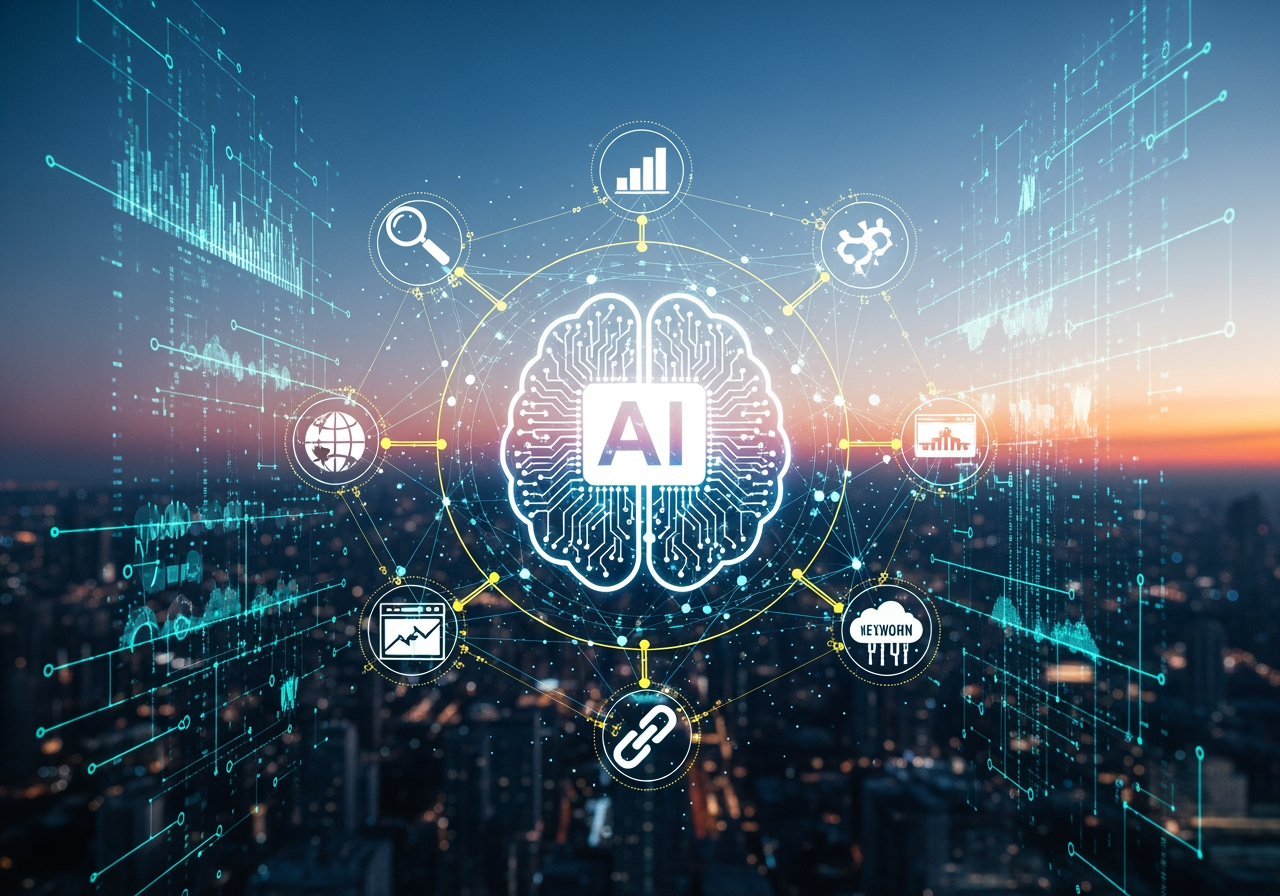
Google, the undisputed leader in search, processes a staggering 3 trillion searches annually. To manage this immense volume and deliver increasingly relevant results, it has continuously integrated advanced AI algorithms into its core ranking systems. These AI components are the “brains” behind modern search, enabling a nuanced understanding of queries and content:
- RankBrain (2015): One of Google’s first major AI integrations, RankBrain is a machine-learning system that helps Google interpret ambiguous or novel queries. It learns from user interactions, effectively understanding which search results best satisfy specific intents, even for queries it has never encountered before.
- BERT (2019): Bidirectional Encoder Representations from Transformers, or BERT, marked a significant leap in natural language processing (NLP). BERT processes language by inferring the meaning of words from the context provided by surrounding words, recognizing subtle linguistic nuances that earlier algorithms missed. This allows Google to better understand complex phrases and conversational queries.
- MUM (2021): The Multitask Unified Model (MUM) is an even more powerful NLP model, reportedly 1,000 times more capable than BERT. MUM can understand information across 75 languages and multiple content formats simultaneously. It is designed to answer highly complex queries that require synthesizing information from various sources and across different modalities (text, image, video).
These algorithms, powered by natural language processing (NLP), enable search engines to move beyond superficial keyword matching. They focus on semantic understanding, allowing them to grasp the underlying meaning, relationships between entities, and the true intent behind a user’s search. This means that for our content to rank, it must demonstrate a deep understanding of a topic and answer user questions comprehensively and authoritatively.
The Rise of Conversational Search: SGE and GEO
The evolution of AI in search has culminated in new, highly interactive search experiences that are fundamentally changing how users find information and how we, as SEO professionals, must adapt.
Google Search Generative Experience (SGE) represents a significant shift towards a more user-friendly and interactive search engine. SGE combines traditional search results with AI-generated answers, providing concise summaries and direct responses to complex queries. These “AI Overviews” often appear at the top of the search results page, synthesizing information from multiple sources to give users immediate answers.
This rise of AI Overviews has a profound implication: it accelerates the trend of “zero-click searches.” A 2024 study by Rand Fishkin of SparkToro revealed that 58.5% of Google searches in the United States ended without a click, meaning users found the information they needed directly on the search results page. While this can reduce direct organic traffic to websites, it lifts the importance of brand visibility and impression share within these AI-generated summaries.
This new landscape has given birth to Generative Engine Optimization (GEO). Unlike traditional SEO, which aims to rank a webpage in search results, GEO seeks to have your content selected as a source for AI-generated answers. It’s about positioning your brand as the authority that informs AI responses. Success in GEO hinges on creating content with high “information gain” – offering unique insights, structured data, and high-trust signals that AI models prioritize when summarizing information. Pages that directly address specific queries see 31% higher citation rates in AI-generated results, underscoring the need for precise, answer-focused content.
How AI Boosts SEO Performance and Efficiency
The integration of AI into SEO is not merely an evolutionary step; it’s a revolution in efficiency and effectiveness. AI provides us with unprecedented capabilities to analyze vast datasets, automate tedious tasks, and gain deeper insights, ultimately leading to increased efficiency, better return on investment (ROI), and more accurate decision-making. Indeed, 30% of AI adopters in sales and marketing cited a 6-10% increase in revenue after implementing the technology, highlighting its tangible business impact. Furthermore, a significant 58% of SEO professionals are planning to integrate generative AI functionality into their workflows in the next year, recognizing its potential.

Automating and Scaling SEO Efforts
One of AI’s most immediate and impactful contributions to SEO is its ability to automate repetitive and time-consuming tasks. This frees up SEO professionals to focus on higher-level strategy, creativity, and human-centric problem-solving. AI-powered tools can:
- Conduct Technical Audits: AI can rapidly crawl websites, identify technical SEO issues like broken links, duplicate content, crawl errors, and page speed problems, and even suggest automated fixes. For example, AI SEO software like Alli AI can help with technical SEO by conducting website audits and fixing duplicate content issues.
- Generate Content Briefs: By analyzing top-ranking content and user intent, AI can automatically generate detailed content briefs, including recommended keywords, topics, structure, and length, saving hours of manual research.
- Scale Content Production: Generative AI tools can assist in drafting content, from blog posts and product descriptions to meta titles and social media updates, ensuring consistency and adherence to SEO best practices at scale.
- Optimize On-Page Elements: AI can analyze existing content and recommend optimizations for meta descriptions, title tags, headings, and internal linking to improve relevance and readability.
Platforms designed for Automated AI SEO are streamlining these complex workflows for businesses of all sizes. By leveraging such tools, organizations can dramatically increase the volume and quality of their SEO output without proportional increases in manual effort. A survey found that 17% of marketers save over 10 hours weekly using AI tools for SEO tasks, demonstrating a clear efficiency gain.
Opening up Deeper Insights with Advanced Data Analysis
Beyond automation, AI’s unparalleled ability to process and analyze massive datasets open ups deeper, more actionable insights that would be impossible for humans to uncover manually. This advanced data analysis capability provides a significant strategic advantage:
- Predictive Analytics: AI can analyze historical data and current trends to predict future search behavior, algorithm changes, and market shifts. This allows SEO strategies to be proactive rather than reactive, anticipating user needs and optimizing content before trends fully emerge.
- Competitor Analysis: AI tools can dissect competitor strategies, identifying their top-performing keywords, content gaps, backlink profiles, and technical strengths and weaknesses. This intelligence helps us pinpoint opportunities for differentiation and dominance.
- Trend Forecasting: By monitoring social media, news, and search queries, AI can identify emerging topics and content gaps weeks or even months before they appear in traditional keyword research tools. This allows for timely content creation that captures nascent demand.
The strategic advantage gained when you can analyze unlimited SEO SERP data to spot market shifts before they happen is immense. AI excels at processing millions of SERPs in real-time, uncovering ranking patterns and identifying what content characteristics win featured snippets and zero-position search results. According to Capgemini’s research, 62% of marketers use generative AI for data analysis, underscoring its pivotal role in informed decision-making.
AI’s Impact on Core SEO Pillars and Actionable Strategies
Artificial intelligence is not just a peripheral tool; it’s becoming an integral part of every core SEO pillar, changing how we approach content, technical optimization, and new search modalities like voice and visual search.
Revolutionizing Content Strategy with AI in SEO
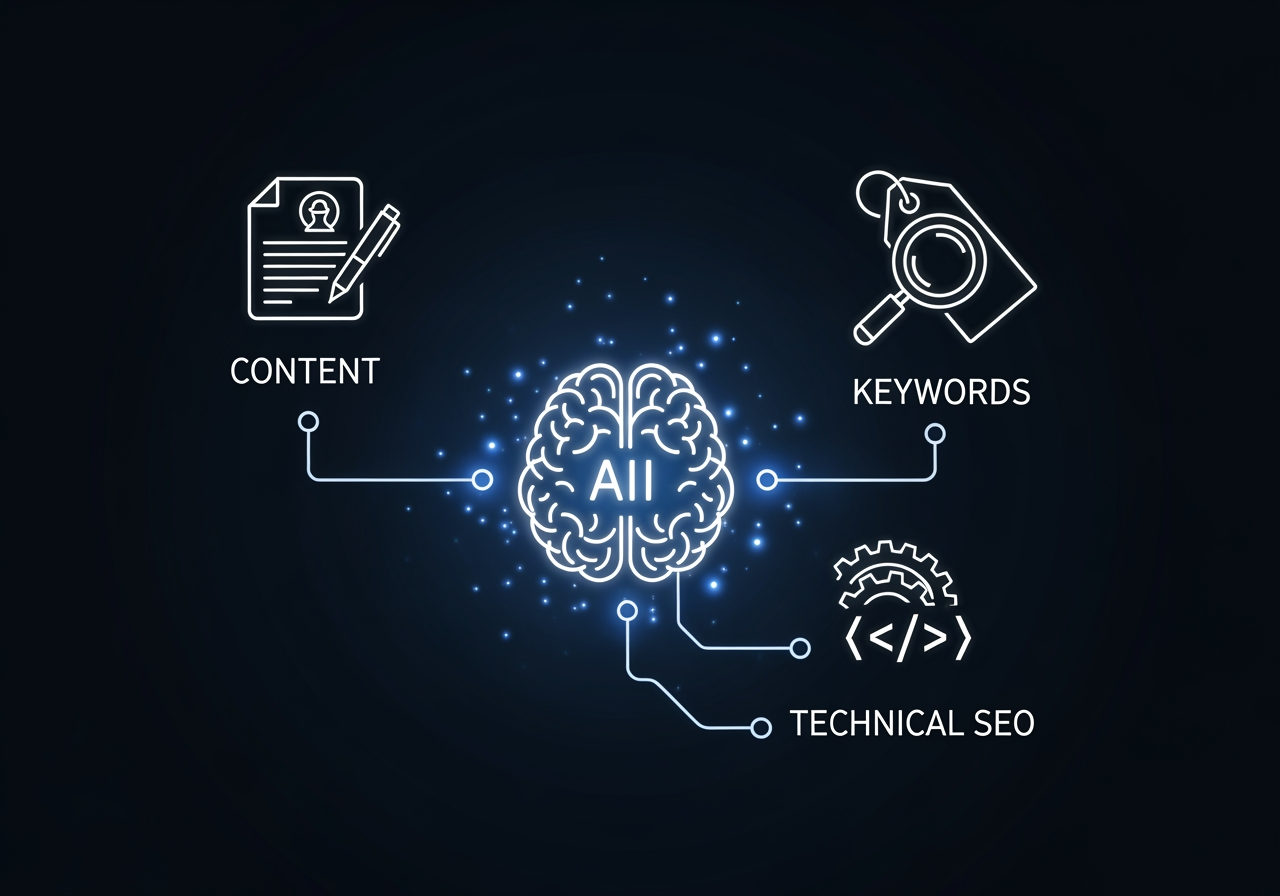
Content remains king, but AI is redefining how we create, optimize, and distribute it. The focus has shifted from mere keyword inclusion to demonstrating Expertise, Experience, Authoritativeness, and Trustworthiness (E-E-A-T), especially for “Your Money, Your Life” (YMYL) topics. AI helps us achieve this by:
- Content Gap Analysis: AI can analyze existing content around target keywords, identify what’s missing compared to top-ranking competitors, and suggest topics or subtopics to cover comprehensively.
- Topic Findy: By analyzing trending topics and user questions across various platforms, AI helps uncover high-value content opportunities and identify emerging interests.
- Optimizing for E-E-A-T: AI tools can help ensure content meets Google’s E-E-A-T standards by recommending authoritative sources, suggesting expert quotes, and analyzing content for depth and accuracy.
Here are some quick wins for content strategy in the age of AI:
- Develop comprehensive topic clusters that cover all aspects of a subject. Research shows that comprehensive content covering a topic in-depth ranks for 68% more long-tail keywords than narrowly focused content. This signals topical authority to AI-powered search engines.
- Use natural, conversational language that mirrors how people actually communicate. Content written in natural language receives 37% more engagement in both search and voice results, making it more appealing to human users and easier for AI to process.
- Structure content with clear headings (H2, H3) for main topics and subtopics. AI systems heavily weigh heading structures to understand content organization and extract key information.
- Directly answer user questions within your content. Place clear, concise answers to common questions in dedicated sections or at the beginning of relevant paragraphs. Pages that directly address specific queries see 31% higher citation rates in AI-generated results.
The Role of AI in SEO for Technical Optimization
Technical SEO, the backbone of a crawlable and indexable website, also benefits immensely from AI. AI-powered tools can perform tasks with a speed and accuracy impossible for human teams:
- AI-powered Site Crawlers: Advanced AI systems can mimic search engine crawlers, identifying structural issues, broken links, and indexing problems across vast websites. Tools like Botify can identify anomalous patterns in site structure and server response codes.
- Anomaly Detection: AI can detect subtle shifts in site performance or crawl behavior that indicate underlying technical issues, often before they impact rankings.
- Predictive Impact of Fixes: AI can analyze potential fixes for technical issues and predict their likely impact on traffic and rankings, allowing for prioritized and data-driven technical SEO decisions.
- Core Web Vitals Optimization: AI solutions can identify bottlenecks affecting Core Web Vitals (Largest Contentful Paint, Interaction to Next Paint, Cumulative Layout Shift) and suggest optimizations for faster loading speeds and better user experience.
- Automating Schema Markup: AI can streamline structured data implementation, even generating and validating complex Schema markup. Research shows that schema with 90%+ property completion has a 43% higher impact on rich results, and content with interconnected entity schema is 51% more likely to appear in knowledge panels and AI-generated answers.
Optimizing for New Search Frontiers: Voice and Visual
AI is not only enhancing traditional SEO but also opening up entirely new frontiers in search:
- Voice Search Optimization (VSEO): With Statista forecasting that the number of voice assistants globally will reach 8.4 billion in the next few years, optimizing for voice search is critical. AI-powered NLP is central to VSEO. Voice searches are typically longer and more conversational, often phrased as questions. AI tools like Frase help identify these questions, allowing us to create content that directly answers them in a natural, conversational tone.
- Visual Search Optimization: As search becomes more visual, technologies like computer vision allow machines to “see” and interpret the content of images and videos. AI can automatically generate descriptive filenames, alt text, and image descriptions, making visual content more findable. Video optimization also benefits from AI, with tools helping to implement structured chapters, closed captions, and keyword-rich descriptions.
Navigating the New Landscape: Future Trends and Challenges
The rapid evolution of AI means the SEO landscape is in a constant state of flux. To stay competitive, we must not only adapt to current changes but also anticipate future trends and address the inherent challenges.
Emerging Trends to Watch in 2025 and Beyond
The future of AI in SEO promises even more sophisticated and integrated approaches:
- Hyper-Personalization: AI will continue to drive increasingly personalized search results based on individual user behavior, location, device, and past interactions. This means content strategies must be flexible enough to cater to diverse user segments.
- Predictive SEO: Beyond current trends, AI will enable more accurate predictive SEO, allowing marketers to anticipate user needs and algorithm shifts even further in advance.
- Agentic AI Workflows: We will see the rise of “agentic AI” systems that can autonomously plan, execute, and monitor complex SEO tasks, requiring human oversight more than direct intervention.
- AI-Native Search Engines: The growth of AI-native search engines like Perplexity and ChatGPT, which prioritize direct answers and conversational interaction, signals a shift in how users expect to consume information. Perplexity, for instance, matches Google’s top 10 domains in over 91% of cases, indicating their growing relevance. Interestingly, Reddit dominates across these AI modes and AI Overviews, appearing in over 40.11% of results with additional links, highlighting the value of community-driven content. Google’s AI Overviews are already rolling out in over 100 countries, triggered in approximately 13.14% of all Google search queries as of March 2025.
Ethical Considerations and the Importance of Human Oversight
As AI becomes more pervasive in SEO, ethical considerations and the need for human oversight become paramount:
- AI Bias: AI models are trained on vast datasets, and if these datasets contain biases, the AI can perpetuate and even amplify them in search results, leading to unfair or inaccurate outcomes.
- Data Privacy: The use of AI for hyper-personalization relies on extensive user data, raising concerns about privacy and data security.
- Content Authenticity: The ease with which generative AI can create content raises questions about authenticity, potential for misinformation, and “deepfakes.” Google’s guidance on AI-generated content is clear: using automation primarily to manipulate rankings violates spam policies. However, content that is helpful and created for users, regardless of how it’s produced, is acceptable.
- Google’s Helpful Content System: Google’s Helpful Content algorithm updates aim to filter out unhelpful, low-quality content, regardless of whether it’s AI-generated or human-written. This reinforces the need for human expertise to ensure content provides genuine value and aligns with E-E-A-T principles, especially for YMYL topics.
The critical need for human strategy and review remains, a core principle of effective Berelvant AI in SEO consulting. Humans bring empathy, creativity, critical thinking, and ethical judgment that AI cannot replicate. Our role is to guide AI, ensure its outputs are accurate and ethical, and ultimately, to craft experiences that resonate with other humans.
Frequently Asked Questions about AI in SEO
Will AI replace SEO professionals?
No, it will not. Instead, AI lifts the role of the SEO professional. AI excels at handling the repetitive, data-intensive tasks: analyzing millions of data points, identifying patterns, generating content drafts, and performing technical audits. This automation frees up professionals to focus on high-level strategy, creative problem-solving, and understanding the nuanced psychological aspects of user experience – areas where human insight is irreplaceable. The job evolves from a technician executing manual tasks to a strategist leveraging powerful AI tools to achieve superior results.
Is AI-generated content bad for SEO?
Google’s guidance is clear: content is judged on its quality and helpfulness, not its method of creation. Low-quality, unhelpful content will rank poorly, whether written by an AI or a human. The key is to use AI as a tool and ensure all content is fact-checked, edited, and imbued with unique human expertise (E-E-A-T). An Ahrefs study of 600,000 analyzed pages finded that AI-generated content doesn’t inherently hurt your Google rankings, provided it meets quality standards. The emphasis remains on creating valuable, original, and trustworthy content that genuinely serves the user.
How can I optimize for Google’s AI Overviews?
Optimizing for Google’s AI Overviews requires a shift towards Generative Engine Optimization (GEO). Focus on creating clear, factual, and well-structured content that directly answers common user questions. Implement structured data (Schema markup) extensively to provide explicit context to search engines and AI systems, making your content easier to parse and cite. Build topical authority with comprehensive articles that demonstrate deep expertise. Aim to become a trusted, citable source in your niche by offering unique insights, proprietary data, and authoritative perspectives. Content that offers high “information gain” and is easily digestible by AI models will have a better chance of being featured.
Conclusion: Embracing the AI-Human Synergy in SEO
The landscape of search is undeniably being reshaped by artificial intelligence. From the nuanced understanding of user intent by Google’s advanced algorithms to the rise of AI Overviews and the new discipline of Generative Engine Optimization, AI is changing every facet of SEO. It offers unprecedented opportunities for efficiency, deeper insights, and the ability to scale our efforts.
However, this revolution does not diminish the role of the human SEO professional; rather, it lifts it. The future of SEO is not about AI replacing humans, but about a powerful partnership – a synergy between AI’s analytical power and human strategic insight, creativity, and ethical judgment. We must accept AI as a sophisticated tool that automates the mundane, reveals the hidden, and amplifies our capabilities.
For marketers and businesses, the message is clear: adapt, innovate, and commit to continuous learning. By leveraging AI not just to optimize for machines, but to better understand and serve human users, we can open up new levels of online visibility, engagement, and ultimately, success in the digital age.