
Tech
What is Common Cathode Outdoor LED Displays: Technical Guide, Energy Calculations & Buyer’s Decision

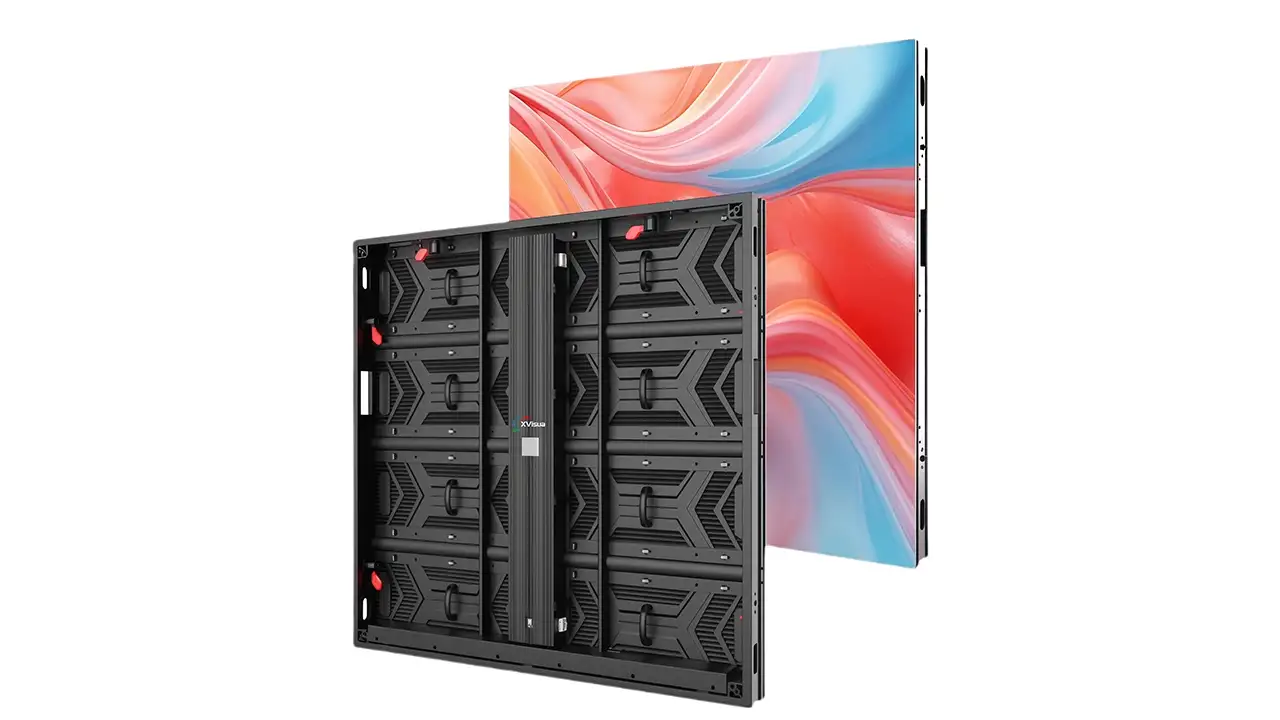
If you are sourcing outdoor LED displays, you’ve almost certainly seen “common cathode” technology in your supplier’s product specifications. This guide will explain whether this technology is suitable for your project.
What Common Cathode Actually Does at the Circuit Level
Every LED has a forward voltage (Vf). It is the minimum voltage required to emit light. This varies significantly by color:
- Red LEDs: Vf ≈ 1.8–2.2V (at rated current)
- Green LEDs: Vf ≈ 2.9–3.5V
- Blue LEDs: Vf ≈ 3.0–3.5V
In a common-anode design, all three color channels share a single power rail. For outdoor applications, this is typically 5V. Each channel receives the same voltage regardless of its actual voltage requirement. The difference between the supply voltage and the actual forward voltage (Vf) is dissipated as heat across the driver IC. For example, if a red subpixel only needs 2.1V but receives 5V, a 2.9V voltage drop occurs per pixel per frame. This voltage drop translates into wasted heat.
In a common-cathode design, the driver IC provides its optimized voltage for each color channel. The red channel receives approximately 2.8V, and the green and blue channels receive approximately 3.8V. The excess voltage drop is eliminated at the source. This is not a software optimization but requires a dedicated driver IC with an independent voltage rail for each channel. This is why common-cathode modules are more expensive and cannot be retrofitted to existing common-anode panels.
The Energy Math: Real Numbers for a P8 LED Billboard
Abstract efficiency metrics require concrete data to project budgeting. Here is an example based on typical highway billboard installations:
Scenario: 50 m² P8 outdoor LED display, operating 18 hours/day, electricity rate $0.14/kWh (US commercial average, 2025)
| Parameter | Common Anode | Common Cathode |
| Average power consumption | 800 W/m² | 480–520 W/m² |
| Total draw (50 m²) | 40 kW | 24–26 kW |
| Daily electricity cost | $100.80 | $60.48–$65.52 |
| Annual electricity cost | $36,792 | $22,075–$23,915 |
| Annual saving | — | $12,877–$14,717 |
| 5-year electricity saving | — | $64,385–$73,585 |
Power figures based on published specifications for P8 SMD outdoor panels from SightLED; actual consumption varies with content brightness and ambient temperature.
Typical common-cathode solar panels cost 12% to 18% more than common-anode solar panels of the same area. This means the upfront cost for a 50-square-meter installation is approximately $4,000 to $8,000. This cost can be recovered within 4 to 8 months.
Secondly, you might underestimate the cost savings. In temperate climates, cabinets operating at lower temperatures require smaller cooling fans or even no active cooling at all. For large installations in hot regions, eliminating one air conditioning unit per cabinet can save $2,000 to $5,000 in operating costs annually.
Heat, Junction Temperature, and the Lifespan Equation
LED degradation follows a predictable thermal relationship modeled by the Arrhenius equation, which forms the basis of IES LM-80 lumen maintenance testing. The practical rule: every 10°C reduction in LED junction temperature approximately doubles rated service life.
Common cathode panels typically operate 15–25°C cooler than equivalent common anode panels under the same conditions. In practical terms:
- A common anode P8 panel running at 75°C junction temperature might be rated at 80,000 hours to L70 (70% of initial brightness)
- The same panel with common cathode driving, running at 55–60°C junction temperature, may achieve 120,000–150,000 hours to L70 under identical conditions
For an LED billboard with a 10-year depreciation period, will you need to replace the LED module once during its entire lifespan, or will you not need to replace it at all?
When Common Cathode Is (and Isn’t) the Right Specification
Common cathode is not universally the optimal choice. Here’s a structured decision framework:
Specify common cathode when:
- Screen operates more than 12 hours/day (savings compound quickly)
- Required brightness exceeds 5,000 nits (thermal management becomes critical)
- Installation is in a high-ambient-temperature environment (>35°C summer average)
- Screen size exceeds 30 m² (absolute energy saving justifies the premium)
- Client has a sustainability or carbon reporting obligation
- Long-term O&M contract is attached (lower failure rates reduce warranty exposure)
Common anode may be sufficient when:
- Screen operates fewer than 8 hours/day in a cool climate
- Budget is tightly constrained and payback period exceeds 36 months
- Installation is temporary or rental-basis (under 24 months)
- Screen size is under 15 m² and total energy draw is low
You can divide the common cathode premium (in dollars) by the annual electricity saving. If the result is under 24 months, common cathode is almost always the economically rational specification.
What to Verify With Your Supplier
“Common cathode” has become a marketing term, and not all LED video wall manufacturers in China use it consistently. Before placing a purchase order, you can request the following specific technical confirmations:
Driver IC datasheet: Ask for the specific IC model number and confirm it has separate voltage rails per color channel. Established manufacturers include Macroblock, SinoWealth, and SILAN. Generic claims without a named IC are a red flag.
Power draw at 50% and 100% brightness: Both figures. Typical content averages around 30–40% brightness, so the 50% figure is more representative of real-world consumption than peak draw.
Thermal data under load: Request operating temperature test results (cabinet surface or junction temperature) at rated brightness in a 40°C ambient environment. A genuine common cathode design should show measurably lower readings than a comparable common anode product.
L70 rating with test conditions: Lumen maintenance ratings should reference IES LM-80 or IEC 62717 methodology and specify the drive current and temperature at which testing was conducted. An L70 claim without test conditions is not comparable across suppliers.
Control system compatibility: Common cathode panels are compatible with all major control systems, but confirm the specific firmware version required with your integrator before finalizing the specification.
FAQs:
Can I retrofit a common cathode driver into my existing outdoor LED module?
No. Common cathode requires a specially designed driver IC architecture, and the power distribution within the module PCB is also different. This is not a problem that can be solved by firmware upgrades or component replacements. If you currently have a common anode LED module and want to improve the efficiency of common cathode, the only way is to replace the module, not retrofit it.
Will common cathode affect color accuracy or calibration?
If implemented correctly, it will not have a negative impact. Some common cathode screens are recalibrated during the manufacturing process to adapt to different voltage environments.
Is common cathode compatible with outdoor LEDs with pixel pitches from P4 to P10?
Yes. Currently, common cathode driver ICs cover outdoor LED pixel pitches from P4 to P10. Due to the higher requirements for integrated circuit density, the adoption of smaller pixel pitch outdoor displays (P4-P5) has been slightly slower, but now all major LED screen manufacturers offer common cathode LED products.
What is the typical warranty period for a common cathode outdoor display? Reputable manufacturers typically offer a 3-5 year warranty. The warranty for common cathode systems is lower because all components experience lower thermal stress.
University of Houston graduate with 5 years of blogging experience, excelling in content strategy, SEO, and audience engagement. Connect with me on LinkedIn.