
Latest News
Executive Leadership Coaching Strategies That Drive Real Organizational Change


Key Takeaways
- Executive coaching enhances leaders’ decision-making, self-awareness, and strategic thinking.
- Effective coaching aligns leadership development with organizational goals to drive sustainable change.
- Integrating technology and data-driven insights can amplify the impact of executive coaching.
Introduction
The pace and complexity of today’s business world demand more from organizational leaders than ever before. Companies are recognizing that strong, agile leadership is essential for lasting organizational growth. That is why executive coaching has become a critical strategy for supporting leaders as they navigate new challenges, adapt to shifting markets, and create cultures that drive innovation.
Leadership coaching is not just about individual development. When approached strategically, it empowers senior executives and emerging leaders to develop skills that ripple across the organization. Effective coaching unlocks potential, promoting more intelligent decision-making, greater self-awareness, and a culture that can withstand complex change.
Organizations that embrace coaching as a leadership tool position themselves for sharper strategic execution. By developing leaders who can move from reactive management to proactive vision-setting, companies can build futures that are both resilient and adaptable. Whether supporting C-suite executives, directors, or high-potentials, an investment in executive coaching is an investment in sustainable organizational success.
To maximize value, coaching must align deeply with business objectives and employ the latest insights and technologies. This article explores proven strategies for harnessing executive coaching to drive meaningful transformation at every level of an organization.
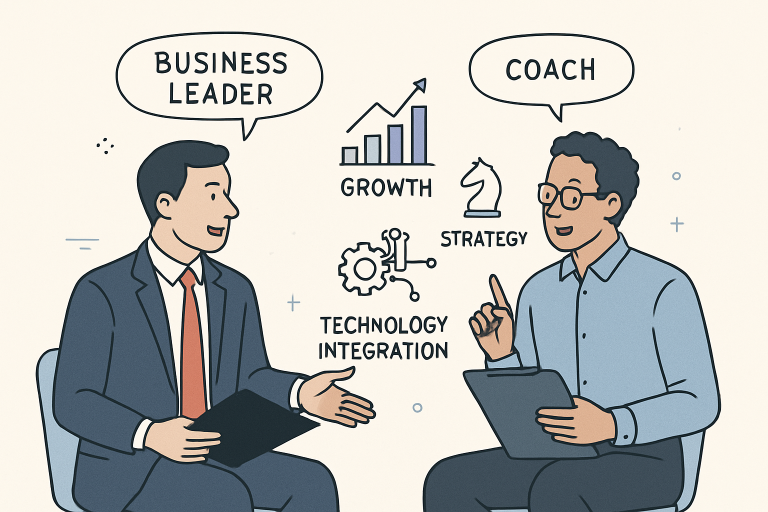
Enhancing Decision-Making
One of the most immediate impacts of executive coaching is improved decision-making. Coaches work with leaders to analyze situations from diverse perspectives, weighing options against both present realities and future objectives. Regular sessions might include scenario planning, stakeholder mapping, and values-driven problem solving. This structure helps executives move beyond intuition alone, grounding choices in data and strategic priorities.
Strong decision-making ripples beyond the top floor. When leaders demonstrate clarity and consistency, teams follow suit, resulting in improved operational outcomes and alignment throughout the organization. According to a recent Harvard Business Review analysis, companies that invest in high-caliber leadership coaching report faster decision cycles and fewer costly missteps, driven by increased executive confidence and accountability.
Building Self-Awareness
Coaching is fundamentally rooted in reflection and feedback. Skilled coaches help leaders understand how their behaviors, communication styles, and emotional triggers affect everything from employee morale to organizational performance. Through tools such as 360-degree feedback assessments and regular reflective exercises, coaching fosters an environment where self-awareness is not only valued but also expected.
Self-aware executives become more adept at managing conflict, recognizing personal growth areas, and adapting their leadership style to support diverse teams. The result is greater trust within organizations, more effective collaboration, and a leadership presence that inspires rather than dictates. These competencies have become especially important in remote and hybrid work environments, where communication is more nuanced than ever before.
Developing Strategic Thinking
Beyond day-to-day management, great leaders excel at strategic thought. Executive coaching can accelerate this development by challenging leaders to think beyond immediate tasks and consider long-term positioning. Coaches guide leaders to anticipate market shifts, identify hidden opportunities, and account for external risks and competition.
Strategic thinking is not innate for every executive, but with frequent practice and challenging dialogue, these skills can be sharpened. In organizations where coaching embeds strategic reflection into the leadership cadence, leaders are equipped to keep the organization resilient and forward-facing. As Forbes notes, organizations with strategically minded executives are significantly more likely to outperform competitors in periods of uncertainty and rapid change.
Aligning Coaching with Organizational Goals
Effective coaching is always tailored to the broader organizational vision and strategy. By aligning coaching objectives with business goals, companies ensure that development efforts build the right competencies and drive the right behavioral shifts. This alignment makes coaching a lever for culture change, not just individual achievement.
Leaders learn to connect their personal growth with organizational values, bridging the gap between strategy and daily execution. This fosters a culture of transparency, accountability, and continuous improvement. During periods of transformation, especially mergers or digital adoption, coaching supports leaders as they manage resistance and champion change initiatives.
Leveraging Technology in Coaching
The integration of technology into executive coaching has opened new possibilities for leadership development. Digital platforms enable remote coaching sessions, analytics-driven feedback, and real-time progress tracking. Virtual simulations put leaders in realistic, risk-free situations, helping reinforce new behaviors and decision frameworks.
Artificial intelligence further personalizes development by identifying patterns in leader behavior and suggesting tailored next steps. Mobile applications and data dashboards make it easier to track progress and ensure accountability. These technological advances allow organizations to scale coaching without sacrificing quality or impact, as noted by leading analysts from Gartner.
Measuring Coaching Impact
Organizations maximize coaching ROI by rigorously measuring its impact. Effective programs use pre- and post-coaching assessments, behavioral analytics, and pulse surveys to quantify progress. Data from these tools enables tying coaching outcomes directly to organizational KPIs, such as employee engagement scores, retention rates, and business performance.
Objective measurement transforms coaching into a core leadership investment rather than an exclusive benefit for select executives. Data-driven insights illuminate which practices deliver the most outstanding value, enabling continuous refinement and improved resource allocation for ongoing leadership development.
Conclusion
Executive leadership coaching extends its impact far beyond personal growth, influencing the entire organization’s performance and culture. By enhancing decision-making skills, self-awareness, and strategic thinking, coaching helps leaders align more effectively with organizational goals, fostering a unified vision and stronger team cohesion. It encourages adaptability and resilience, equipping leaders to navigate change and uncertainty with confidence. Leveraging technology and measurable outcomes, organizations can track progress, refine leadership strategies, and ensure continuous improvement. The result is a cadre of capable, forward-thinking leaders who drive innovation, strengthen company culture, and create a sustainable competitive advantage that benefits both teams and the broader business.