
HEALTH
10 Things That Affect How Many Hair Grafts You May Need

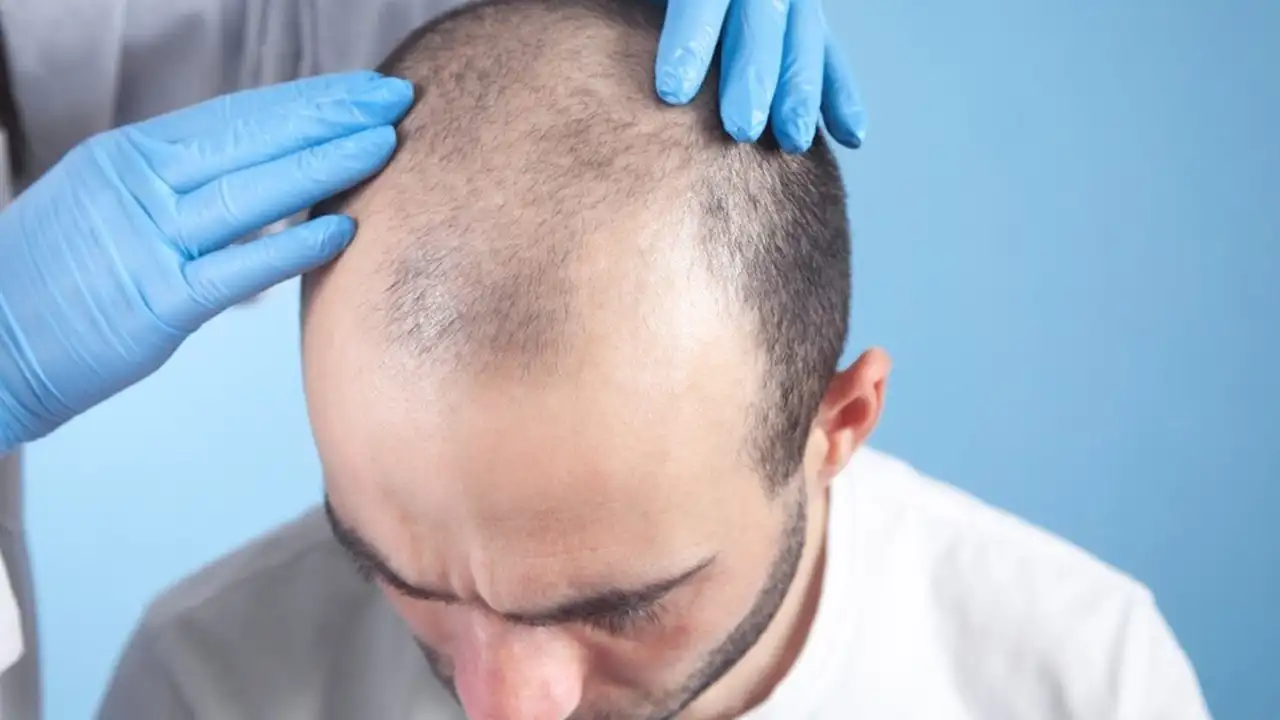
1. The Stage of Your Hair Loss
The most direct factor in determining graft numbers is the extent of baldness. A common scale, the Norwood scale, is used to classify patterns, giving surgeons a starting point for their calculations.
When hair loss is limited to a receding hairline, fewer grafts are needed. But as the balding progresses to include the crown and the top of the scalp, the surface area expands significantly. The jump from moderate balding on top to extensive balding across the front and back can easily double the number of grafts required for coverage. For example, restoring a hairline might take 2,000 grafts, while providing coverage for a largely bald scalp could demand 5,000 to 6,000 grafts over multiple sessions.
2. The Density of Your Donor Hair
The supply of hair at the back and sides of the head, known as the donor area, is finite. Before any procedure is planned, a surgeon must evaluate how dense this hair is, as it dictates the total number of grafts available for a lifetime.
A person with very thick, dense hair in their donor zone has a large reserve, which allows for bigger transplant sessions. Conversely, someone with naturally thin or sparse donor hair has a limited supply. Attempting to take too many grafts from a weak donor area will cause permanent damage, resulting in a moth-eaten or see-through look at the back of the head. This is a critical limitation; a person with a low-density donor area cannot achieve the same result as someone with a high-density one, even if their balding pattern is identical.
This is why early graft estimates should consider both the balding area and the donor area.
Tools such as HairCostCalculator.com can help patients organize these early questions by estimating likely graft needs, comparing destination-based cost ranges, reviewing donor-area suitability, and showing a possible result simulation before a clinical consultation.
3. Your Hair’s Characteristics
The physical traits of your hair have a major impact on the visual result. Thick, coarse hair shafts simply cover more scalp surface than fine, thin hair.
This means a person with coarse hair can achieve the look of fullness with fewer grafts. Wavy or curly hair also creates a better illusion of density because it does not lie flat against the scalp. The color matters, too. Someone with light-colored hair and fair skin has low contrast between their hair and scalp, which makes thinning less noticeable. High contrast, like black hair on pale skin, makes the scalp more visible, often requiring higher density to look full.
4. Your Desired Fullness
Patient expectations are a key variable. The number of grafts needed for light, natural-looking coverage is very different from the number needed for the highest possible density.
Achieving a result that simply covers the bald scalp so it is not shiny might require a density of 25 to 30 grafts per square centimeter. However, creating a thick result that mimics the density of natural, non-thinning hair could require 45 to 55 grafts in the same area. Pushing for extreme density is not always possible; packing too many grafts into one spot can compromise their blood supply and lead to poor growth.
5. The Likelihood of Future Hair Loss
A hair transplant moves hair, but it does not stop the progression of male pattern baldness. The plan must account for the hair you are likely to lose in the future.
For a younger man under 30 with aggressive hair loss, a conservative plan is often the best strategy. This means using fewer grafts and designing a more mature hairline to save donor hair for future procedures. Using 4,000 grafts on a 25-year-old might look good for a few years, but it could be a disaster when he is 40 and has continued to lose hair behind the transplanted zone. Planning must preserve the donor supply for the long term.
New York hair restoration surgeon Dr. Bernstein explains that transplant planning should account for “the patient’s future balding pattern” and “his total donor hair supply.” This is why a graft estimate should not be based only on the visible bald area today; it also needs to consider age, likely future hair loss, and how much donor hair must be preserved for later.
6. The Surgical Method: FUE vs. DHI
The chosen implantation technique, whether standard FUE or Direct Hair Implantation, can influence the surgical plan. In many standard FUE workflows, recipient sites are created first and grafts are then placed in a separate step. DHI uses a Choi Implanter Pen to create the site and insert the graft in a single motion.
This procedural difference can affect the maximum number of grafts transplanted in a single session. DHI is often presented as a more controlled, graft-by-graft process using a Choi Implanter Pen, so daily session sizes may sometimes be capped at a lower number, such as 2,500 to 3,000 grafts, to maintain quality.
A standard FUE procedure, where incision creation and placement are separate steps, can allow a larger team to work in parallel, sometimes enabling sessions exceeding 4,000 grafts. A plan for widespread coverage might lean toward FUE, while a plan requiring maximum controlled density in a specific zone might use DHI.
7. Extraction Quality and Transection Rate
The technical skill of the surgical team during extraction has a direct mathematical impact on the available donor supply. Every time a follicular unit is improperly extracted, it can be damaged or severed — an event known as transection. A low transection rate, under 3%, means that nearly all extracted follicles are viable for transplantation.
A high transection rate, over 8–10%, is wasteful. It effectively reduces the donor yield, meaning more follicles must be extracted to reach the target graft number for the procedure. This not only exhausts the finite donor area more quickly but can also lead to a lower final density, as damaged grafts have a significantly lower survival rate after implantation.
8. Previous Hair Surgeries
The condition of the scalp is important. If a patient has had previous transplants, scar tissue can affect both the donor and recipient areas.
Placing new hair grafts into a scarred area is more difficult. Blood supply in scar tissue is often reduced, which can lower the survival rate of the new grafts. This means a surgeon may need to place more grafts into a scarred zone to achieve the same density that a scalp without scars could achieve with fewer. Scarring in the donor area from prior procedures also reduces the number of healthy grafts available for future use.
9. Hairline Design
The final look is determined by artistry, not just numbers. How the hairline is designed has a huge effect on the total graft count.
A low, straight, and aggressive hairline requires an enormous number of grafts to appear dense and natural. In contrast, a slightly higher or more curved hairline can frame the face effectively while using far fewer grafts. Lowering a hairline by just one centimeter can add 500 to 700 grafts to the surgical plan. This decision is a critical trade-off between an immediate look and the long-term preservation of donor hair.
10. Your Age
Age often indicates how stable a person’s hair loss has become. A surgeon’s plan for a 25-year-old and a 55-year-old should be completely different, even if they show the same pattern of baldness today.
A 55-year-old man with a stable balding pattern is a predictable case. A surgeon can be more confident in using grafts to fill in the existing pattern because it is unlikely to change much more. A 25-year-old who is already significantly bald is on a path to extensive future hair loss. His plan must be extremely conservative to ensure he does not run out of donor hair later in life.
University of Houston graduate with 5 years of blogging experience, excelling in content strategy, SEO, and audience engagement. Connect with me on LinkedIn.